
When you buy through our links, we may earn a commission. Products or services may be offered by an affiliated entity. Learn more.
Best Toddler Mattress of 2026


Sleep Foundation
Why Trust Us


Our mission to create a healthier, more well-rested world demands that our product reviews be best-in-class. You won’t find more expertise on mattresses and sleep products anywhere else.
The Sleep Foundation product testing team uses an industry-leading evaluation process paired with real world consumer feedback to come up with objective recommendations so that you can feel confident in your product decisions.
A toddler mattress often marks one of the biggest milestones of childhood: the transition from a crib to bed. Whether you decide to use a smaller toddler bed and mattress or graduate to a twin, there are a few key considerations to keep in mind, like firmness, ease of cleaning, and material quality.
We’ll discuss the top mattresses for toddlers based on our in-house testing and parent reviews, and we’ll discuss what distinguishes them from other brands. Our picks include both those with smaller dimensions that fit in toddler bed frames as well as more traditional twin and full sizes. If you’d like to read more about mattresses for little ones, check out our guide to the best mattresses for kids.
Our #1 Pick: Helix Kids
Both parents and our experts praise the Helix Kids, which is our favorite toddler mattress of 2026. Its reversible design has a firmer side and a softer side to provide years of steady support. The liquid-repellent layers are also helpful for protecting the mattress from spills and stains.
Read on to see our full list of best toddler mattresses of 2026 based on performance ratings from our in-house testing team, in-depth product inspections, and verified reviews from real mattress owners.
Our Top Picks
Best Overall Mattress
:Helix Kids
Shop Now
Most Comfortable Mattress
:Bear Cub
Shop Now
Best Value Mattress
:Newton Kids’ Mattress
Shop Now
Best First Big Kid Mattress
:Saatva Youth
Shop Now
Best Temperature Regulating Mattress
:Brooklyn Bedding BB Kids Mattress
Shop Now
Best Mattress for Spinal Alignment
:Nolah Nurture Kids
Shop Now
Easiest Mattress to Move
:Leesa Kids Mattress
Shop Now
Best Organic Mattress
:Birch Kids Natural Mattress
Shop Now
Best Dual-Firmness Mattress
:Avocado Organic Crib Mattress
Shop Now
How We Tested the Best Mattresses for Toddlers
Testing Criteria
Toddlers have specific needs in a mattress since young sleepers may spend more time in bed and are often still working toward a dry night’s sleep. The following factors informed the criteria we tested against when evaluating mattresses for some of the youngest sleepers.
Waterproofing: Toddlers are prone to nighttime accidents and spills, so a mattress with built-in waterproofing or a highly protective cover can make cleanup easier and extend the life of the mattress. Effective moisture protection also helps reduce the risk of mold and odor.
Size: Toddler mattresses must fit standard toddler bed frames and convertible cribs. We prioritized models that match common dimensions. The mattresses we chose also provide a stable, secure sleep surface that minimizes gaps between the mattress and bed rails. We also considered thickness, as this can determine whether a mattress is safe for bunk beds.
Quality Materials and Durability: Toddlers spend much more time sleeping than adults (averaging up to 14 hours per day!), so we tested for the high-quality designs with durable foams and coils. Quality materials can help maintain the mattress shape, structural integrity, and performance through active, prolonged use.
Temperature Regulation: Breathable materials and cooling technologies can help support a comfortable night’s sleep.
Price: Because toddlers will outgrow their mattresses within several years, parents may want to seek value without sacrificing safety and comfort. We considered models across a range of price points that deliver strong performance relative to cost.
How We Evaluated
Our database of mattresses includes a wide selection of toddler beds, so to land on the best of the best, we referred to a set of quantitative benchmarks, including:
- Strong overall performance ratings
- Easy to clean materials and covers
- Versatile designs with a medium to medium firm feel
Next, we narrowed down our selection to a list of top toddler mattresses. We reviewed product specifications, safety features, and size options. Our testing team examined each model for firmness consistency, protective coverage, breathability, and overall comfort for a toddler sleep surface. After providing scores for key performance categories, they also assigned accolades, then selected their top picks. This list includes a range of sizes, constructions, and price options.
Our Testing Team

Logan Foley
Editorial Director
Full Bio

Mary Fenton
Head of Product Content
Full Bio

Jeremy Klein
Senior Product Testing Manager
Full Bio

Brad Nehring
Senior Product Analyst
Full Bio

Colin Simpson
Product Research Manager
Full Bio
Best Overall Mattress: Helix Kids
Best Overall Mattress
8.3/10Test Lab Score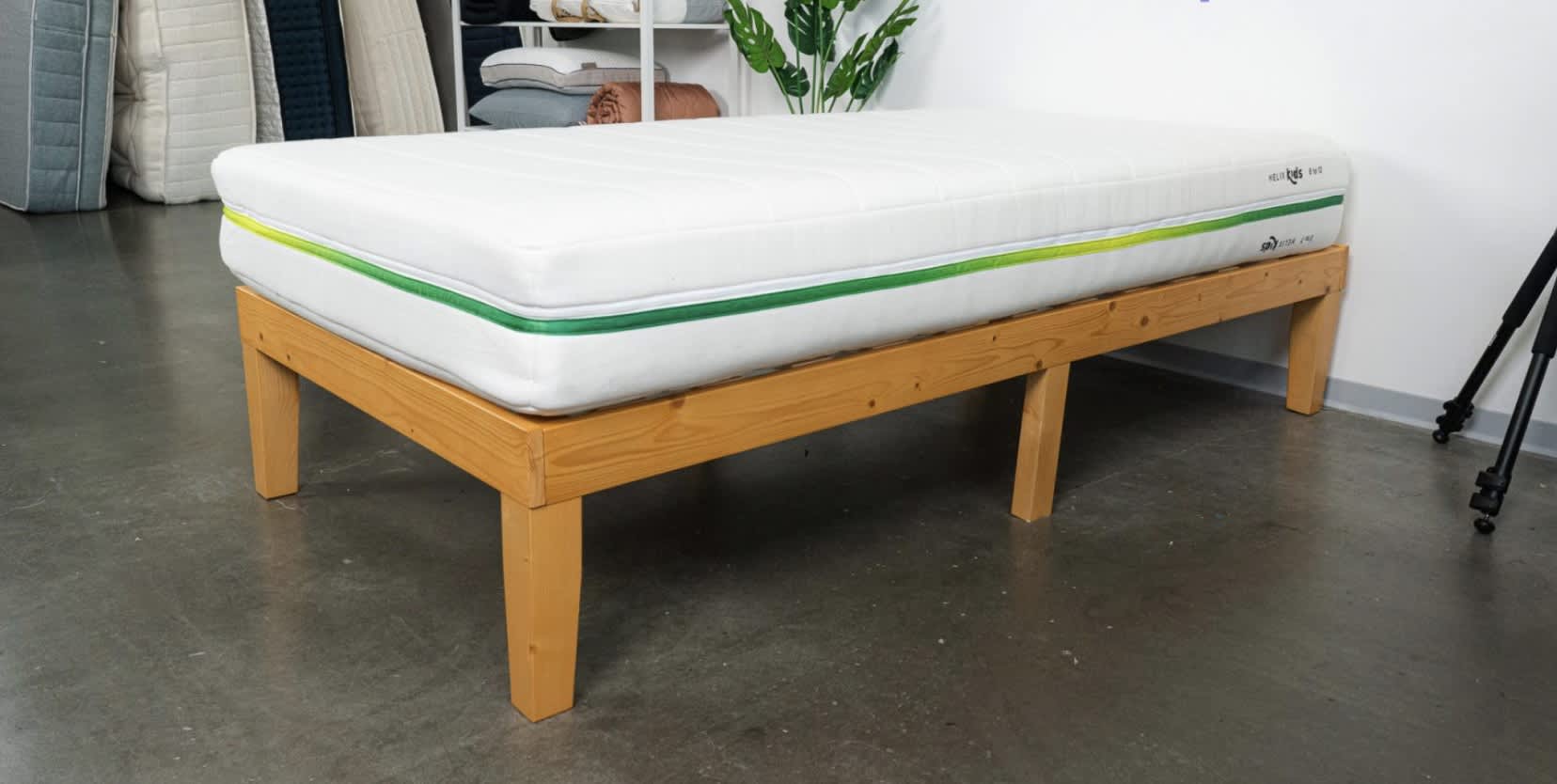
Helix Kids
A flippable hybrid designed for kids 3-12.
Key Details
- Who It’s Best For: Kids between the ages of 3 and 12.
- Feel: One side is plush and medium soft (4), the other is medium firm (6) and more supportive.
- What It’s Made Of: Cushy memory foam on the softer side and more responsive polyfoam on the firmer side, with a shared pocketed coil support core between the comfort systems.
- What We Don’t Like: Relatively expensive pricing may be a dealbreaker for parents with smaller budgets.
Scoring & Reviews
The following ratings show how suitable this mattress is for different sleeping positions and sleeper weights. These scores are determined by how well the mattress supports and relieves pressure for each sleeper type.
In addition to the hands-on feedback from our team, we conduct a number of quantitative tests in our Test Lab. The below ratings are based on the experience of our testers.
Performance
If your child is reaching the end of their toddler years and ready to transition to a larger bed, the Helix Kids is a great option designed to promote healthy growth. This flippable mattress is designed for children through their preteen years, with a medium firm (6) side for kids 3 to 7 and a gentler medium soft (4) surface for those between 8 and 12.
How It Performed
The Helix Kids is a practical choice for toddlers, young children, and preteens. One side of the mattress, rated medium firm (6), is designed for children aged 3 to 7 and includes a layer of responsive polyfoam for cushioning without excessive sink. The other side, rated medium soft (4), is suited for children aged 8 to 12 and features gel-infused memory foam for enhanced contouring and pressure relief.
Additional touches such as the waterproof barrier and antimicrobial treatment can be helpful as your child gets used to sleeping in a big kid bed.
Construction Breakdown
The Helix Kids Mattress stands 8 inches tall and features a reversible design with different firmness levels on each side. Its breathable Tencel cover includes a fiberglass-free fire barrier, a plant-based water repellent to guard against spills, and an antimicrobial treatment to minimize bacterial growth.
At its core, sturdy individually wrapped coils provide tailored support by moving independently.
Trial, Shipping, and Warranty
The Helix Kids Mattress ships free to addresses in the contiguous U.S. It includes a 120-night sleep trial, with a mandatory 30-night break-in period before returns are accepted. The mattress is also backed by a lifetime limited warranty.
Read More
 Read Less

Most Comfortable Mattress: Bear Cub
Most Comfortable Mattress
7.7/10Test Lab Score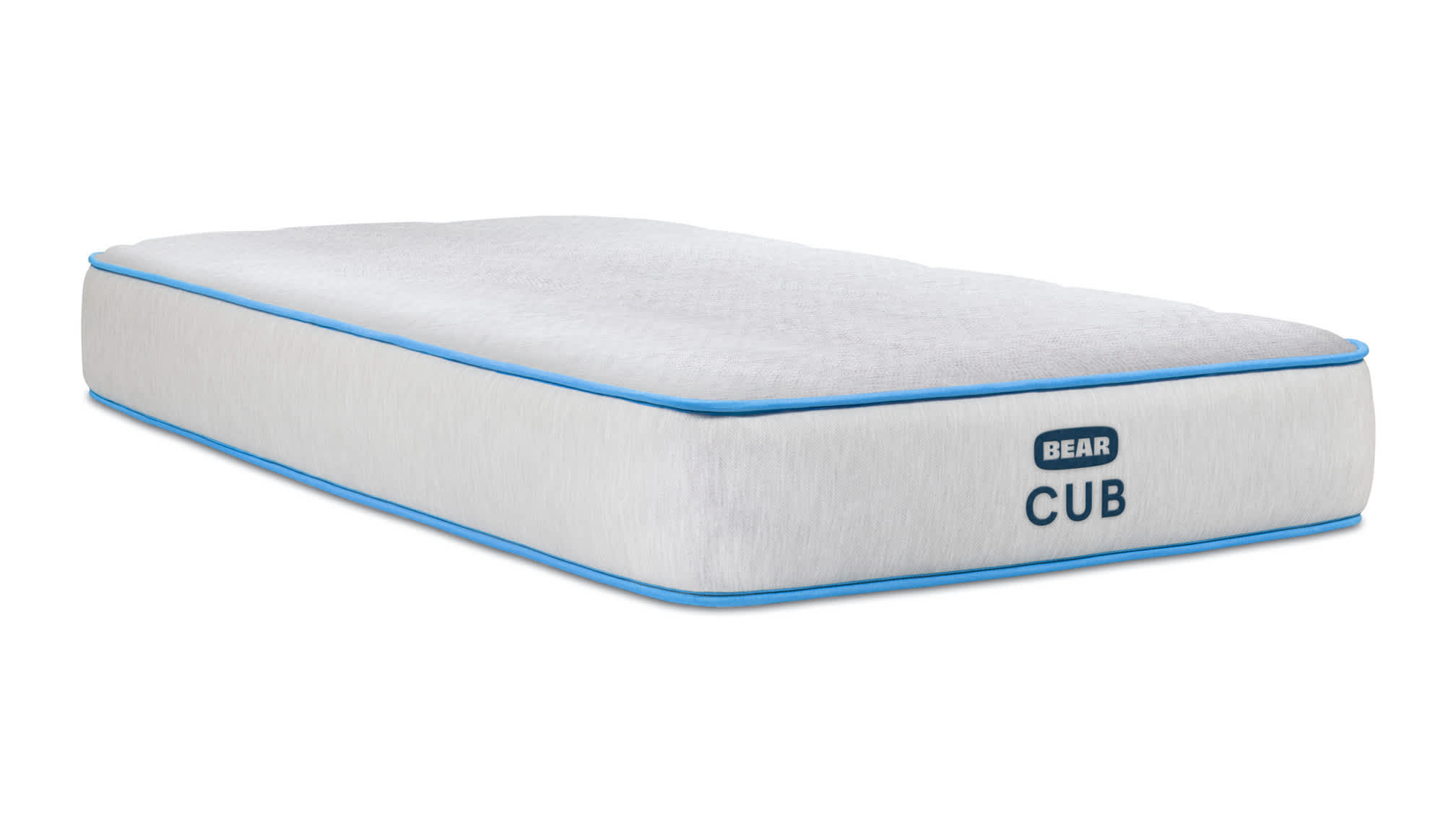
Bear Cub
A kid-friendly hybrid that’s firm and supportive.
Key Details
- Who It’s Best For: Toddlers and school-age kids who sleep hot.
- Feel: A firm (7) design with foam layers that gently conform and respond to movement with a light bounce.
- What It’s Made Of: Gel-infused memory foam and transitional polyfoam over a pocketed coil support core with perimeter reinforcement.
- What We Don’t Like: Kids who prefer a softer feel might need a mattress with more cushioning.
Scoring & Reviews
The following ratings show how suitable this mattress is for different sleeping positions and sleeper weights. These scores are determined by how well the mattress supports and relieves pressure for each sleeper type.
In addition to the hands-on feedback from our team, we conduct a number of quantitative tests in our Test Lab. The below ratings are based on the experience of our testers.
Performance
For toddlers who are transitioning out of a crib-size mattress, the Bear Cub has a lot to offer. The balanced hybrid design is just soft enough to feel cozy but offers ample support to promote spinal alignment for growing kids.
How It Performed
The Bear Cub’s Tencel cover is naturally breathable and helps offset some of the heat retention that can occur with foam layers. The coils also promote ventilation through the bed’s core, which is beneficial for kids who easily overheat during sleep. For parents who prioritize safety criteria, the mattress has GREENGUARD Gold certification to ensure it has met strict standards for chemical emissions.
Construction Breakdown
The Bear Cub Mattress is a hybrid designed for kids and teenagers, featuring three layers and a firm (7) feel to support growing bodies. Available in twin and full sizes, it stands 8.5 inches tall. The quilted Tencel cover is crafted to wick moisture and dissipate heat, keeping sleepers cool and dry.
The top comfort layer of memory foam gently cushions pressure points and conforms evenly to the body, with gel infusions to reduce heat retention. Beneath it, a denser layer of adaptive polyfoam promotes proper spinal alignment by distributing body weight evenly—critical for supporting young, developing bodies.
A 6-inch pocketed coil support core stabilizes the mattress, with reinforced edges to prevent roll-off and ensure durability. The responsive coils reduce sagging while supporting healthy spinal posture. The coils also promote better airflow than traditional polyfoam cores.
Trial, Shipping, and Warranty
The Cub Mattress is available on Bear’s website and ships to all 50 states. Shipping is free within the contiguous U.S., while deliveries to Alaska or Hawaii incur a $100 fee. The mattress is backed by a lifetime warranty.
Read More
Read Less
Best Value Mattress: Newton Kids’ Mattress
Best Value Mattress
7.9/10Test Lab Score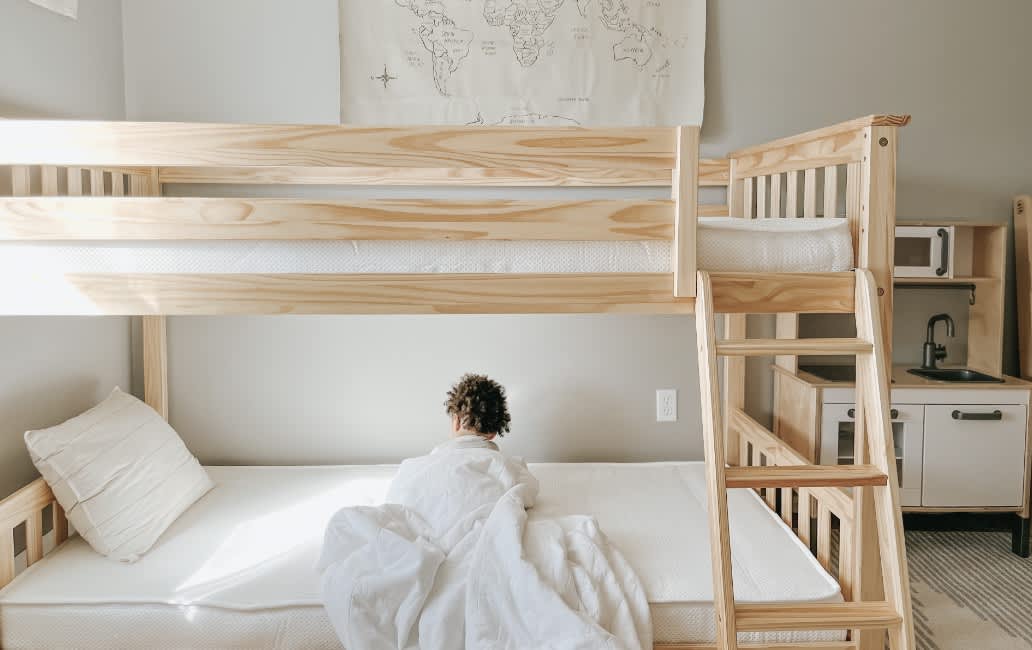
Newton Kids’ Mattress
Key Details
- Who It’s Best For: Younger kids who need a mattress that promotes healthy growth and development.
- Feel: Firm (7) and responsive with sturdy support, light cushioning and no sinkage.
- What It’s Made Of: Core foam made of food-grade polymer material that responds to movement and resists sinkage.
- What We Don’t Like: Only offered in crib sizes and too small as toddlers transition from crib to big kid bed.
Scoring & Reviews
The following ratings show how suitable this mattress is for different sleeping positions and sleeper weights. These scores are determined by how well the mattress supports and relieves pressure for each sleeper type.
In addition to the hands-on feedback from our team, we conduct a number of quantitative tests in our Test Lab. The below ratings are based on the experience of our testers.
Performance
The Newton Crib Mattress has a two-stage design that accommodates infants and toddlers. Its Wovenaire core consists of 90% air and 10% food-grade polymer, which makes it more breathable than many other toddler mattresses. The quilted 3D spacer fabric cover is removable and washable.
How It Performed
The Newton Kids’ Mattress feels exceptionally light and bouncy compared to beds with traditional foam layers. This design helps ensure your child remains on top of their mattress and doesn’t sink into the surface.
We also love how easy it is to clean this mattress. The ability to machine-wash the cover and core layers will no doubt be a major selling point for many parents.
Construction Breakdown
At the heart of the mattress is Newton’s patented Wovenaire® technology, which features a core made from 90% air and 10% food-grade polymer. This innovative design ensures firm support for growing bodies while promoting excellent airflow to keep children cool and comfortable throughout the night.
One of the mattress’s most notable features is its complete washability. Both the cover and the core can be washed, making it easy to clean up spills and reduce the buildup of dust mites and allergens. The three-piece design simplifies the washing process, offering convenience for busy parents.
The Newton Kids’ Twin Mattress is GREENGUARD Gold certified, ensuring low chemical emissions and a healthier indoor sleep environment. With a low profile of 5.5 inches, it’s an ideal choice for bunk beds, trundle beds, or any setup where a slimmer mattress is preferred.
Trial, Shipping, and Warranty
The Newton Crib Mattress includes a 100-night home trial, allowing parents to test it risk-free. It is backed by a limited lifetime warranty as well as free shipping and returns for added convenience.
Read More
Read Less
Big First Big Kid Mattress: Saatva Classic
Best First Big Kid Mattress
8.4/10Test Lab Score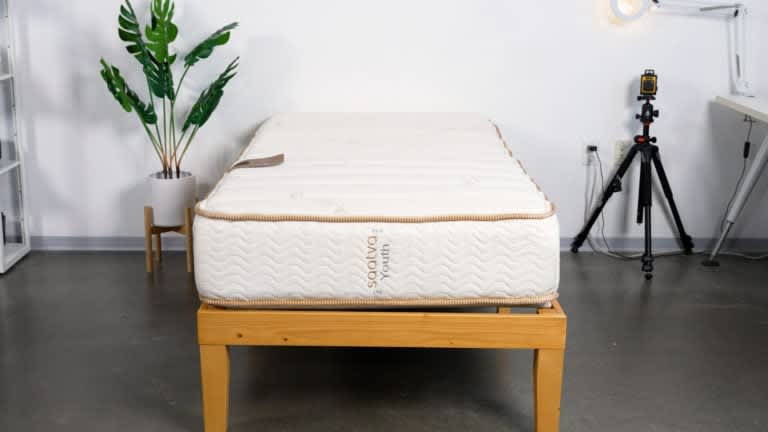
Saatva Youth
A reversible hybrid meant for growing children.
Key Details
- Who It’s Best For: Kids between the ages of 3 and 12.
- Feel: Surface for younger kids is a plush and flexible medium (5) feel, while the other surface is firm (7) and more supportive.
- What It’s Made Of: Comfort systems on each side consisting of quilted cotton, a waterproof membrane, and a dense foam layer. Zoned pocketed coils with perimeter reinforcement make up the shared support core.
- What We Don’t Like: Pricing is high compared to the competition and returns incur a $99 fee.
Scoring & Reviews
The following ratings show how suitable this mattress is for different sleeping positions and sleeper weights. These scores are determined by how well the mattress supports and relieves pressure for each sleeper type.
In addition to the hands-on feedback from our team, we conduct a number of quantitative tests in our Test Lab. The below ratings are based on the experience of our testers.
Performance
The Saatva Youth Mattress has a dual-sided construction to comfortably accommodate a growing child. One side is designed to fit a child ages 3 to 7 and consists of a five-zone support layer that is firmer in the center third of the mattress. This construction encourages proper spinal alignment, which is crucial for this younger age range.
How It Performed
The Saatva Youth is a thoughtfully designed mattress made from durable, high-quality materials. This represents a high-value investment for parents seeking a mattress that will accommodate their toddler through preteen years.
Since both sides are encased in water-resistant covers and given an antimicrobial treatment, the Youth is also a hygienic option for your child.
Construction Breakdown
The Saatva Youth Mattress features a dual-sided design to support a growing child. One side is tailored for children ages 3 to 7, with a five-zone support layer that is firmer in the center to encourage proper spinal alignment during this critical stage of development.
The reverse side is designed for children ages 8 to 12, offering high-density comfort foam that is both supportive and breathable. This foam helps regulate temperature to prevent overheating. A lumbar support zone with patented spinal zone technology promotes proper spinal alignment for older kids.
The mattress’s support core consists of a dual-sided coil unit made from flexible, supportive recycled steel coils that contour to the body and help relieve pressure points.
Both sides are encased in a soft organic cotton cover that is hypoallergenic, breathable, and water-resistant. The cover is treated with Saatva’s Guardin botanical antimicrobial treatment for added protection.
Trial, Shipping, and Warranty
In addition to a 365-night sleep trial, the Saatva Youth Mattress is backed by a lifetime warranty and comes with free White Glove delivery. Each mattress is handcrafted in the U.S.
Read More
Read Less
Best Temperature Regulating Mattress: Brooklyn Bedding BB Kids Mattress
Best Temperature Regulating Mattress
8.2/10Test Lab Score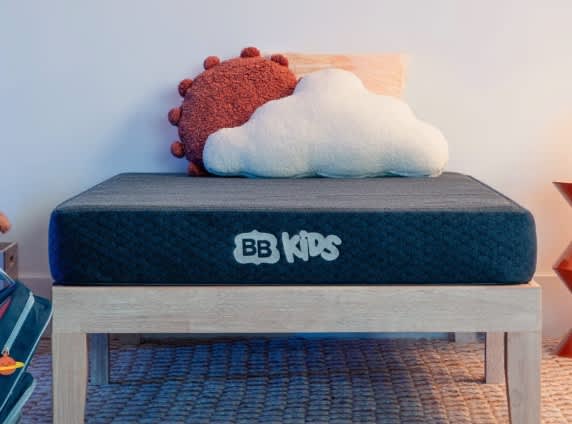
Brooklyn Bedding BB Kids Mattress
Key Details
- Who It’s Best For: Toddlers transitioning to their first big kid bed.
- Feel: Firm (7) design intended to keep your child’s entire body on an even plane.
- What It’s Made Of: A 2-inch layer of gel-infused memory foam, followed by a 4-inch layer of high-density base foam.
- What We Don’t Like: Due to its single-surface construction, the bed may not last as long as reversible mattresses meant for toddlers and children.
Scoring & Reviews
The following ratings show how suitable this mattress is for different sleeping positions and sleeper weights. These scores are determined by how well the mattress supports and relieves pressure for each sleeper type.
In addition to the hands-on feedback from our team, we conduct a number of quantitative tests in our Test Lab. The below ratings are based on the experience of our testers.
Performance
Temperature regulation is an important mattress quality, especially if you and your toddler live in a place prone to high heat and humidity levels. The BB Kids from Brooklyn Bedding features a top layer of memory foam infused with cooling gel intended to push body heat away from the mattress surface. A breathable, stain-resistant cover also helps your child sleep cool and comfortably throughout the year.
How It Performed
The BB Kids is firm (7) and supportive. This helps ensure healthy sleep posture for your toddler as they transition from a crib to their first big kid mattress. The top layer feels somewhat cushy and adaptive, but the support core is strong and most children won’t feel “trapped” in the mattress. This layer is also infused with cooling gel to help maintain a comfortable surface temperature. Another breathable component is the knit polyester cover, which is also stain-resistant to protect the mattress when accidents occur.
Construction Breakdown
The BB Kids consists of two individual layers, beginning with 2 inches of gel-infused memory foam. This material provides a light contour, molding to your child’s body without hugging too closely or sinking excessively. A 4-inch base layer of high-density polyfoam stabilizes the mattress, driving home the firm (7) feel.
At 6 inches thick, the BB Kids should be low enough to pair with your bunk bed. However, be sure to measure the height of your bunk bed’s rails – per current guidelines, the mattress should sit no fewer than 5 inches below the top of the rails.
Trial, Shipping, and Warranty
Brooklyn Bedding offers free ground shipping to customers in the contiguous U.S. The BB Kids comes with a 120-night sleep trial. If you decide to keep the mattress, it’s further covered under a lifetime warranty.
Read More
Read Less
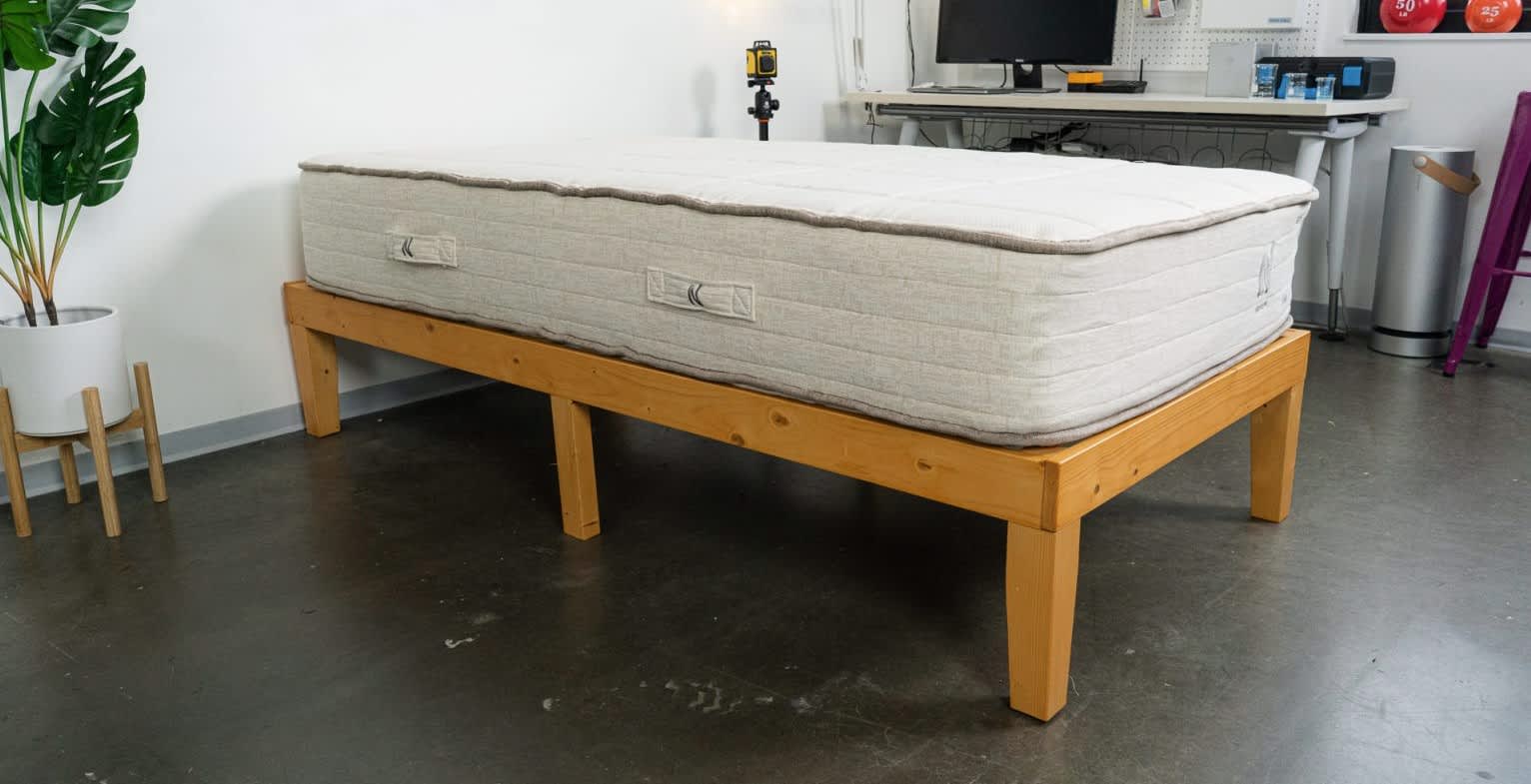
Best Mattress for Spinal Alignment: Nolah Nurture Kids
Best Mattress for Spinal Alignment
8.1/10Test Lab Score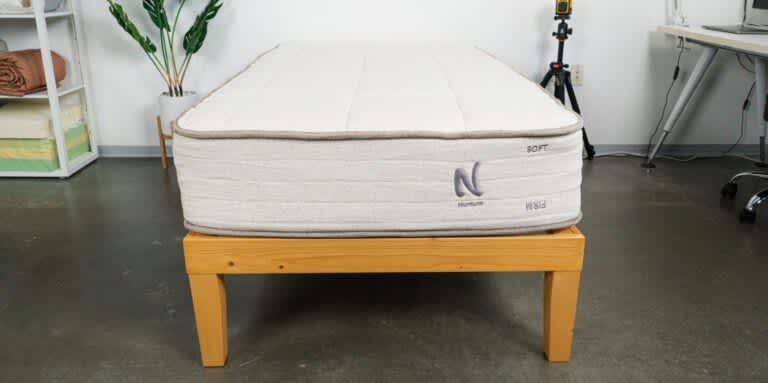
Nolah Nurture Kids
Double sided hybrid mattress that can be flipped when the kid gets older.
Key Details
- Who It’s Best For: Toddlers and young children through elementary school age.
- Feel: One side of the mattress is medium soft (4) and adaptive, the other is firm (7) and supportive.
- What It’s Made Of: Adaptive memory foam on the softer side, dense polyfoam on the firmer side, and a pocketed coil support core shared by both comfort systems.
- What We Don’t Like: At 8 inches thick, the mattress is too tall for most bunk beds.
Scoring & Reviews
The following ratings show how suitable this mattress is for different sleeping positions and sleeper weights. These scores are determined by how well the mattress supports and relieves pressure for each sleeper type.
In addition to the hands-on feedback from our team, we conduct a number of quantitative tests in our Test Lab. The below ratings are based on the experience of our testers.
Performance
Proper spinal alignment is important for growing children while they sleep, but their needs change and evolve as they age. The flippable Nolah Nurture Kids features a sleep surface on each side, one with firm support for toddlers who are transitioning from their crib and another side with ample cushioning to keep them comfortable as they grow older. This two-phase design can help ensure healthy alignment throughout their development.
How It Performed
Like many competing flippable toddler beds, the Nolah Nurture is a practical choice for parents because it provides a supportive sleep surface for your child as they grow and develop. A breathable organic cotton cover on each side also helps ensure the mattress stays cool while they sleep. Support is another strength our team noted. The shared coils are zoned, meaning they feel stronger around the midsection – this is key to keeping the child’s entire body on the same, even plane and promoting healthy spinal alignment.
Construction Breakdown
Both sides of the Nolah Nurture Kids feel distinct from one another, so the mattress succeeds at creating two unique sleep surfaces for your toddler to use. The polyfoam side is firm (7) and doesn’t conform very closely, so your child’s midsection won’t sink into the mattress too much. Zoned coils also provide the pushback needed to maintain proper alignment. As they get older, your child might prefer the medium soft (4) side, which feels much plusher. This surface is cushioned with 2 inches of memory foam. Both sides are encased in organic cotton covers.
At 8 inches, the mattress may be too thick for a bunk bed. However, your frame may be compatible if the side rails stand 13 inches or taller.
Trial, Shipping, and Warranty
Nolah ships free of charge to shoppers in the contiguous U.S. The Nurture Kids comes with a sleep trial that spans 120 nights in length. Should you decide to keep the mattress after the return period ends, it’s also covered under a lifetime manufacturer’s warranty.
Read More
Read Less
Easiest Mattress to Move: Leesa Kids Mattress
Easiest Mattress to Move
7.5/10Test Lab Score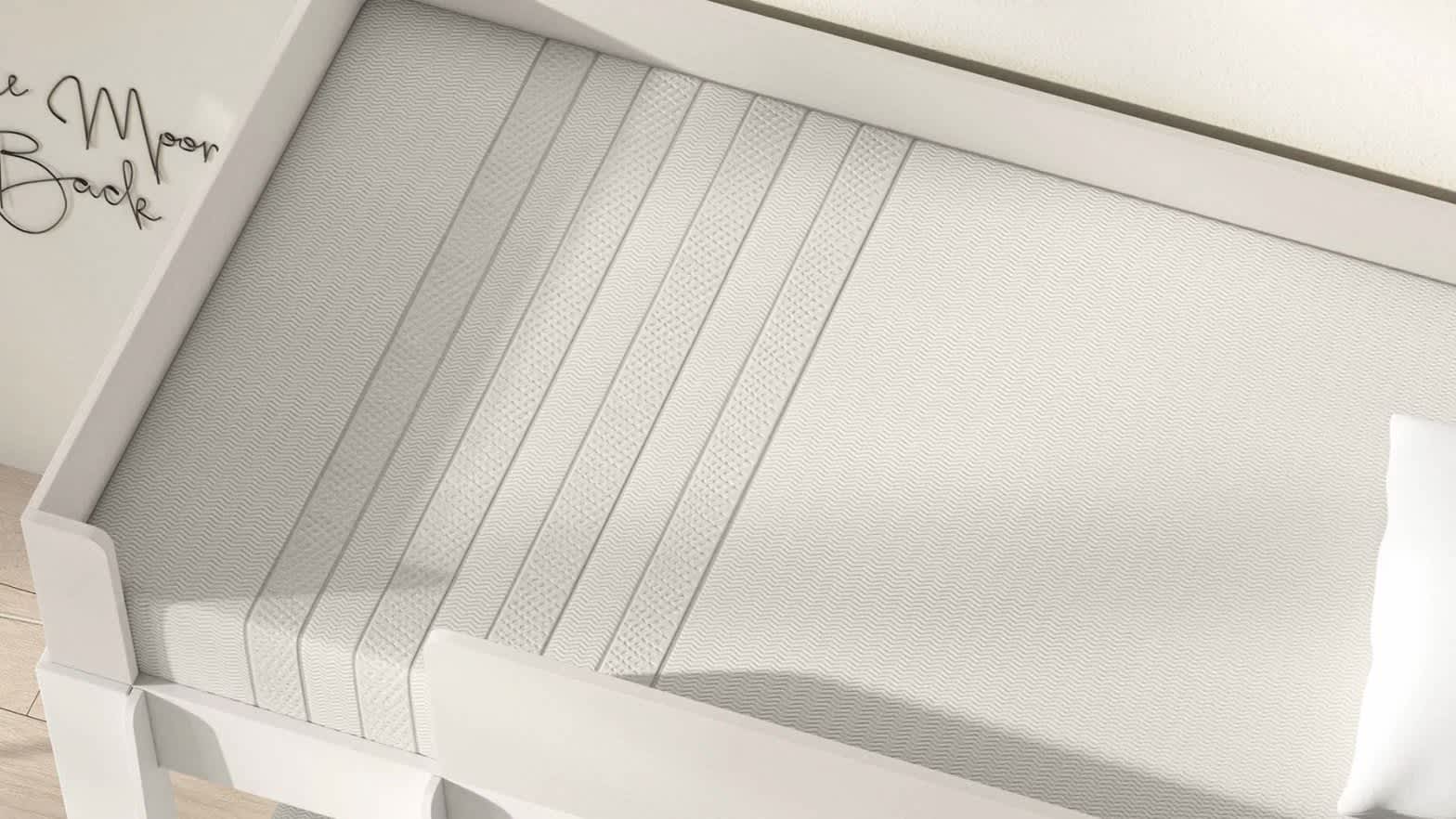
Leesa Kids Mattress
Key Details
- Who It’s Best For: Kids 4 and older.
- Feel: Medium firm (6) with a light contour from the top layer and great overall stability.
- What It’s Made Of: A top layer of memory foam, followed by dense transitional polyfoam and high-density base foam.
- What We Don’t Like: Since the mattress does not include any waterproof elements, nighttime accidents can cause permanent damage if you don’t use a protector.
Scoring & Reviews
The following ratings show how suitable this mattress is for different sleeping positions and sleeper weights. These scores are determined by how well the mattress supports and relieves pressure for each sleeper type.
In addition to the hands-on feedback from our team, we conduct a number of quantitative tests in our Test Lab. The below ratings are based on the experience of our testers.
Performance
The all-foam Leesa Kids Mattress is a good choice for toddlers and young children in large part because of its size. Twin models weigh 29 pounds and full models weigh 39 pounds, so both of them are fairly lightweight compared to most innerspring and hybrid models on the market.
How It Performed
The Leesa Kids is medium firm (6) with a surface that gently molds to your child’s body for a soothing, cradling effect. Underlying transitional and base layers are dense and firm enough to prevent them from sinking too deeply into the mattress, which helps ensure even alignment and proper sleep posture.
The cover is composed of breathable knit fabric, and all three of the foam layers share an open-cell composition that helps promote airflow, so the mattress shouldn’t overheat. A low profile and lightweight design also make the mattress compatible with a wide range of bed frames, including bunk beds with rails that stand at least 12.5 inches tall.
Construction Breakdown
The Leesa Kids begins with 1 inch of adaptive memory foam, followed by a second comfort layer of denser transitional polyfoam. These materials are adaptive and breathable, allowing your child to enjoy a light contour without feeling stuck or trapped in their bed. A 5-inch high-density foam base stabilizes the mattress and prevents deep sinkage. The cover is made of knit polyester.
Trial, Shipping, and Warranty
Leesa provides complimentary ground shipping to customers in all 50 states and select locations in Canada. Your order includes a sleep trial that runs for 120 nights. After the return period ends, the Leesa Kids is backed by a lifetime warranty against various manufacturing defects.
Read More
Read Less
Best Organic Mattress: Birch Kids Natural Mattress
Best Organic Mattress
8.1/10Test Lab Score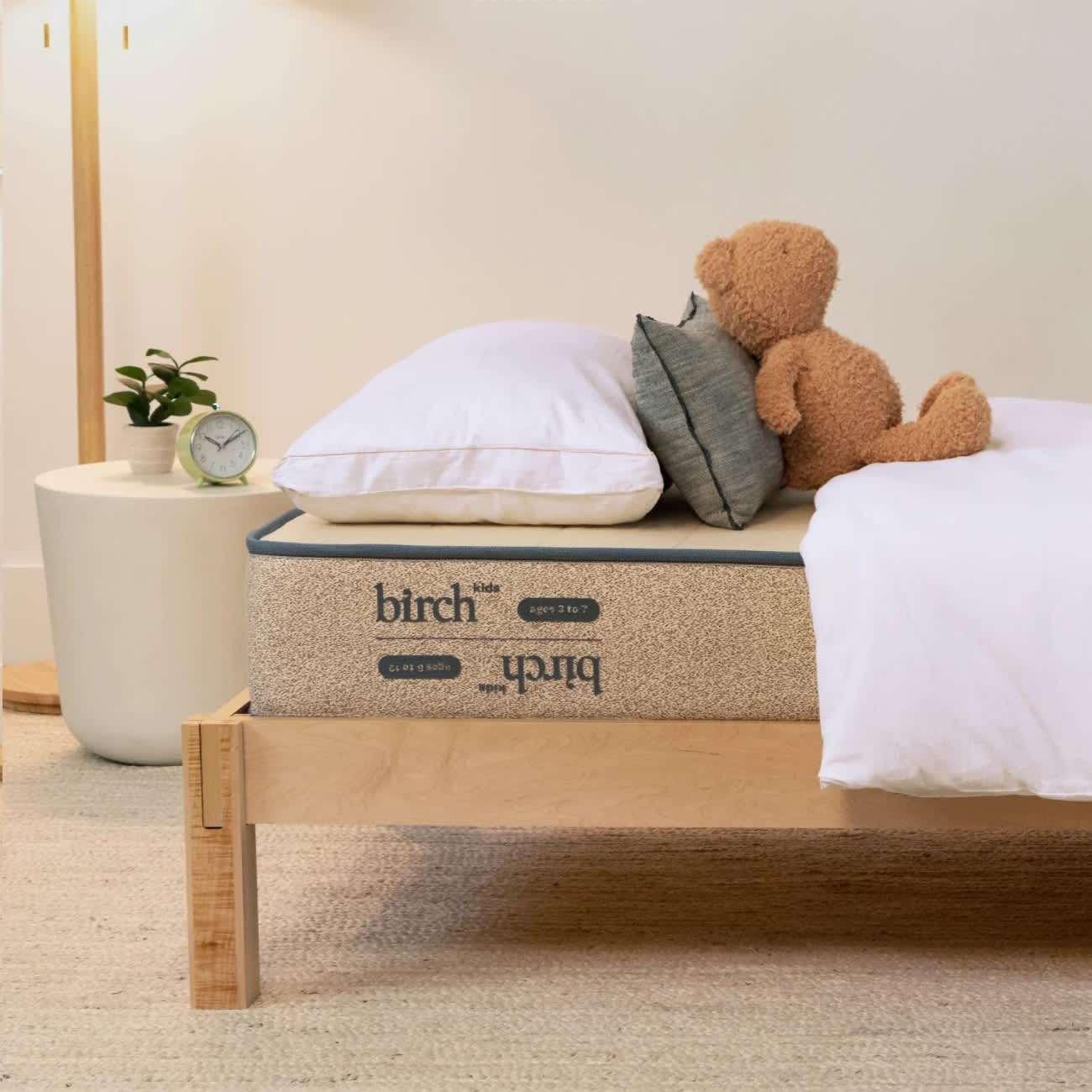
Birch Kids Natural Mattress
Key Details
- Who It’s Best For: Children 2 and older
- Feel: One side is firm (7) with minimal contouring, while the other is medium firm (6) for a bit more cushioning without sacrificing support.
- What It’s Made Of: Each sleep surface features multiple layers of organic wool batting, and the softer side also contains a layer of organic Talalay latex. A shared support core of pocketed coils is sandwiched between the comfort systems.
- What We Don’t Like: The sticker price is fairly high, and this might be a dealbreaker to parents who are shopping on a budget.
Scoring & Reviews
The following ratings show how suitable this mattress is for different sleeping positions and sleeper weights. These scores are determined by how well the mattress supports and relieves pressure for each sleeper type.
In addition to the hands-on feedback from our team, we conduct a number of quantitative tests in our Test Lab. The below ratings are based on the experience of our testers.
Performance
If buying eco-friendly products is a priority in your household, the Birch Kids Natural Mattress is a solid option for your toddler when they leave their crib. This reversible latex hybrid has a different feel on each side, and is intended to promote healthy sleep posture between the ages of 2 and 7, then provide a bit more cushioning as they grow older. Latex is naturally durable and resistant to indentations, so it’s possible your child could use the mattress until they reach junior high or high school.
How It Performed
The Birch Kids Natural is very sophisticated compared to most of the other toddler mattresses we’ve tested. While this level of quality and craftsmanship drives up the sticker price, it also helps ensure excellent durability and strong performance. Temperature control is one of the bed’s defining strengths. The wool batting is naturally breathable and moisture-wicking, while the ventilated latex and open coil system promote airflow throughout the mattress to maintain a comfortable interior temperature.
Since latex doesn’t mold to the body like foam, this mattress is also easy to move on and won’t make your child feel trapped or stuck when they get in and out of bed. Latex is also effective at soothing sore spots and alleviating pressure, which can come in handy when your child is going through growing pains.
Construction Breakdown
The Birch Kids Natural’s firm (7) side contains two layers of organic wool batting, which helps keep the surface cool and doubles as a natural fire barrier. The other side also contains two wool layers, followed by a layer of organic Talalay latex to create a slightly softer medium firm (6) feel. Pocketed coils located between these comfort systems serve as a support core for both sides. A cover made of breathable organic cotton encases the mattress.
Since the Birch Kids Natural measures 8 inches thick, it will be too tall for bunk beds if their side rails stand lower than 13 inches tall. We recommend measuring the dimensions of your bunk bed before deciding on this mattress.
Trial, Shipping, and Warranty
Birch offers free shipping throughout the contiguous U.S. The Kids Natural comes with a 120-night sleep trial, during which your child can sleep on the mattress in their own bedroom and decide whether they like it. Once the return period ends, your purchase is covered under a lifetime warranty.
Read More
Read Less
Best Dual-Firmness Mattress: Avocado Organic Crib Mattress
Best Dual-Firmness Mattress
9.7/10Test Lab Score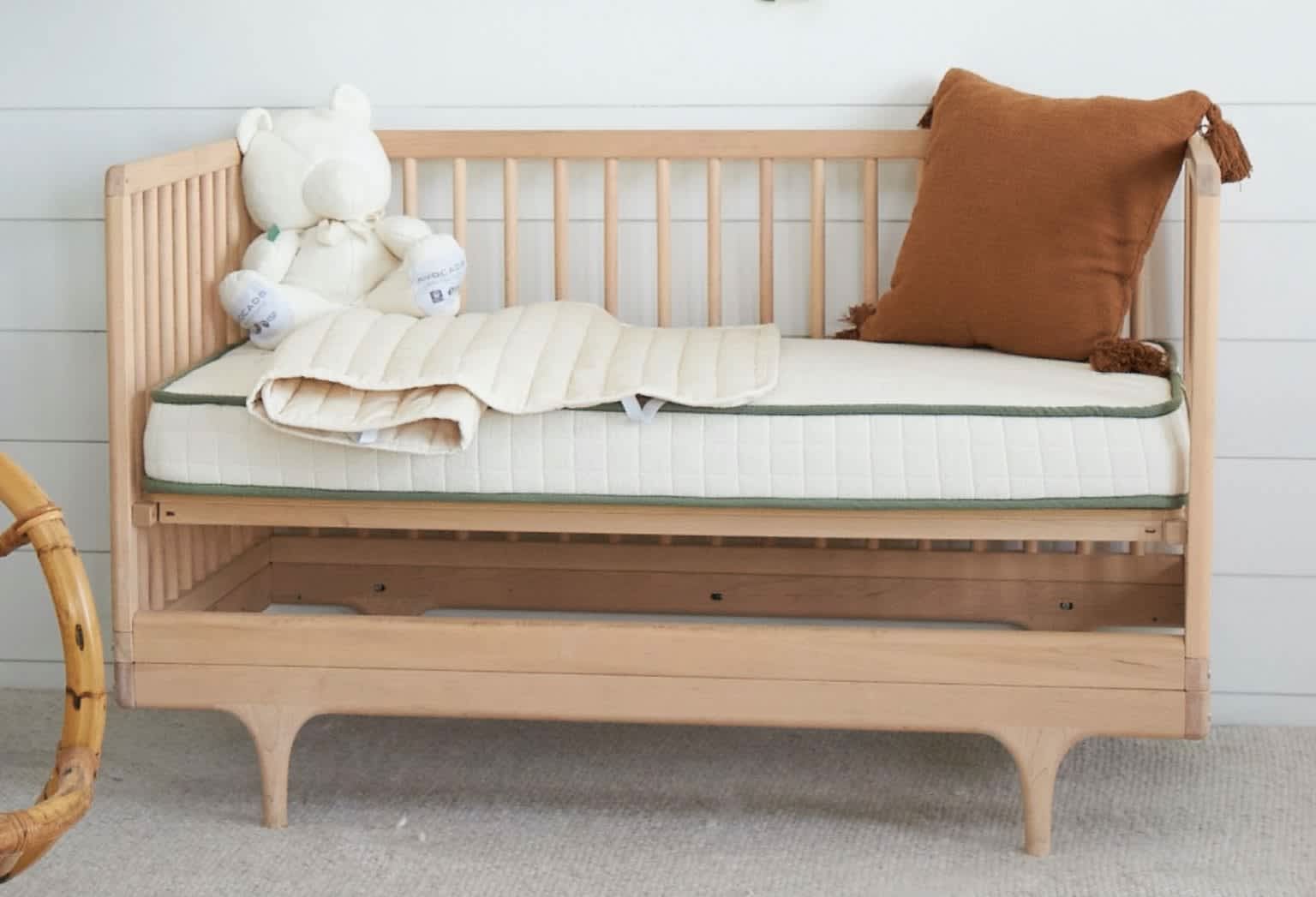
Avocado Organic Crib Mattress
Key Details
- Who It’s Best For: Infants and toddlers through age 4.
- Feel: A firm (7) side for infants to ensure safe sleeping and a medium firm (6) surface for toddlers that’s a bit more flexible without sacrificing support.
- What It’s Made Of: Breathable coconut husk batting over Dunlop latex on both sides. Pocketed coils with a reinforced perimeter make up the shared support core.
- What We Don’t Like: High price-point is a barrier for most budget shoppers.
Scoring & Reviews
The following ratings show how suitable this mattress is for different sleeping positions and sleeper weights. These scores are determined by how well the mattress supports and relieves pressure for each sleeper type.
In addition to the hands-on feedback from our team, we conduct a number of quantitative tests in our Test Lab. The below ratings are based on the experience of our testers.
Performance
The Avocado Organic Crib Mattress is a flippable model designed to sleep both infants and toddlers. The mattress is made using sustainable practices and organic materials, resulting in a versatile, high-performing crib mattress.
How It Performed
Avocado is known for high-quality sleep products made from sustainably sourced materials, so the Organic Crib Mattress fits nicely in the brand’s lineup. Durable construction ensures the mattress should perform well until your child is ready to leave their crib.
Temperature control is a defining strength of the mattress. The ventilated latex and coils both promote plenty of interior airflow, and the breathable cover helps the surface stay cool.
Construction Breakdown
The Avocado Organic Crib Mattress is a flippable model designed to sleep both infants and toddlers. The mattress is made using sustainable practices and organic materials, resulting in a versatile, high-performing crib mattress.
The infant side is meant for babies under 1 year old and has a firmer feel to support small growing bodies. The sturdy base features 3 inches of coconut husk fiber combined with organic Dunlop latex, which is more breathable and durable than memory foam and other types of latex.
The reverse side of the bed is meant for toddlers, with a medium-firm surface tailored for children ages 1 to 4 years old. The surface features 1 inch of organic Dunlop latex and a wool support layer. The feel is plusher than the other side but still promotes good posture in developing bodies.
Both mattress sides have quilted covers made from soft and breathable organic cotton.
Trial, Shipping, and Warranty
The mattress comes with a 25-year limited warranty and a 30-night sleep trial. Avocado ships the mattress free of charge to the contiguous U.S.
Read More
Read Less
How to Choose a Toddler Mattress
Toddler energy during the day necessitates lots of sleep — 11 to 14 hours a day to be exact — so it’s important that their mattress is both safe and comfortable. And toddlers aren’t just tiny adults. Their growing bodies require extra support, they may be more sensitive to certain chemicals found in mattresses, and they’re more prone to accidents at night. We’ll highlight these and other considerations to keep in mind when choosing your toddler’s mattress.
Firmness Level
Firmness level is one of the most important factors to consider when looking for a toddler mattress. That’s because toddlers are always growing and need top-notch support to keep their spines aligned. Most toddler mattresses are medium firm or firm or a 6 to 7 on the firmness scale. Toddlers tend to move around while they sleep, so a firmer option allows them to move across the surface without much trouble.
A firmer mattress is also safer than a very plush one. While toddlers are more mobile than infants and don’t have the same risks of suffocation with soft surfaces, it’s still safer to keep their mattresses on the firmer side.
Dual-Sided
It’s common to find toddler mattresses that are dual-sided, meaning each side of the mattress has a different firmness level. You’re likely to see either crib mattresses that have a firm side for infants and a medium-firm side for toddlers or a twin mattress with a firmer side for small children and a softer side for older kids.
Considering that a high-quality mattress can last several years, it may be worth it to invest in a dual-sided mattress that will grow with your child. It’s worth noting, however, that a crib mattress is only about 52 inches long, while a twin measures 75 inches in length, so a twin will fit your child for longer.
“I believe that having a dual-sided mattress is a wise investment,” says Dr. Nilong Vyas, Pediatrician MD. “It provides exactly what your child needs at each stage of their development. Once they outgrow their toddler bed, they may be ready to transition to a full-sized bed that can accommodate them through adolescence.”
Size
You have a few options when moving your toddler to a big kid bed. A standard toddler bed is smaller in size and accommodates a mattress with the same dimensions as a crib mattress: 28 inches by 52 inches. In fact, many cribs convert to toddler beds by removing one rail and replacing it with a lower, smaller rail. Toddler beds won’t fit your child for as long as a twin bed, but many parents find the transition to be easier on little ones.
You can also go with a twin bed frame that will fit a twin mattress measuring 38 inches by 75 inches. If your toddler is relatively young when transitioning out of their crib, a twin bed may feel large, but it will also fit your child for more years. You can always choose a bed frame that’s low to the ground to help with concerns about rolling out of bed. Regardless of bed type, your mattress needs to fit snugly to ensure safety.
Quality Materials
Safety and comfort are a top priority for your toddler, so it’s important that your toddler’s new mattress consists of non-toxic, quality materials. If you opt for a foam mattress, look for one that is high-quality and dense enough to provide sufficient support. Similarly, innerspring mattresses should be firm and supportive. Higher quality materials can also increase breathability to help regulate temperature and keep your toddler comfortable.
Waterproofing & Care
Toddlers are prone to bedwetting and accidents, so it helps to have a waterproof cover that’s easy to remove and wash. This will protect the mattress from the buildup of unwanted bacteria, dust, mold, and other contaminants. Some designs are washable from cover to core, though this is less common.
Temperature Regulation
Some mattresses are heat-wicking, while others are more likely to retain heat. If your child tends to sleep hot, look for a highly breathable mattress, as this will help to regulate temperature and increase comfort. Innerspring and hybrid mattresses tend to be better at dissipating heat due to their coil layer, but some foam models are engineered to regulate temperature.
Price
Price can vary substantially when it comes to toddler mattresses. Dual-sided or flippable mattresses typically command a higher price-point since they are meant to last longer and grow alongside your child. Other features like organic covers, waterproofing, and washability may also increase the price.
What Type of Mattress Is Best for Toddlers
Foam
Foam mattresses for toddlers typically contain polyfoam and not memory foam, as the conforming tendency of the latter is not considered to be as safe for young children. Plus, polyfoam generally provides more durable support. For a toddler, a foam mattress should be firm with an even surface. To prevent the likelihood of off-gassing, shoppers may want to look for models that have been aired out in advance and do not contain any toxic chemicals.
Hybrid
Hybrid models combine coil support systems with comfort layers made from foam or latex. This type of mattress often maximizes the strengths of multiple mattress types while minimizing potential drawbacks. Hybrid models are typically designed to cradle the body and relieve pressure points while providing strong support. They also tend to provide better edge support when compared to all-foam models, which can be helpful if your toddler rolls toward the edge of the bed at night.
Innerspring
Innersprings are a more traditional mattress type, with a support core of coils and a thinner comfort system. This construction enables better airflow, which makes the mattress more breathable and temperature-regulating. They may be less durable and supportive when compared to other models, but they also tend to be more economical.
Latex
Latex mattresses contain single or multiple layers of either natural or synthetic latex. Depending on whether it is processed using the Talalay or Dunlop method, a latex mattress may have a lighter or denser feel. Latex is typically durable but more expensive, which may not be ideal for a mattress that a young child will ultimately outgrow.
Last Things to Consider With a Toddler Mattress
Now that we’ve discussed the basics of toddler mattresses, we’ll cover some of the most critical factors to consider when making this important purchase.
Toddler Bed Safety
Regardless of mattress type, it’s crucial that a mattress fit snugly within a crib or toddler bed in order to prevent suffocation or entrapment. The two-finger test is one way to assess how well the mattress fits. If there’s space to fit more than two fingers between the mattress and the crib or bed frame, then the mattress is too small.
Dr. Vyas notes that railing safety is also important. “When transitioning a toddler out of the crib and into a toddler bed (either a converted crib bed or free-standing bed), it is essential to have a railing,” she writes. “Many kids feel insecure going from a crib to a very open bed, and having a railing ensures that they don’t fall out and that they still feel safe. Ensuring your toddler’s safety when making the transition will help them feel more secure to continue to sleep independently, even in a bed where they have the freedom to escape.”
Although it varies from child to child, toddlers typically transition from a crib to a toddler bed between the ages of 18 months to 3 years. Your toddler may be ready for a toddler bed if they are able to climb out of the crib or once they are nighttime potty trained. Consulting with your physician can help you determine the best age to make the switch to a toddler bed.
Material Safety & Certifications
Toddlers are more sensitive to airborne chemicals known as volatile organic compounds (VOCs), which are a byproduct of certain manufacturing processes. A mattress that is GREENGUARD Gold and CertiPUR-US certified indicates that it adheres to rigorous, third-party chemical emissions standards and does not contain phthalates, formaldehyde, or heavy metals like mercury and lead.
Look for mattresses that use non-chemical flame retardants, such as silica or plant-based thistle, as these are non-toxic alternatives. If opting for a foam or latex model, check to see if the mattress has been aired out in advance so that off-gassing odors are minimal by the time it reaches your home. “If the mattress has not been aired out in advance,” says Dr. Vyas, “it is best to do that in another room for several days up to a week before installing it in the toddler’s room.”
Care & Cleaning
Bedwetting, spills, and other accidents are inevitable in the toddler years, so a mattress that simplifies the care and cleaning process may be beneficial. Look for a removable cover that can be washed by machine or hand, which will help keep your toddler’s sleep space hygienic. In some circumstances, the mattress core may be washable. “When in the midst of potty training,” says Dr. Vyas, “it may be beneficial to also use a disposable chuck pad under the fitted sheet and over the mattress cover to avoid significant seepage.”
A useful add-on to consider for additional peace of mind is a removable mattress protector, as this will help shield the mattress from spills, stains, mold, allergens, and odors. Mattress protectors can be removed and washed regularly.
How We Test: Your Comfort Is Our Science
Our industry-leading product testing team cares deeply about improving your sleep. Having a holistic understanding of a mattress’s role as part of a sleep system is paramount to our testing process. Since a bed’s comfort and feel depend largely on body weight and sleeping position, our testing team represents a wide range of body types, sleep positions, and comfort preferences.
In our Seattle-based Test Lab, we use an objective, hands-on process to evaluate mattresses across performance categories. The following are the key guidelines that inform our performance ratings. Our ultimate goal is to ensure you have all the information you need to make the best purchase decision for you.
Construction analysis:We begin testing each mattress by analyzing its design and making note firmness, height, individual layer composition, and sticker price. This allows us to evaluate qualities like support, durability, and value.
Product testing:Firsthand testing is crucial to our evaluation and ratings system. We use a wide range of tools and technology to test mattresses in six performance categories: motion isolation, pressure relief, temperature control, ease of movement, edge support, and odor potential.
Field testing: In addition to lab-based tests, we base our ratings on feedback from field testers who use the mattresses in their own homes. They spend several weeks collecting data — this gives us insights into how the mattress performs night after night for an extended period.
User testing:We curate feedback verified owners have provided in surveys, sleep stories, and product reviews. This helps us evaluate our initial findings and, if needed, tweak our ratings to reflect real-world experiences.
How We Determine Our Overall Scores

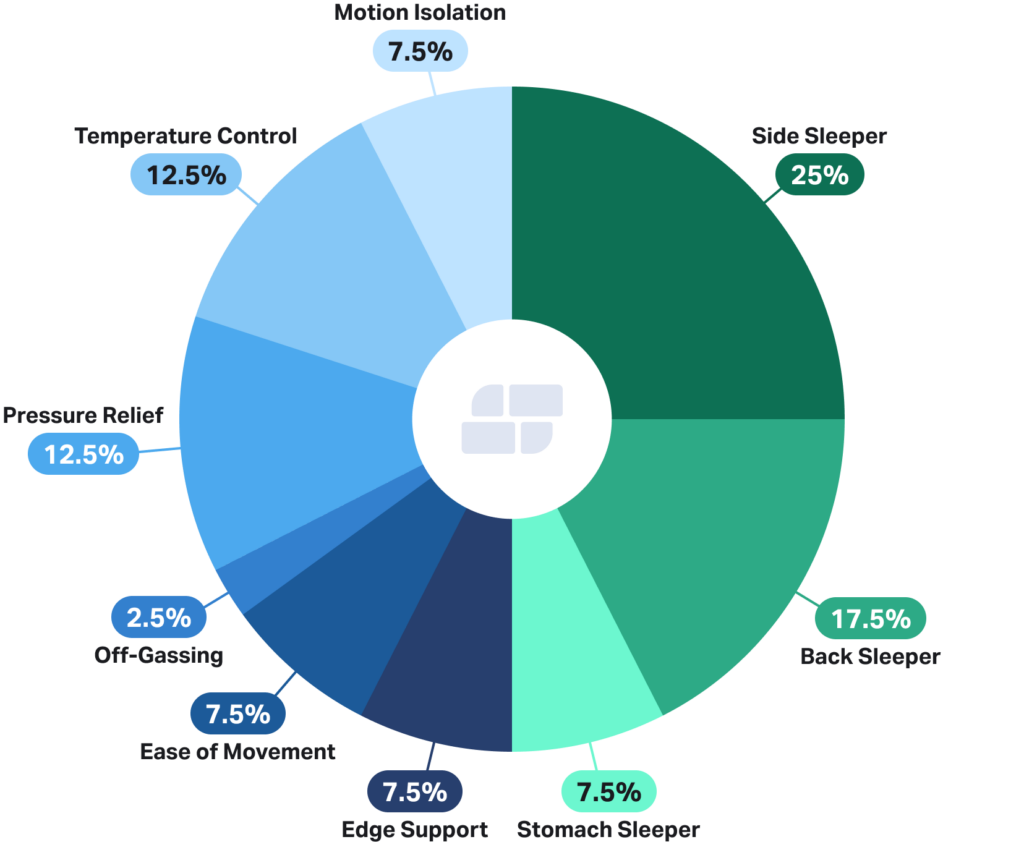
To determine a mattress’s overall score, we assign weighted percentages to performance categories based on how important they are to the individual sleep experience. For instance, areas like pressure relief and temperature control tend to matter more to people than something like off-gassing, and because more people sleep on their side and back than on their stomach, we weigh those positions more heavily.
Performance Categories
Motion Isolation
This criteria alludes to the amount of motion a mattress absorbs when a sleeper moves on the surface. We use two testers lying side by side to evaluate motion isolation, who each feel for transfer while the other person moves on the mattress.
Temperature Control
To determine how well a mattress regulates temperature, we perform temperature tests and look closely at its materials and construction. Many mattresses are designed with cooling components meant to reduce heat retention.
Pressure Relief
A bed with strong pressure relief excels at preventing pressure from building up in areas like the shoulders and hips. Beds with even contouring and weight distribution are top performers when it comes to pressure relief.
Off-Gassing
A mattress in a box may release unpleasant chemical odors for a short period after you’ve unboxed it. The initial smell may be strong but typically fades within 2 or 3 days. As Dr. Vyas notes, it can take up to one week before off-gassing odors completely dissipate.
Ease of Movement
This criteria reflects how easily a sleeper can move across a bed’s surface. Responsive surfaces made of latex typically perform better than foam surfaces, which can inhibit movement.
Edge Support
We perform sit tests along a bed’s perimeter to measure how well the edges push back against weight. Mattresses with strong edge support have minimal sagging when sleepers sit on or lie close to the perimeter.
Dive Deeper – Mattress Guides by Sleeper Type
If you’re still not sure which type of mattress would be best for your little one, you can review our collection of mattress guides to narrow down your search.
Best Mattress by Sleeper Type
- Best Mattress for Athletes
- Best Mattress for Couples
- Best Mattress for Kids
- Best Mattress for Stomach Sleepers
- Best Mattress for Seniors
- Best Mattress for Teenagers
- Best Cooling Mattress for Hot Sleepers
- Best Tempur-Pedic Mattress for Side Sleepers
- Best Tempur-Pedic Mattress for Back Sleepers
- Best Tempur-Pedic Mattress for Stomach Sleepers
Frequently Asked Questions
When can a toddler transition to a toddler mattress?
While it depends on your particular child, and recommendations from your pediatrician, most kids transition out of their crib between 18 months and 3 years. If your toddler is climbing out of their crib, it’s a good idea to move them to a toddler bed for safety. “Don’t move your child out of the crib because a new sibling is arriving,” says Dr. Vyas. “It is best to get a second crib than transition a child too soon.”
You’ll be in for at least a few nights of teaching them to stay in their beds, but many toddlers appreciate the newfound independence. That said, make sure your toddler’s room is safe for them to be alone in if they do get out, and you may want to install a safety gate across their doorway in case of middle-of-the-night wanderings. “This stage is essential in establishing rules and guidelines and, most of all, expectations around the new bed,” says Dr. Vyas. “It may be useful to use the help of a sleep coach on how to make the transition from a crib to a toddler bed smooth so that the toddler can maintain good sleep habits and ensure they continue to sleep through the night.”
Does a toddler bed use the same mattress as a crib?
A standard toddler bed can use the same mattress as a crib because it has the same dimensions as a crib: 28 inches by 52 inches. Crib mattresses are firm, so you can either search for one that’s dual-sided with a medium-firm side designed for toddlers or choose a medium-firm twin mattress and twin bed frame.
What type of mattress is best for a toddler?
Hybrid mattresses offer a great mix of support and comfortable cushioning, and most come in medium-firm models. Hybrids also tend to support kids well over time as their bodies grow. Foam can also be a good fit if it’s firm enough, and foam mattresses are also lighter weight than hybrids. Latex can provide excellent support but tends to be pricey.

Still have questions? Ask our community!
Join our Sleep Care Community — a trusted hub of product specialists, sleep health professionals, and people just like you. Whether you’re searching for the perfect mattress or need expert sleep advice, we’ve got you covered. Get personalized guidance from the experts who know sleep best.
Jackson leads editorial product recommendations at Sleep Foundation, transforming the data from our sleep product test lab into real world takeaways for consumers. He has spent over half a decade developing protocol to evaluate and measure the impacts of products on sleep quality. As a cited sleep product expert, Jackson helps guide millions of shoppers to find personalized recommendations for everything from pillows to bedding to mattresses.
Dr. Vyas is a pediatrician and founder of Sleepless in NOLA. She specializes in helping parents establish healthy sleep habits for children.
Learn more about our medical advisory board