When you buy through our links, we may earn a commission. Products or services may be offered by an affiliated entity. Learn more.

Perimenopause and Sleep Issues


- Hormonal changes during perimenopause can disrupt sleep, leading to more nighttime awakenings and time spent awake in bed.
- Hot flashes and night sweats are common causes of disrupted sleep, while anxiety and other mood changes can make sleep problems worse.
- Insomnia is common during perimenopause, and the risk of sleep disorders such as obstructive sleep apnea and restless legs syndrome may also increase.
- Treatments such as menopausal hormone therapy, certain non-hormonal medications, cognitive behavioral therapy, and lifestyle changes may help improve sleep, depending on the cause.
Navigating perimenopause comes with a variety of changes, and for many women, sleep disruptions are one of the most frustrating symptoms. Perimenopause, also called the menopausal transition, describes the period of time before, during, after menopause, which occurs when a person doesn’t menstruate for 12 months. One of the most common (and frustrating) symptoms during this time is changes to sleep.
Symptoms of Perimenopause
Perimenopause can cause many different symptoms, all of which stem from fluctuating hormones. While not everyone experiences all of these, some symptoms associated with perimenopause include:
- Hot flashes and night sweats, which can continue into menopause
- Irregular menstrual periods, including changes in flow level
- Depression, anxiety, and mood swings
- Sleep disruptions, as well as problems getting to sleep and prolonged nighttime awakenings
- Memory issues and “brain fog”
- Vaginal dryness
- Sexual dysfunction
- Joint pain
- Breast pain or tenderness
- Menstruation-related migraine headaches
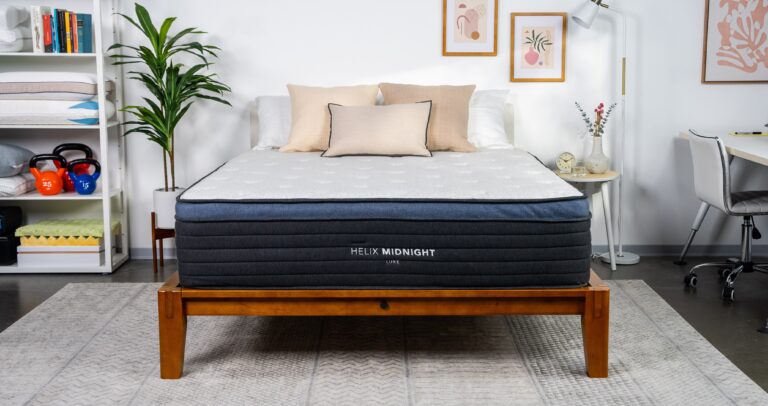
Looking to improve your sleep? Try upgrading your mattress.
Sleep Changes in Perimenopause
People in perimenopause wake up more frequently during the night and spend more time awake in bed than those of a similar age but not in perimenopause. One of the most common (and well-known) reasons is night sweats, which are hot flashes that wake someone up from sleep. People who have night sweats tend to have more sleep problems than those in perimenopause who do not.
Sleep changes during perimenopause occur because of fluctuating hormone levels. Specifically, lower levels of estradiol, a type of estrogen, and higher levels of follicle-stimulating hormone (FSH) have been connected to disrupted sleep during perimenopause, whether or not a person has night sweats.
Sleep Disorders and Perimenopause
“Perimenopausal people are at increased risk for developing disruptive sleep conditions,” says Dr. Wells. And insomnia is one of the most common sleep disorders during perimenopause. This can involve trouble falling asleep or trouble staying asleep and often results in daytime tiredness, difficulty focusing, a change in mood, or worries about sleep.
Obstructive sleep apnea (OSA) and restless legs syndrome (RLS) are two other sleep disorders common during perimenopause. One study of women between 44 and 56 years old who reported trouble sleeping found that 53% had RLS, OSA, or both disorders.
Obstructive sleep apnea is a sleep disorder that involves lapses in breathing during sleep caused by muscles in the airway closing together. When OSA goes untreated, it affects memory, mood stability, and concentration and increases a person’s risk of accidents, such as getting into a car crash. OSA also increases the risk of developing type 2 diabetes, nonalcoholic fatty liver disease, and heart problems like heart disease, stroke, and heart failure.

Improving Sleep in Perimenopause
Despite the prevalence of poor sleep during perimenopause, there are several ways to improve sleep during this time, including menopausal hormone therapy, addressing an underlying sleep disorder, non-hormonal medications, and behavioral and lifestyle modifications that support healthy sleep.
Menopausal Hormone Therapy (MHT)
Menopausal hormone therapy (MHT), also called hormone therapy or hormone replacement therapy (HRT), involves taking hormones to reduce symptoms during the menopausal transition. Most commonly, the hormones prescribed are an estrogen, a progestogen, or a combination of both.
MHT can help with sleep troubles, hot flashes, mood, and joint pain. While MHT may work well for general sleep disruptions or sleep disruptions resulting from night sweats, depression, or anxiety, MHT isn’t a viable treatment option for those who have trouble sleeping due to restless legs syndrome or obstructive sleep apnea. These disorders require separate treatment.
Other Medications
Apart from menopausal hormone therapy, there are other non-hormonal medications available that may help with hot flashes and night sweats. These include selective serotonin reuptake inhibitors (SSRIs), serotonin-norepinephrine reuptake inhibitors (SNRIs), gabapentin, neurokinin receptor antagonists, and oxybutynin, among others.
Non-Medication Treatments
Certain non-medication treatments may help with perimenopause symptoms, including sleep disturbances and night sweats.
- Cognitive-behavioral therapy (CBT)
- Hypnosis
- Regular exercise
- Yoga
- Relaxation exercises
Randomized, controlled research studies show that cognitive-behavioral therapy and hypnosis can help with perimenopause symptoms. Though more research is needed to clarify how well regular exercise, yoga, and relaxation exercises might work for perimenopause specifically, experts acknowledge that they provide health benefits overall and are unlikely to cause harm.
When to See a Doctor
If you experience new symptoms interfering with your sleep or daily life, talk to your doctor about them. It’s important to see a doctor rather than assume perimenopause is occurring when new symptoms appear.
Sometimes, people experience similar symptoms as the result of a thyroid disorder, pregnancy, medication side effects, or an underlying illness. Even if your symptoms stem from perimenopause, you could also have developed a sleep disorder that requires treatment at the same time. Your doctor can determine if you need any testing.
If you don’t have a doctor, Midi Health is a virtual care clinic focused on women navigating perimenopause and menopause. Along with helping you navigate sleep issues, Midi’s trained clinicians provide patients with personalized care for hot flashes and night sweats, moodiness, anxiety, brain fog, weight gain, and many more symptoms of hormonal change. Treatments may include hormonal and non-hormonal medications, supplements, and lifestyle coaching and Midi’s care is guided by world-class experts in women’s midlife health.
References8 Sources
Casper, R. (2024, February). Clinical manifestations and diagnosis of menopause. In R. Barbieri, W. Crowley, & K. Martin (Ed.). UpToDate.
https://www.uptodate.com/contents/clinical-manifestations-and-diagnosis-of-menopauseCoborn, Jamie et al. “Disruption of Sleep Continuity During the Perimenopause: Associations with Female Reproductive Hormone Profiles.” The Journal of clinical endocrinology and metabolism vol. 107,10 (2022): e4144-e4153. doi:10.1210/clinem/dgac447
https://pubmed.ncbi.nlm.nih.gov/35878624/MedlinePlus: National Library of Medicine (US). (2023, August 23). Estradiol blood test.
https://medlineplus.gov/ency/article/003711.htmPengo, Martino F et al. “Sleep in Women Across the Life Span.” Chest vol. 154,1 (2018): 196-206. doi:10.1016/j.chest.2018.04.005
https://pubmed.ncbi.nlm.nih.gov/29679598/Neubauer, D., Bonnet, M., & Arand, D. (2024, February). Evaluation and diagnosis of insomnia in adults. In R. Benca & A. Eichler (Ed.). UpToDate.
https://www.uptodate.com/contents/evaluation-and-diagnosis-of-insomnia-in-adultsKline, Lewis R. (2024, October 9). Clinical presentation and diagnosis of obstructive sleep apnea in adults. UpToDate.
https://www.uptodate.com/contents/clinical-presentation-and-diagnosis-of-obstructive-sleep-apnea-in-adultsMartin, K. & Barbieri, R. (2023 December). Treatment of menopausal symptoms with hormone therapy. In W. Crowley & J. Mulder. UpToDate
https://www.uptodate.com/contents/treatment-of-menopausal-symptoms-with-hormone-therapyPinkerton, J. V. (2021, August). Menopause. Merck Manual Consumer Version.
https://www.merckmanuals.com/home/women-s-health-issues/menopause/menopause
Learn More About Women's Sleep Needs