10% off Home Sleep Tests
 When you buy through our links, we may earn a commission. Products or services may be offered by an affiliated entity. Learn more.

Sleep Apnea in Children


- Sleep apnea is a common condition that not only affects adults, but a small percentage of children as well.
- Children can have sleep apnea for a variety of reasons, including jawline structure, enlarged tonsils and adenoids, or other health conditions that impact breathing during sleep.
- Some experts feel sleep apnea in children is underdiagnosed, and when the problem is left untreated, it can lead to other health issues or development delays.
- Treatment for sleep apnea in children ranges from surgical interventions and medicine to CPAP therapy and natural alternatives.
Sleep apnea can cause pauses in breathing and can affect your overall sleep quality and general health. When children have the condition, it can also lead to daytime sleepiness and behavior issues.
Knowing the causes and symptoms of sleep apnea in children can help you determine when to see a pediatrician and potentially seek treatment. Learn more about sleep apnea in children, the tests available to diagnose it, and ways to help manage symptoms or resolve this condition.
Can Children Have Sleep Apnea?
Yes, children can have sleep apnea. Although it’s not as common, it may be underdiagnosed in younger patients than adults. Researchers estimate that between 1 to 5% of children have obstructive sleep apnea (OSA).
Untreated sleep apnea from a young age may lead to future health problems, so if you notice your child having unusual breathing or excessive snoring during sleep or unusual fatigue or changes in behavior during the day, it’s something you should discuss with your pediatrician.
Type of Sleep Apnea in Children
There are three types of sleep apnea that can affect children, with one kind being the most common:
- Obstructive sleep apnea (OSA): With OSA, a person tries to breathe but is unable to because of a constricted or blocked airway. This is the most common type of sleep apnea.
- Central sleep apnea (CSA): In CSA, which is less common, the brain stops properly signaling when to take breaths during sleep.
- Mixed/complex sleep apnea: This type is a hybrid of OSA and CSA in which elements of each contribute to the child’s condition. In many cases, the patient is first diagnosed with and treated for OSA, but then CSA symptoms emerge.
Similar to adults, OSA is much more common in children than CSA or mixed.
Sleep Apnea in Adults vs. Children
Sleep apnea leads to poor-quality sleep in all affected people, but the daytime symptoms can be different between adults and children. Adults are more likely to exhibit daytime sleepiness and fatigue, while children are more likely to show behavior issues such as difficulty concentrating and hyperactivity.
Additionally, sleep apnea is treated differently in children. In adults, the most common treatment is continuous pressure airway pressure (CPAP) therapy, while the most common treatment for children is surgery. Certain orthodontic treatments are only helpful in actively growing children and are not an option for adults with sleep apnea.
Understand Your Child’s Sleep Apnea Risk
Answer three questions to take charge of troubled sleep.
What Are the Symptoms of Sleep Apnea?
Snoring is a hallmark symptom of OSA. However, not all children who snore have sleep apnea, and not all children with sleep apnea snore. Only a doctor can determine whether a child’s symptoms are due to sleep apnea.
In addition to snoring, other symptoms of sleep apnea in children include:
- Breathing through the mouth during sleep
- Coughing or choking
- Night sweats
- Sleepwalking
- Sleep talking
- Sleep terrors
- Bedwetting
Sleep apnea also causes symptoms during waking hours. These may include:
- Difficulty controlling emotions
- Daytime sleepiness
- Difficulty concentrating
- Behavioral problems that often mimic attention deficit hyperactivity disorder (ADHD), such as hyperactivity, rebelliousness, and impulsiveness
- Morning headaches
- Irritable mood
What Causes Sleep Apnea in Children?
Sleep apnea in children can happen because of their physical characteristics (like jaw shape or tonsil size), lifestyle factors that can contribute to airway constriction, or other health issues and genetic conditions that impact the muscles or breathing.
Obstructive Sleep Apnea
There are several causes of OSA in children:
- Enlarged tonsils and adenoids: A widely recognized risk factor for childhood OSA is enlarged tonsils and adenoids. Tonsils and adenoids are glands located at the back of the throat and are part of the immune system. The tonsils and adenoids may be enlarged due to genetics, frequent infections, or inflammation. When enlarged, these glands constrict the airway, making breathing during sleep more difficult.
- Childhood obesity: OSA in children is also frequently caused by obesity, which also constricts the airway. OSA occurs in 60% of obese children .
- Other risk factors: Other causes of OSA include having a small jaw or an overbite, the use of sedatives or opioids, and tongue and throat muscle weakness due to conditions like Down syndrome or cerebral palsy. Having nasal allergies, being around adults who smoke, and having a family history of OSA are also found to be risk factors for childhood OSA.
Central Sleep Apnea
CSA can occur for a variety of reasons in children. It is important to note that a few central apnea events during sleep is considered normal. Central sleep apnea has been associated with rare genetic disorders in children, such as congenital central hypoventilation syndrome. It may also be present when children have health conditions that interfere with parts of the central nervous system that controls breathing.
How Is Sleep Apnea Diagnosed in Children?
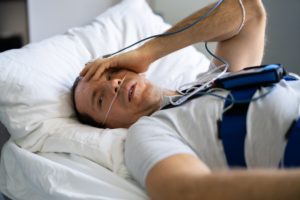
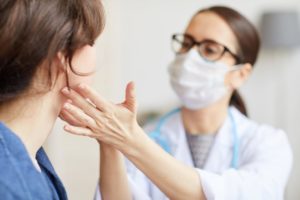
First, a doctor gathers information from the child and parent or guardian about the child’s sleep habits and any daytime and nighttime symptoms. The doctor may also perform a physical examination of the child’s mouth, neck, and throat to look for physical characteristics that increase risk for sleep apnea (such as enlarged tonsils and adenoids).If this initial evaluation indicates further testing is appropriate, the doctor may suggest polysomnography, which is a sleep study performed overnight at a sleep clinic.
Polysomnography involves measuring specific body functions while a person is sleeping. It is painless and noninvasive. Polysomnography is the gold standard method for evaluating suspected sleep apnea, as it provides the most definitive results.

What Is the Treatment for Sleep Apnea in Children?
Sleep apnea in children can be treated in a variety of ways depending on the type of apnea, what the underlying cause is perceived to be, the severity, and other factors. Treatments range from surgical options to CPAP therapy to medications to natural remedies.
Medical Interventions
Treatments for childhood sleep apnea depend on the cause and severity of symptoms and should be discussed in detail with the healthcare provider:
- Adenotonsillectomy: Childhood sleep apnea caused by enlarged tonsils and adenoids may be cured by surgically removing the tonsils and adenoids.
- Myofunctional therapy: Mouth and throat exercises, also known as “myofunctional therapy” or “oropharyngeal exercises,” have been shown to improve obstructive sleep apnea and snoring in children .
- Orthodontics: Rapid maxillary expansion and mandibular advancement devices are orthodontic approaches that use dental hardware to create more space in the mouth and improve the flow of air through the airway.
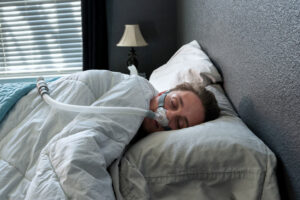
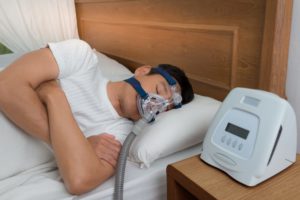
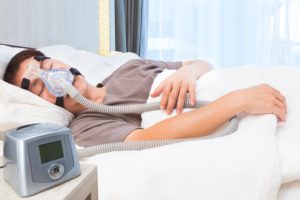
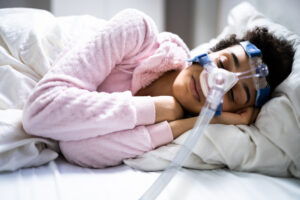
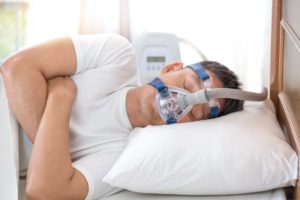
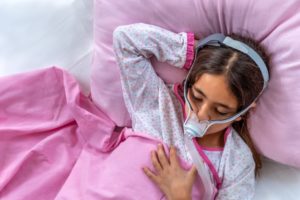
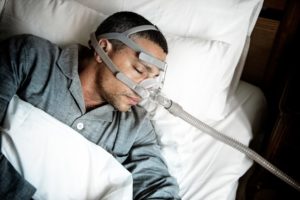
- CPAP: Also called continuous positive airway pressure, CPAP is a machine that continuously pumps air into the airway. CPAP users wear a mask attached to a pump while they are sleeping. Sleeping with a CPAP mask can be a difficult adjustment for children and may require behavioral support.
- Treatment of allergies and sinus inflammation: Medications, such as a steroid nasal spray, saline nasal rinses, and/or other allergy medications, may be an option for children with mild sleep apnea symptoms. These medications can reduce airway constriction and poor tongue posture caused by constantly breathing through the mouth. Allergy treatment is often done in conjunction with other treatment options.
Additionally, children with very mild or no symptoms may be monitored over time without administering treatment . Supportive care during watchful waiting can include education on good sleep habits, close monitoring of symptoms and frequent follow up with the healthcare provider.
Natural Treatments
Though some natural therapies and lifestyle changes could help reduce sleep apnea’s severity, it’s important to work with your pediatrician to find the most appropriate course of treatment. Once you are under a doctor’s care, they may recommend supplementing treatment with additional at-home remedies that can help reduce OSA in children. A child’s healthcare provider will be in the best position to discuss the risks and benefits of the natural treatment listed below:
- Weight loss: In children with obesity and obstructive sleep apnea, weight loss can alleviate symptoms. A pediatrician can assist with healthy diet and exercise planning. A dietician or nutritionist can also help create a weight loss plan. However, weight loss can take time, and a child with severe symptoms may benefit from initiating treatment that provides relief more quickly.
- Avoiding allergens: It may be helpful to avoid substances—such as pollen and mold—that can cause allergic rhinitis (an allergic reaction of the nasal passages). Allergic rhinitis leads to congestion and airway restriction, which contribute to sleep apnea symptoms.
- Nasal breathing retraining: Nasal breathing retraining (also called myofunctional therapy) is a type of physical therapy that aims to strengthen the tongue and surrounding muscles to help a child breathe effectively at night. It may help reduce symptoms, but data is limited.
- Positional therapy: Positional therapy involves training a person to sleep in a different position. It may be used in children whose sleep apnea occurs only when they sleep on their back. Elevating the head of the bed can also help alleviate sleep apnea. However, limited information is available about the effectiveness of positional therapy in children.
When to See a Doctor
It is a good idea to consult a doctor anytime abnormal sleep symptoms are present. Also, children who are not sleeping well may have trouble focusing, display irritability, or have poor impulse control. If a child is struggling with behavior concerns, it could be helpful to ask the doctor whether a sleep disorder such as sleep apnea may be a contributing factor.
Frequently Asked Questions
What’s the best sleeping position for a child with sleep apnea?
Children with sleep apnea are typically advised to try to sleep on their side. Back sleeping, especially lying flat, usually worsens symptoms. To help keep the child from rolling onto their back, you can place pillows behind them. Sleeping elevated can also help.
Can sleep apnea kill a child?
While sleep apnea is not usually a life threatening condition in and of itself, it can lead to other health problems over time and impact quality of life. Because there are pauses in breathing, sleep apnea could have an impact on growth, development, behavior, and strain on other body systems.
Does sleep apnea cause bed wetting in children?
Typically, there isn’t a direct connection between bed wetting (nocturnal enuresis) and sleep apnea. However, in a small percentage of cases, experts believe that the partially obstructed airway and pauses in breathing could change the child’s brain chemistry and trigger bed wetting.
Can obstructive sleep apnea in children cause developmental delays?
OSA could lead to other health consequences in children, especially when left untreated, including possible developmental delays. Inadequate sleep and rest can lead to hyperactivity, impulsivity, increased aggression or oppositional behaviors in some children.
Can removal of adenoids help central sleep apnea in children?
Removing adenoids that are enlarged is a common treatment for children with OSA. However, studies show that it may help improve CSA in children who have both types, or a mixed sleep apnea diagnosis.
Can sleep apnea cause ADHD symptoms in children?
There have been studies showing direct ties between sleep apnea and ADHD symptoms in children. In one study, attention deficits were reported in up to 95% of pediatric OSA patients.

Still have questions? Ask our community!
Join our Sleep Care Community — a trusted hub of sleep health professionals, product specialists, and people just like you. Whether you need expert sleep advice for your insomnia or you’re searching for the perfect mattress, we’ve got you covered. Get personalized guidance from the experts who know sleep best.
Alexa Fry is a science writer with experience working for the National Cancer Institute. She also holds a certificate in technical writing.
Dr. Truong is a Stanford-trained sleep physician with board certifications in sleep and internal medicine. She is the founder of Earlybird Health.
References
17 Sources
-
Meltzer, L. J., Johnson, C., Crosette, J., Ramos, M., & Mindell, J. A. (2010). Prevalence of diagnosed sleep disorders in pediatric primary care practices. Pediatrics, 125(6), e1410–e1418.
https://pubmed.ncbi.nlm.nih.gov/20457689/ -
Marcus, C. L., Brooks, L. J., Draper, K. A., Gozal, D., Halbower, A. C., Jones, J., Schechter, M. S., Ward, S. D., Sheldon, S. H., Shiffman, R. N., Lehmann, C., Spruyt, K., & American Academy of Pediatrics (2012). Diagnosis and management of childhood obstructive sleep apnea syndrome. Pediatrics, 130(3), e714–e755.
https://publications.aap.org/pediatrics/article/130/3/e714/30258/Diagnosis-and-Management-of-Childhood-Obstructive -
Khan MT, Franco RA. Complex sleep apnea syndrome. Sleep Disord. 2014;2014:798487. doi:10.1155/2014/798487
https://pmc.ncbi.nlm.nih.gov/articles/PMC3945285/ -
Li, Z., Celestin, J., & Lockey, R. F. (2016). Pediatric Sleep Apnea Syndrome: An Update. The journal of allergy and clinical immunology. In practice, 4(5), 852–861.
https://linkinghub.elsevier.com/retrieve/pii/S2213219816301052 -
A.D.A.M. Medical Encyclopedia. (2021, August 10). Pediatric sleep apnea. MedlinePlus.
https://medlineplus.gov/ency/article/007660.htm -
O’Brien LM, Holbrook CR, Mervis CB, et al (2003). Sleep and neurobehavioral characteristics of 5- to 7-year-old children with parentally reported symptoms of attention-deficit/hyperactivity disorder. Pediatrics, 111(3):554-563.
https://publications.aap.org/pediatrics/article/111/3/554/79884/Sleep-and-Neurobehavioral-Characteristics-of-5-to -
Strohl, K. P. (2020, September). Obstructive sleep apnea in children. Merck Manual Professional Version.
https://www.merckmanuals.com/professional/pulmonary-disorders/sleep-apnea/obstructive-sleep-apnea-in-children -
Narang, Indra, Matthew, Joseph L. (2012, August). Childhood Obesity and Obstructive Sleep Apnea. Journal of Nutrition and Metabolism.
https://www.ncbi.nlm.nih.gov/pmc/articles/PMC3432382/ -
Camacho, Macario et al. “Myofunctional Therapy to Treat Obstructive Sleep Apnea: A Systematic Review and Meta-analysis.” Sleep vol. 38,5 669-75. 1 May. 2015, doi:10.5665/sleep.4652.
https://www.ncbi.nlm.nih.gov/pmc/articles/PMC4402674/ -
Rana, M., August, J., Levi, J., Parsi, G., Motro, M., & DeBassio, W. (2020). Alternative Approaches to Adenotonsillectomy and Continuous Positive Airway Pressure (CPAP) for the Management of Pediatric Obstructive Sleep Apnea (OSA): A Review. Sleep disorders, 2020, 7987208.
https://pubmed.ncbi.nlm.nih.gov/32695520/ -
Marcus, C. L., Moore, R. H., Rosen, C. L., Giordani, B., Garetz, S. L., Taylor, H. G., Mitchell, R. B., Amin, R., Katz, E. S., Arens, R., Paruthi, S., Muzumdar, H., Gozal, D., Thomas, N. H., Ware, J., Beebe, D., Snyder, K., Elden, L., Sprecher, R. C., Willging, P., … Childhood Adenotonsillectomy Trial (CHAT) (2013). A randomized trial of adenotonsillectomy for childhood sleep apnea. The New England journal of medicine, 368(25), 2366–2376.
https://pubmed.ncbi.nlm.nih.gov/23692173/ -
American Thoracic Society | Obstructive Sleep Apnea in Children. American Thoracic Society. Published 2021. https://site.thoracic.org/advocacy-patients/patient-resources/obstructive-sleep-apnea-in-children
https://site.thoracic.org/advocacy-patients/patient-resources/obstructive-sleep-apnea-in-children -
Sleep Apnea in Children: Symptoms, Causes, Treatment. SleepApnea.org. https://www.sleepapnea.org/sleep-apnea-in-children/
https://www.sleepapnea.org/sleep-apnea-in-children/ -
Bedwetting in Children & Teens: Nocturnal Enuresis. National Kidney Foundation. Published August 13, 2024. https://www.kidney.org/kidney-topics/bedwetting-children-teens-nocturnal-enuresis
https://www.kidney.org/kidney-topics/bedwetting-children-teens-nocturnal-enuresis -
Trosman I, Trosman SJ. Cognitive and Behavioral Consequences of Sleep Disordered Breathing in Children. Med Sci (Basel). 2017;5(4):30. Published 2017 Dec 1. doi:10.3390/medsci5040030
https://pmc.ncbi.nlm.nih.gov/articles/PMC5753659/ -
Eitan D, Cave T, Scheffler P. Effect of adenotonsillectomy on central sleep apnea: A scoping review. International Journal of Pediatric Otorhinolaryngology. 2024;177:111863. doi:https://doi.org/10.1016/j.ijporl.2024.111863
https://www.sciencedirect.com/science/article/abs/pii/S016558762400017X -
Urbano GL, Tablizo BJ, Moufarrej Y, Tablizo MA, Chen ML, Witmans M. The Link between Pediatric Obstructive Sleep Apnea (OSA) and Attention Deficit Hyperactivity Disorder (ADHD). Children (Basel). 2021;8(9):824. Published 2021 Sep 19. doi:10.3390/children8090824
https://pmc.ncbi.nlm.nih.gov/articles/PMC8470037