When you buy through our links, we may earn a commission. Products or services may be offered by an affiliated entity. Learn more.
What to Do When You Can’t Sleep


At a Glance
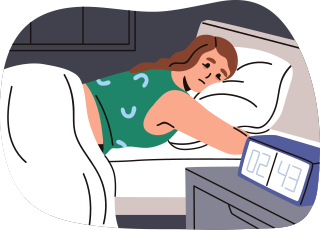
Having trouble sleeping? Don’t panic. Here’s a quick list of dos and don’ts for restless nights.
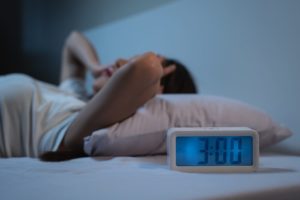
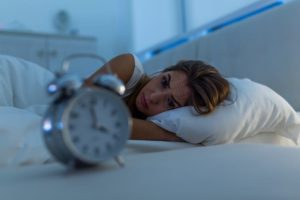
- Don’t watch the clock.
- Avoid your phone.
- Get out of bed if you’re awake for 20 minutes.
- Do a quiet activity like reading, journaling, or listening to music.
- Return to bed when sleepy.
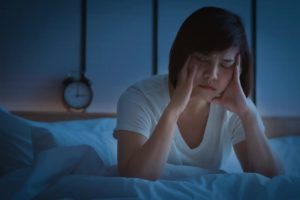
Nearly everyone is familiar with that seemingly inescapable feeling of being awake in the middle of the night, with everything quiet — except for your brain. According to data from roughly 160,000 Sleep Foundation profiles, more than 80% have difficulty falling asleep at least some of the time and 37% say they frequently have difficulty falling asleep.
So what are you supposed to do when you’re lying awake at midnight, staring at the ceiling, and can’t seem to drift off? Below, we’ll explain the different causes of insomnia and walk you through solutions, relaxation techniques, and proactive tips for better rest that you can start today. We’ll also tell you when it’s time to see a doctor.
Why You Can’t Sleep
Insomnia is one of the most common sleep disorders, and it often has more than one cause. Possible causes include:
- Underlying health conditions, such as depression, chronic pain, acid reflux, or a sleep disorder like sleep apnea or restless legs syndrome
- Stress and anxiety, as a racing mind can make it hard to unwind at night
- Poor sleep habits, like using screens before bed or having an inconsistent sleep schedule
- Lifestyle choices, such as drinking caffeine late in the day or consuming alcohol before bed

What to Do When You Can’t Sleep
If you find yourself still awake long after you’ve gotten into bed, the best steps to take for sleep aren’t always the obvious ones. Likewise, common instincts or habits for combating restlessness may actually make it worse. Here’s an in-depth look at what to do — and avoid — when you can’t sleep.
First, Don’t Panic
Short periods of wakefulness during the night are normal. When you sleep, you typically cycle through four to six phases of REM sleep and non-REM sleep. Between each phase, it’s common to wake up briefly. Often, if you relax, you’ll drift back to sleep.
On the other hand, if your wakefulness causes stress or anxiety that you’re not asleep, this can lead to a difficult cycle. Worrying about not sleeping can make it even harder to fall asleep and create a cycle of stress that keeps you awake.
Give Yourself 20 Minutes
Rather than worrying about sleep, try to relax and focus on just lying down for 20 minutes. In some cases, this is all your body needs to fall asleep. However, if after 20 minutes you still feel awake, it’s better to get out of bed. Trying too hard to force sleep can cause even more stress and be counterproductive.
Get Out of Bed and Do Something Relaxing
Doing a relaxing activity can help facilitate sleep by calming you and distracting the mind from intrusive thoughts. For example, reading a physical book (not a tablet or e-reader) can be a simple, calming way to ease into sleep. Choose something light or familiar — nothing too thrilling or emotionally intense — to avoid getting too stimulated.
You can also try breathing exercises, which can prime you for sleep by relaxing the body and mind. Listening to soft, calming music may help as well.
Avoid stimulating activities such as checking your phone, watching TV, playing video games, or exercising.
Keep the Lights Dim
Avoid bright lights while trying to fall asleep. Too much light exposure during sleeping hours can affect your circadian rhythm and make it even harder to sleep. If you need light, use dimmers, low-light lamps, or night lights. Avoid phones and screens in general, which emit blue light that can interfere with melatonin production.
What Not to Do When You Can’t Sleep
Some things people do when they can’t sleep can be counterproductive or even dangerous. Here are a few behaviors to avoid during restless nights.
Don’t Force It
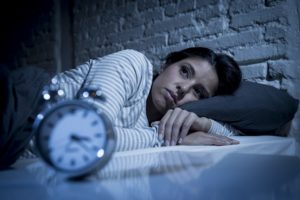
No matter how much you may want to, you can’t force yourself to sleep. Staying awake in bed for hours will delay the onset of sleep, so it’s better to get up and do a short relaxing activity, and then try again. By the same token, try to avoid worrying about the time or watching the clock, as this type of stress can also make it hard to sleep.
Avoid Alcohol and Extra Sleep Medications
Drinking alcohol may help you fall asleep faster, but it reduces REM sleep and causes more wake-ups in the middle of the night as the blood alcohol levels begin to drop. As a result, you’ll feel less rested the next day. Alcohol use before bed is also associated with a higher risk of sleep disorders that interfere with your rest , such as obstructive sleep apnea.
Those who take sleep medication under a doctor’s guidance should not take extra medication or increase their dose without consulting a physician first. Doing so may cause unpleasant or dangerous side effects.

Relaxation Techniques to Help You Fall Asleep
Struggling to fall asleep can leave you frustrated and drained. But before you reach for a sleep aid, consider trying one of these evidence-backed techniques. From progressive muscle relaxation and deep breathing to guided imagery, mindfulness meditation, and more, these approaches are simple, safe, and easy to try at home, even in the middle of the night.
1. Controlled Breathing
Slow, deep breathing can bring your body into a state of relaxation. Repeat this exercise several times, until you feel ready to sleep or to transition into another relaxation ritual.
- Place one hand on your stomach and the other on your chest.
- Inhale slowly, directing your breath deep into your belly. The hand on your stomach should gradually rise, while the one on your chest should have little to no movement.
- Exhale gently, allowing the hand on your stomach to gradually fall.
2. Body Scan Meditation
Many people use meditation to invite calm and to promote mental and physical well-being. Body scans are a type of meditation that involves directing attention to different areas of the body without judging the sensations that arise.
- Lie in bed face up with your hands at your side.
- Spend a few moments practicing controlled breathing.
- Direct your attention to sensations in your feet without labeling them as good or bad.
- Breathe deeply and imagine the breath traveling all the way to your feet. As you exhale, let your feet dissolve from your awareness, and direct your attention to your ankles and calves.
- Move your attention progressively upward until you reach the head.
- Finish the practice by becoming aware of your body as a whole and breathing deeply.
3. Progressive Muscle Relaxation
Progressive muscle relaxation (PMR) is a technique that involves deliberately tensing and relaxing particular muscle groups, which can help you recognize and release tension in the body.
- Sit or lie in a comfortable position and become aware of your breath.
- As you slowly breathe in, clench your fists, noticing sensations that accompany tightening your muscles.
- Gently exhale, relaxing your hands. Notice tension draining out of your muscles.
- Repeat this process, tensing as you inhale and releasing as you exhale, for muscle groups throughout your body.
4. Imagery
Imagery — also sometimes called visualization — is a technique that involves imagining peaceful or comforting scenes that encourage the body to relax. You can practice visualization on your own or you can access guided imagery exercises online or through apps.
- Find a comfortable position and close your eyes. Practice controlled breathing for a few moments.
- Imagine yourself in a scene that feels calming and relaxing, such as on a beach.
- Picture as many pleasant details as you can, taking note of feelings of relaxation in your body.
5. The Military Method
Need to fall asleep anywhere, anytime? The military sleep method was designed to help service members fall asleep in tense or difficult situations by teaching them to quickly relax their body and mind.
- Relax your face, moving from your forehead to your jaw.
- Release any tension in your shoulders and arms, allowing them to rest at your sides.
- Take a slow, deep breath and then gradually exhale.
- Relax your legs, beginning with the hips and thighs and working your way to the tips of your toes.
- With your eyes closed, imagine a peaceful scene. If you get distracted, repeat a simple phrase in your mind, like “be still.”
6. 4-7-8 Breathing Exercise
The 4-7-8 breathing technique was created to calm the nervous system and promote relaxation. This method of breathing control involves establishing a pattern of inhaling, holding breath, and exhaling in a specific ratio.
- Close your eyes and place the tip of your tongue on the roof of your mouth, just behind your teeth. Keep your tongue in this position for the whole exercise.
- Close your mouth and breathe in through your nose as you count to four in your mind.
- Hold your breath, and count to seven.
- Open your mouth and exhale as you count to eight. Allow the breath to make a whooshing sound as it leaves your body.
- Repeat steps two through four three more times, making sure that your breathing pattern follows the 4-7-8 ratio.
7. Playing a Word Game
Playing a word game can help you relax by keeping stressful thoughts at bay. Games that engage you in repetitive, monotonous tasks are also likely to make you feel sleepy. A cognitive scientist named Luc Beaudoin developed the following word game to help people sleep.
- Pick a neutral word of five or more letters. Choose a word without repeating letters, such as dream.
- Think of as many words as you can that begin with the first letter of your chosen word. For the word dream, you might list the words dog, duck, donut, or dimples.
- Visualize each word you come up with.
- Repeat this process for each letter in the word.
- If you feel sleepy before finishing the game, allow yourself to fall asleep.
8. Autogenic Training
Autogenic training is a relaxation technique that uses self-hypnosis to promote sleep. It involves repeating phrases that focus awareness on relaxing sensations in different areas of the body.
To practice, lie in bed with your eyes closed and recite sets of six to 10 phrases for each of the following sensations:
- “Warmth in the arms and legs”
- “Heaviness in the arms and legs”
- “A slow, steady heartbeat”
- “Slow, calm, regular breathing”
- “Softness and warmth in the belly”
- “A cool forehead”
With each progressive set, retain some phrases from the previous sets and introduce new ones. Here are example first and final sets.
| First set: | Final set: |
|---|---|
| My left foot is warm. (x 3) My right foot is warm. (x 3) Both of my legs are warm. (x 3) My feet and legs are warm. (x 3) My right hand is warm. (x 3) My left hand is warm. (x 3) Both of my arms are warm. (x 3) My hands and arms are warm. (x 3) | My arms and legs are warm and heavy. (x3) My heartbeat is slow and steady. (x3) My breathing is calm and regular. (x3) My belly is warm and relaxed. (x3) My forehead is cool. (x3) My body is at peace. (x3) |
Proactive Tips to Sleep Better
Practicing good sleep hygiene — your daily habits and behaviors around rest — can help set the stage for more effective relaxation and better-quality sleep overall. Try incorporating the following strategies into your routine:
- Get natural light early in the day: Aim for at least 30 minutes of sunlight exposure in the morning to help regulate your circadian rhythm.
- Exercise regularly: Daily physical activity can help you fall asleep faster and enjoy deeper sleep, just try to finish vigorous workouts a few hours before bed.
- Avoid caffeine in the evening: Cut off caffeine at least six to eight hours before bedtime, as it can linger in your system and disrupt your sleep.
- Limit alcohol and nicotine: These substances may make you feel drowsy initially but can interfere with sleep quality later in the night.
- Keep naps short and early: If you nap, aim for no more than 20 to 30 minutes and try to do so earlier in the day to avoid interfering with nighttime sleep.
- Optimize your bedroom for sleep: Make your sleep environment cool, dark, and quiet. Choose a comfortable mattress, supportive pillows, breathable sheets, and consider blackout curtains or a white noise machine.
- Stick to a consistent sleep schedule: Go to bed and wake up at the same time every day, even on weekends, to support your body’s internal clock.
- Create a calming bedtime routine: Wind down each night with quiet activities like reading, taking a warm shower or bath, drinking non-caffeinated tea, or listening to soft music or an audiobook.
- Put away electronics: Avoid screens and silence notifications at least 30 to 60 minutes before bed to reduce stimulation and blue light exposure.
- Get up if you can’t sleep: If you’re awake for more than 20 minutes, get out of bed and do something calming in another room until you feel sleepy. This helps your brain associate the bed with sleep, not stress.
When to See a Doctor
Occasional sleepless nights are normal, especially during times of stress or schedule disruption. But if you’re consistently struggling to fall asleep, stay asleep, or wake up feeling unrested, it may be time to talk to a healthcare provider.
Consider seeing a doctor if:
- You’ve had trouble sleeping at least three nights a week for over a month.
- Sleep issues are affecting your mood, energy, focus, or daily functioning.
- You rely on over-the-counter sleep aids or substances like alcohol to fall asleep.
- You snore loudly, gasp for air during sleep, or suspect a sleep disorder like sleep apnea.
- You’ve tried improving your sleep hygiene but still feel exhausted during the day.
A doctor can help identify any underlying issues, such as insomnia, anxiety, depression, or a sleep-related breathing disorder, and work with you to develop an effective treatment plan. Sleep is a vital part of your overall health; don’t hesitate to seek help if you’re not getting the rest you need.
If a doctor suspects you have insomnia, they’ll likely begin by asking about your sleep habits, lifestyle, and overall health. You may be asked to keep a sleep diary or complete a questionnaire about your sleep patterns. In some cases, your provider might recommend a sleep study to rule out other health conditions, like sleep apnea or restless legs syndrome.
Diagnosis and Treatment for Insomnia
Treatment for insomnia often starts with cognitive behavioral therapy for insomnia (CBT-I), a proven, first-line approach that helps change unhelpful thoughts and behaviors around sleep. CBT-I can teach you techniques to relax, manage anxiety about sleep, and build a healthier sleep routine.
If needed, a doctor may also discuss short-term use of sleep medications, though these are generally considered a secondary option. Lifestyle adjustments — like improving sleep hygiene, managing stress, and addressing underlying health issues — are also key to restoring better sleep.


Frequently Asked Questions
What is it called when you can’t sleep?
Insomnia is the most common term used to describe difficulty falling asleep. It may be short term, lasting as little as a few days, or chronic. However, occasional difficulty falling asleep is common and doesn’t always indicate a sleep disorder.
Why can’t I sleep after drinking?
While alcohol makes you feel drowsy in the moment, it reduces overall sleep quality and disrupts sleep cycles, causing middle-of-the-night wake ups and reduced REM sleep. Experts recommend that you avoid drinking for several hours before bedtime.
Is it normal to wake up multiple times at night?
It’s normal to wake up briefly several times throughout the night. When you sleep, you pass through different phases of REM and non-REM sleep, and often, you wake up briefly between each phase. Normally, you fall back asleep quickly.
Should I stay in bed if I can’t sleep?
If you find yourself lying awake for more than 20 minutes, it’s generally best to get up and do something relaxing before trying to sleep again. Reading a book, listening to calming music, and breathing exercises are all ways to quiet the mind and ease into sleep. Avoid stimulating activities such as checking your phone.
Can I take melatonin if I can’t sleep?
Evidence suggests that melatonin may help some people fall asleep, particularly those whose sleep problems are caused by jetlag or late work schedules. However, melatonin isn’t regulated by the U.S. Food and Drug Administration (FDA), and its quality and dosage can vary between products. It’s a good idea to speak to your doctor before starting melatonin, especially if you take other medications or have underlying health conditions.

Still have questions? Ask our community!
Join our Sleep Care Community — a trusted hub of sleep health professionals, product specialists, and people just like you. Whether you need expert sleep advice for your insomnia or you’re searching for the perfect mattress, we’ve got you covered. Get personalized guidance from the experts who know sleep best.
Lucy Bryan is a writer and editor with more than a decade of experience in higher education. She holds a B.A. in journalism from the University of North Carolina at Chapel Hill and an M.F.A. in creative writing from Penn State University.
Dr. Abhinav Singh, board certified in Sleep Medicine and Internal Medicine, is the Medical Director of the Indiana Sleep Center, which is accredited by the American Academy of Sleep Medicine. He is also a Clinical Assistant Professor at Marian University College of Medicine in Indianapolis, where he developed and teaches a Sleep Medicine rotation.
Learn more about our medical advisory boardReferences11 Sources
National Heart, Lung, and Blood Institute. How Sleep Works – Sleep Phases and Stages | NHLBI, NIH. www.nhlbi.nih.gov. Published March 24, 2022.
https://www.nhlbi.nih.gov/health/sleep/stages-of-sleepNational Institute of Neurological Disorders and Strokes (NINDS). (2024, September 05). Brain basics: Understanding sleep.
https://www.ninds.nih.gov/health-information/public-education/brain-basics/brain-basics-understanding-sleepBlume C, Garbazza C, Spitschan M. Effects of light on human circadian rhythms, sleep and mood. Somnologie (Berl). 2019 Sep;23(3):147-156.
https://pubmed.ncbi.nlm.nih.gov/31534436/He, S., Hasler, B. P., & Chakravorty, S. (2019). Alcohol and sleep-related problems. Current opinion in psychology, 30, 117–122.
https://pmc.ncbi.nlm.nih.gov/articles/PMC6801009/Simou, E., Britton, J., & Leonardi-Bee, J. (2018). Alcohol and the risk of sleep apnoea: a systematic review and meta-analysis. Sleep medicine, 42, 38–46.
https://pmc.ncbi.nlm.nih.gov/articles/PMC5840512/Mirgain, S. (2016 September). A Body Scan Script. Office of Patient Centered Care & Cultural Transformation. U.S. Department of Veterans Affairs.
https://www.va.gov/WHOLEHEALTHLIBRARY/docs/Script-Body-Scan.pdfMirgain, S. & Singles, J. (2023). Progressive Muscle Relaxation. Office of Patient Centered Care & Cultural Transformation. U.S. Department of Veterans Affairs.
https://www.va.gov/WHOLEHEALTHLIBRARY/docs/Progressive-Muscle-Relaxation.pdfU.S. Department of Veterans Affairs. (2015, September). Relaxation Exercise: Visualization. Veterans Employment Toolkit.
https://www.va.gov/vetsinworkplace/docs/em_eap_exercise_visualizing.aspNational Heart, Lung, and Blood Institute. (2022, March 24). Insomnia – What is insomnia?
https://www.nhlbi.nih.gov/health/insomniaCarudo, C. & Chosewood, C. (2020, June 29). Improve sleep: tips to improve your sleep when times are tough. NIOSH Science Blog. Centers for Disease Control and Prevention.
https://www.cdc.gov/niosh/bulletin/2020/sleep.htmlShane-McWhorter, L. (2023, January). Melatonin. Merck Manual Professional Version.
https://www.merckmanuals.com/professional/special-subjects/dietary-supplements/melatonin