
When you buy through our links, we may earn a commission. Products or services may be offered by an affiliated entity. Learn more.
Best Mattress for Scoliosis in 2026


Sleep Foundation
Why Trust Us


Our mission to create a healthier, more well-rested world demands that our product reviews be best-in-class. You won’t find more expertise on mattresses and sleep products anywhere else.
The Sleep Foundation product testing team uses an industry-leading evaluation process paired with real world consumer feedback to come up with objective recommendations so that you can feel confident in your product decisions.
Roughly 2% to 3% of the U.S. population has scoliosis, a condition characterized by an unnatural curvature of the spine. Scoliosis can cause pressure and sore spots in areas along the spine, making it difficult to get a good night’s sleep. While a mattress can’t cure scoliosis, some beds can provide the right amount of support to improve spinal alignment and alleviate pressure where it’s needed. This can ensure people with scoliosis get the high-quality sleep they need.
Our Top Picks
Best Overall Mattress
:Luxury Firm WinkBed
Shop Now
Best Value Mattress
:Brooklyn Bedding CopperFlex Memory Foam
Shop Now
Most Comfortable Mattress
:Leesa Sapira Chill Hybrid
Shop Now
Best Mattress for Back Pain
:Saatva Rx
Shop Now
Best Mattress for Side Sleepers
:Helix Midnight Luxe
Shop Now
Best Mattress for Hip Pain
:Bear Elite Hybrid
Shop Now
Best Mattress for Pressure Relief
:Brooklyn Bedding Signature Hybrid
Shop Now
Best Mattress for Spinal Alignment
:Nolah Natural 11
Shop Now
Best Firm Mattress
:Plank Firm Luxe
Shop Now
Best Mattress Deals Happening Now
- Save $771 — Luxury Firm WinkBed
$1,799(List Price $2,570) - Save $150 — Brooklyn Bedding CopperFlex Memory Foam
$449(List Price $599) - Save $748 — Leesa Sapira Chill Hybrid
$1,719(List Price $2,467) - Save $300 — Saatva Rx
$3,099(List Price $3,399) - Save $600 — Helix Midnight Luxe
$1,799(List Price $2,399)
How We Tested the Best Mattresses for Scoliosis
Testing Criteria
Scoliosis can change how the body distributes weight while you sleep, making mattress performance especially important. For this category, we focused on beds that promote healthy spinal alignment, ease pressure points, and accommodate different types of spine curvature. The following criteria informed our evaluation of the best mattresses for scoliosis.
Spinal support and pressure relief: Maintaining neutral spinal alignment is essential for managing discomfort associated with scoliosis. We looked for mattresses that provide targeted support to the lumbar region while relieving pressure at the shoulders and hips. This combination can help reduce strain caused by uneven weight distribution, a common issue for those who have scoliosis.
Contouring comfort: A mattress for sleepers with scoliosis should adapt to the body’s natural curves while maintaining spinal alignment. We evaluated how well each mattress cradles pressure points with enough support to prevent excessive sinkage.
Edge support: Strong edge support contributes to overall stability and ease of movement, which can be especially important for sleepers who experience stiffness or discomfort when changing positions. It can also help sleepers who have mobility challenges, since a strong perimeter can make it easier to get in and out of bed. We narrowed the pool to mattresses with reinforced edges that maintain support across the full sleep surface.
How We Evaluated
To assess mattresses for scoliosis, we combined performance data from our mattress database with hands-on testing conducted in our Seattle Test Lab.
Our team analyzed sleeper ratings and test results across core performance categories, including:
- Spinal alignment and pressure relief
- Responsiveness and contouring
- Variety of mattress types
- Ease of movement
- Durability
Next, we identified mattresses that demonstrated reliable performance for spinal support while accommodating a range of sleep positions and body types. Each finalist underwent in-depth testing to evaluate firmness balance, adaptability, and overall stability.
Multiple testers assessed each mattress to understand how different builds and sleep styles interact with mattress design. We also compared results across mattress types to ensure a diverse selection of options.
Based on these findings, we selected the following mattresses for sleepers who have scoliosis.
Our Testing Team

Logan Foley
Editorial Director
Full Bio

Mary Fenton
Head of Product Content
Full Bio

Jeremy Klein
Senior Product Testing Manager
Full Bio

Brad Nehring
Senior Product Analyst
Full Bio

Colin Simpson
Product Research Manager
Full Bio
Best Overall Mattress: Winkbed
Best Overall Mattress
9.4/10Test Lab Score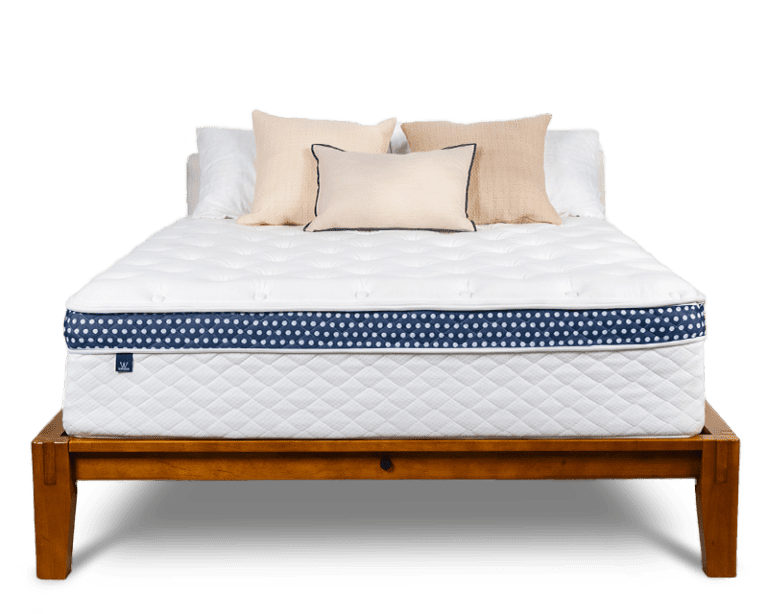
WinkBed
High end hybrid bed providing ample support, cushion, and cool sleep.
Key Details
- Who It’s Best For: Sleepers who use any position with persistent pain in their shoulders, back, or hips
- Feel: Available in adaptive medium soft (4), balanced medium firm (6), and supportive firm (7) designs. A fourth option, the WinkBed Plus (8), is intended for people over 230 pounds.
- What It’s Made Of: Standard Winkbed models contain adaptive polyfoam comfort layers and zoned coil support cores. The WinkBed Plus features latex instead of comfort foam.
- What We Don’t Like: Initial off-gassing can persist for several nights after uboxing.
Scoring & Reviews
The following ratings show how suitable this mattress is for different sleeping positions and sleeper weights. These scores are determined by how well the mattress supports and relieves pressure for each sleeper type.
In addition to the hands-on feedback from our team, we conduct a number of quantitative tests in our Test Lab. The below ratings are based on the experience of our testers.
SELECT AN ICON TO VIEW DETAILS:
Motion Isolation
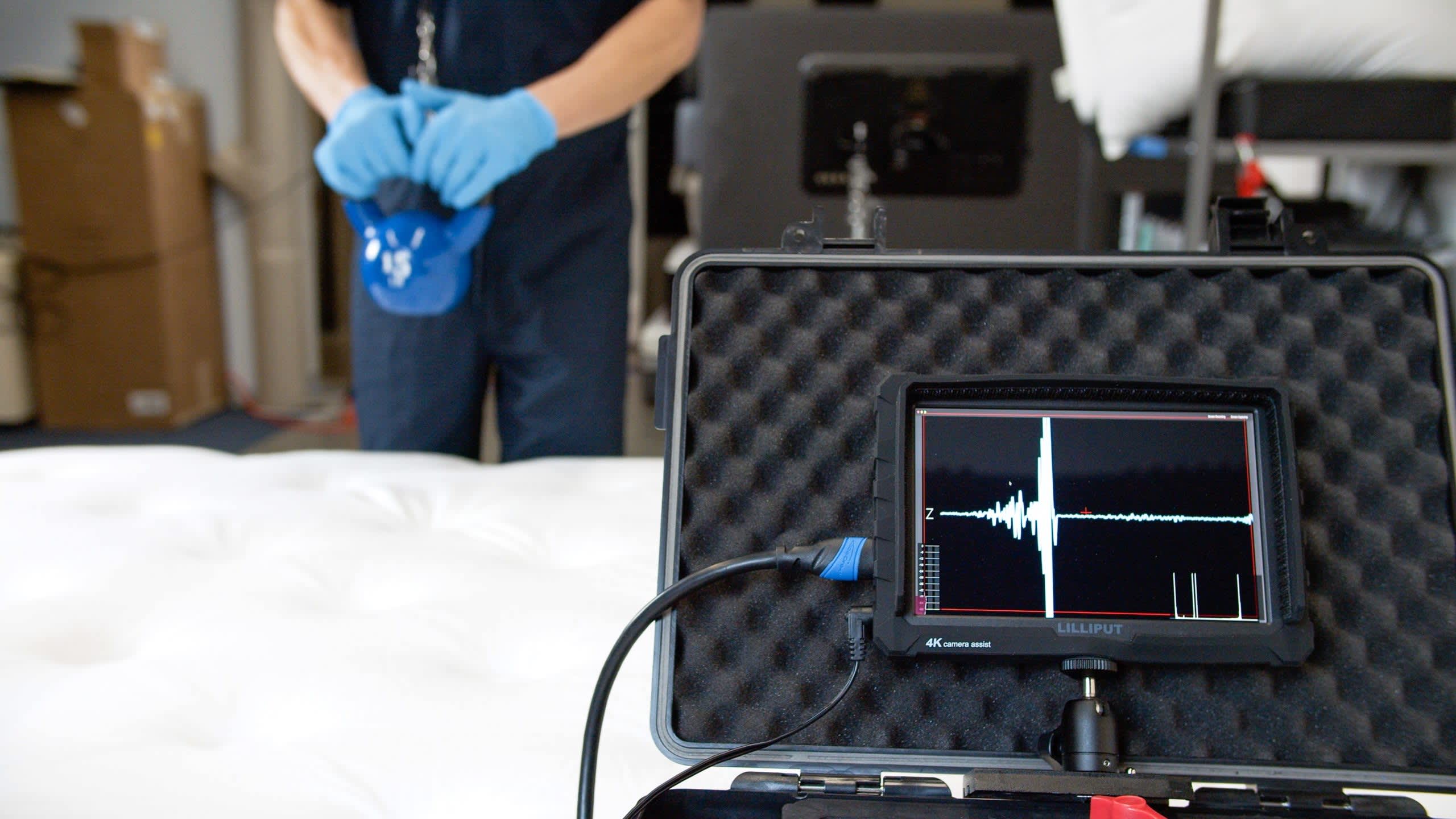
All four firmness options offer above-average motion isolation compared to other hybrids we’ve tested. The Softer, Luxury Firm, and Firmer models have polyfoam layers that significantly absorb vibrations, preventing motion from traveling across the surface. The Plus features latex, and does not isolate as much motion – though it still received high marks from our team. Although the coil core gives the mattress some bounce, the foam layers are substantial enough to dampen motion transfer.
Pressure Relief
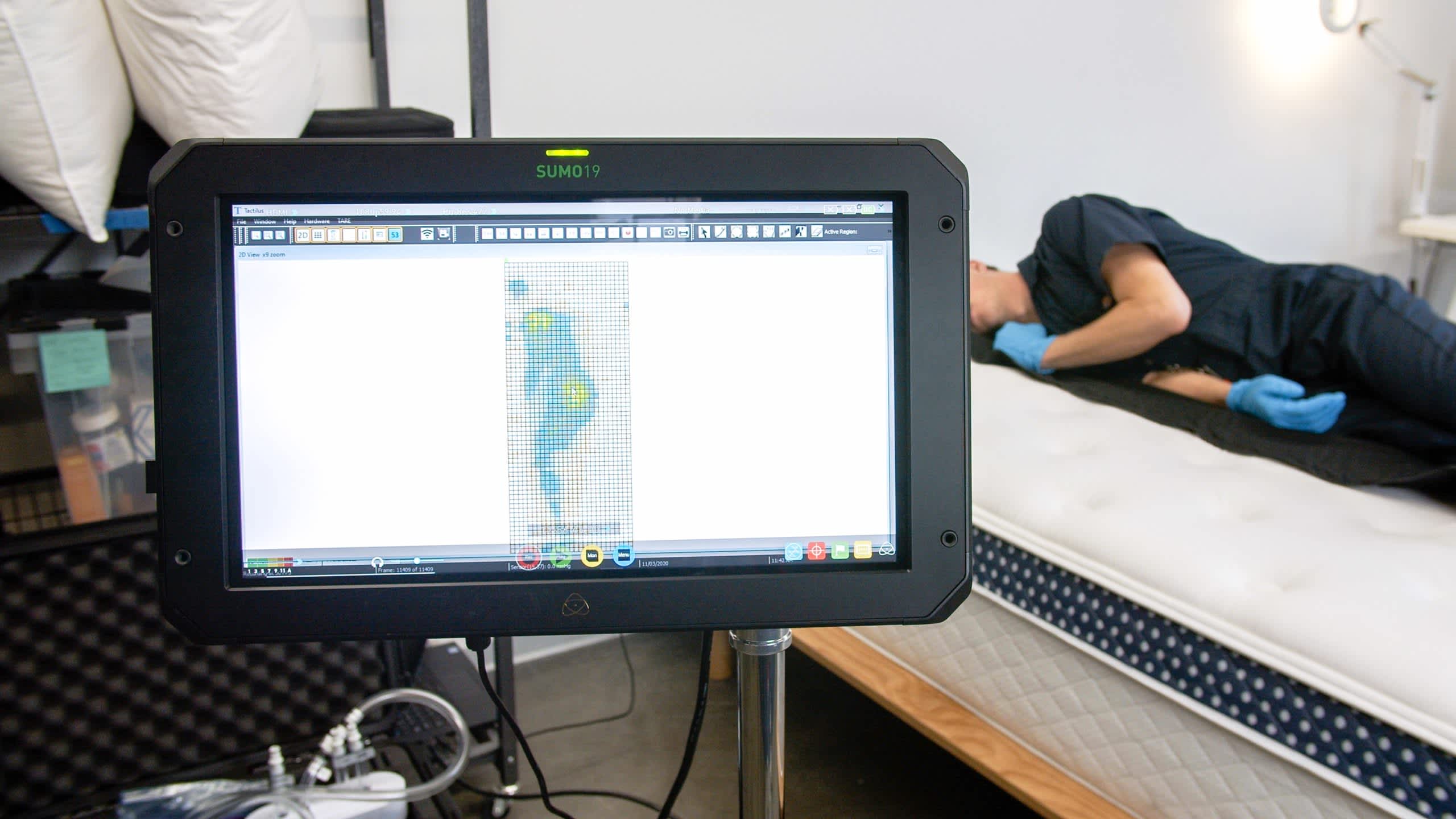
Like with many hybrid models, the WinkBed’s strong contouring can help relieve painful pressure points. Using pressure-mapping sensors, we found the Softer, Luxury Firm, and Firmer versions of the mattress generously cradle your body and ease pressure off sensitive joints, thanks largely to the multiple foam layers. The Plus version uses polyfoam and latex layers, which offer gentle contouring as well.
Temperature Control
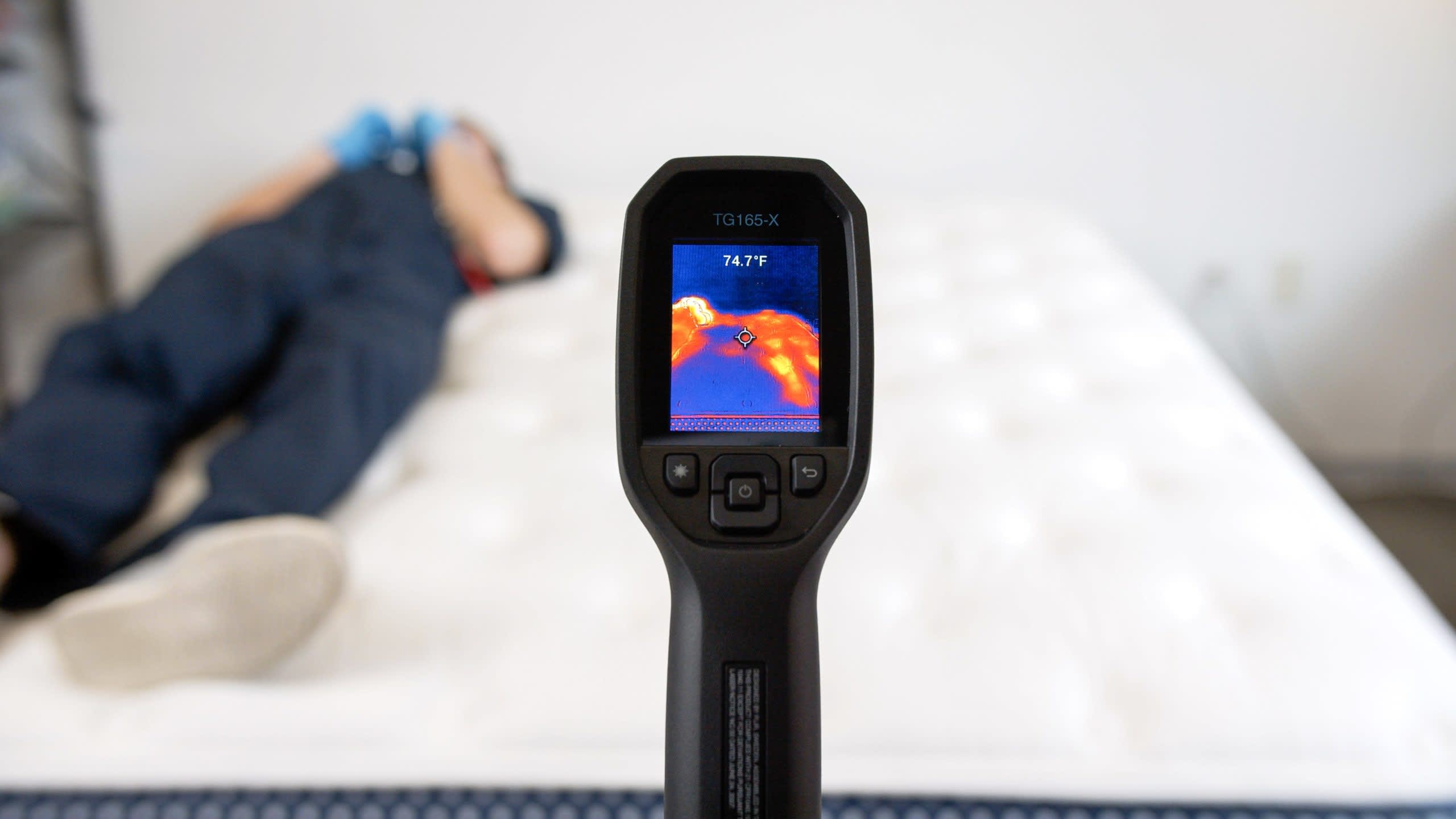
The WinkBed’s Tencel cover wicks heat and moisture away from the sleeper’s body. In the Softer, Luxury Firm, and Firmer models, polyfoam infused with cooling gel helps to minimize heat retention. The Plus version uses latex, a naturally breathable material that resists heat buildup.The coil core also promotes significant air circulation. All of these components make the WinkBed one of the best cooling mattresses on the market.
Edge Support
While many hybrid models have sturdy edges, the WinkBed’s perimeter is exceptionally strong . Thanks to extra reinforcement along the edges, our testers noticed minimal compression when sitting along the edge. Most sleepers should feel secure enough to sleep or sit on the full surface of the mattress without worrying about rolling off.The edge of the Softer model may not seem quite as sturdy as the Luxury Firm, Firmer, and Plus versions, due to its plusher design.
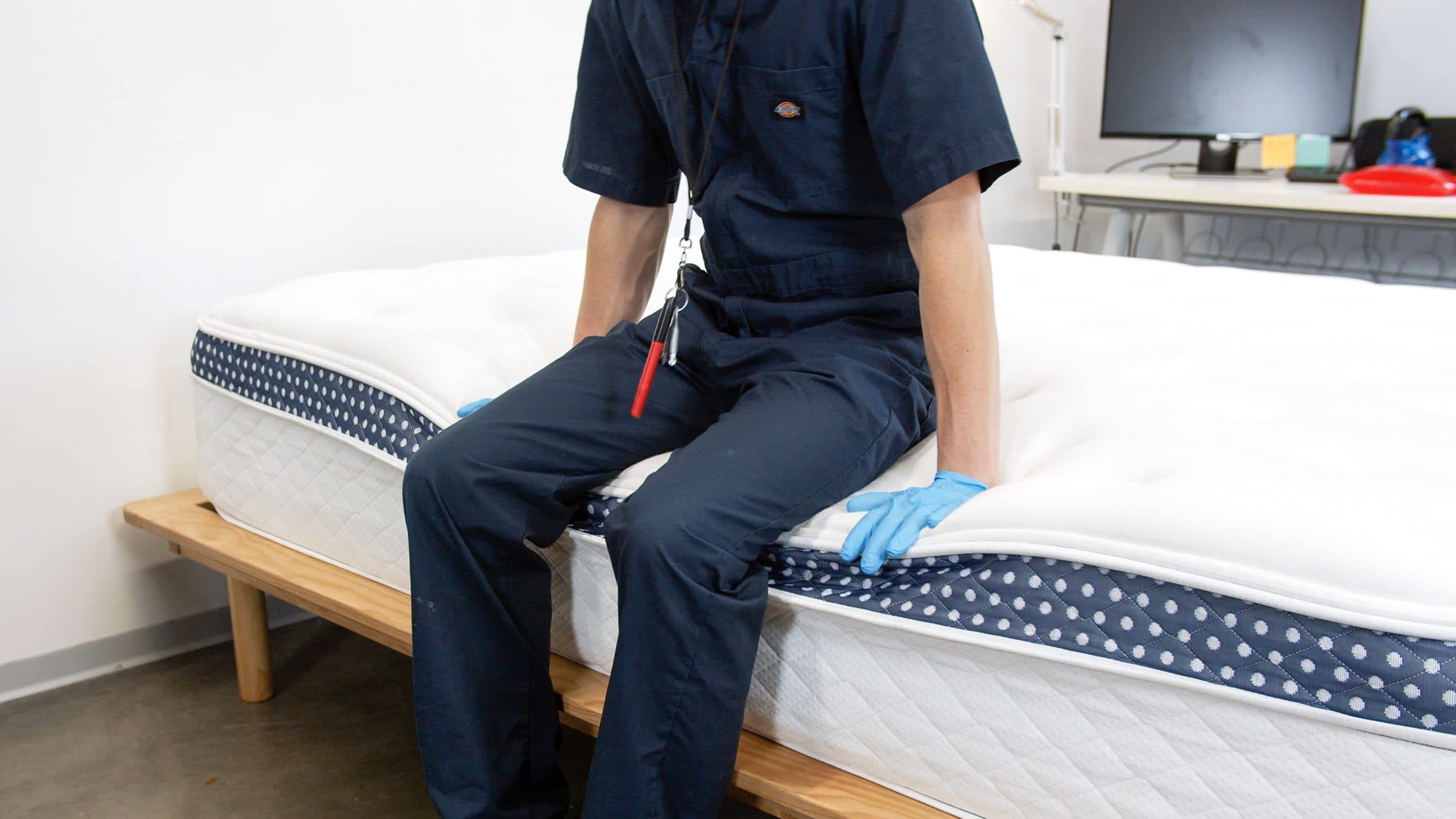
Ease of Movement
The three softest versions of the WinkBed Mattress feature polyfoam comfort layers. Polyfoam is more responsive than memory foam, so the WinkBed won’t hug your body as closely as hybrid mattresses made with close-conforming memory foam. The result is strong ease of movement across the surface.The Plus model features a very responsive latex layer, so this option shines when it comes to ease of movement.
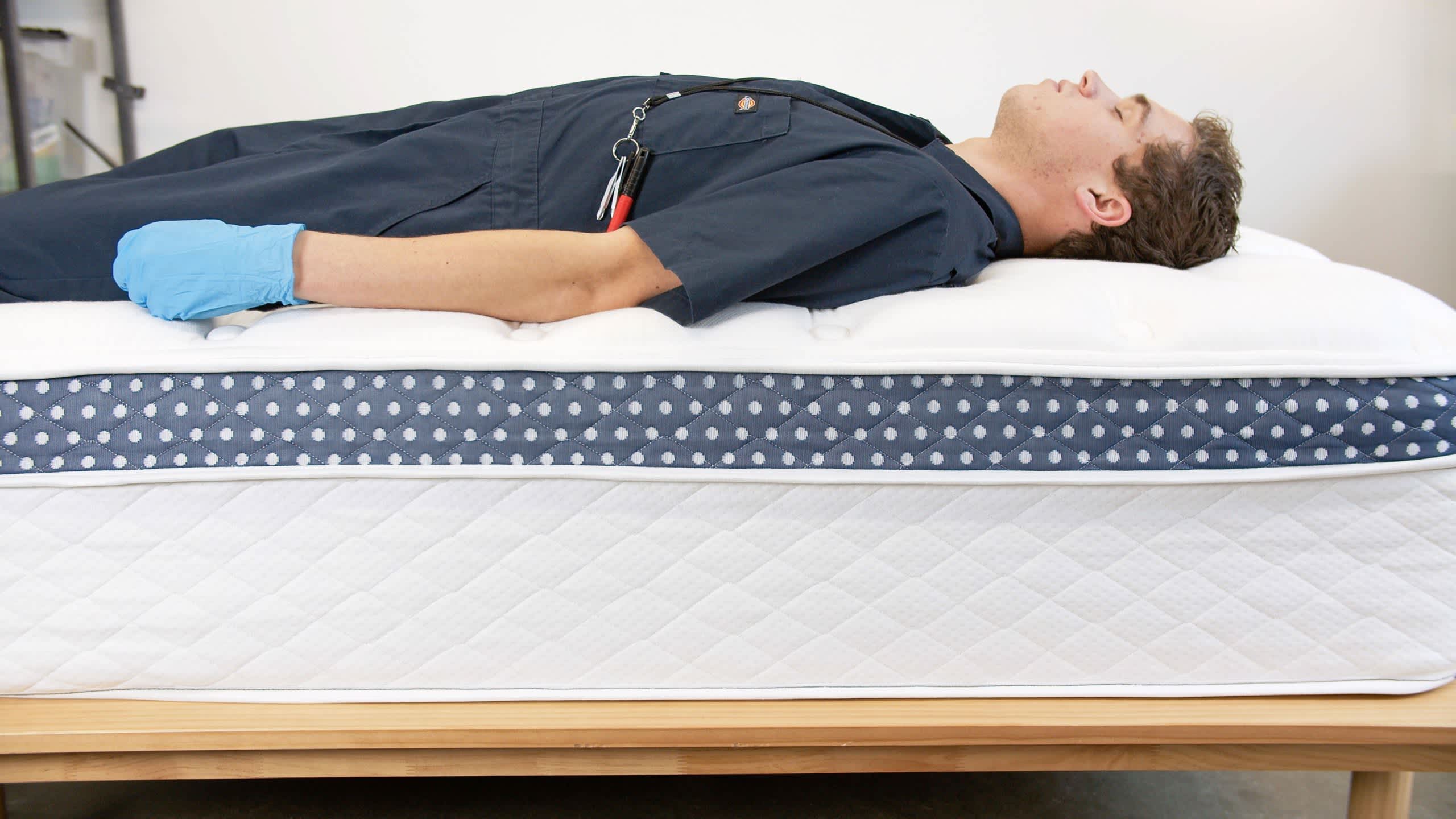
Durability
As a hybrid mattress with a polyfoam comfort layer, the Winkbed should last slightly longer than the average bed. Hybrids tend to be durable because the inner coils last a long time, and polyfoam is more durable than memory foam. That being said, the foam comfort layer isn’t too thick on the Winkbed (2 to 2.5 inches, depending on the firmness you choose), so you might find the bed getting less comfortable after around eight or nine years when impressions and sagging start to set in.
The Luxury Firm WinkBed delivers targeted spinal support for people with scoliosis, using a combination of foam comfort layers and zoned pocketed coils. A breathable cover, gel-infused comfort layer, and a coil support core also allow for a healthy amount of airflow to keep the mattress cool.
How It Performs
Thanks to its medium firm (6) feel, this mattress ranked highly among our testing team’s back and stomach sleepers, particularly those weighing up to 230 pounds.
Our side-sleeping testers between 130 and 230 pounds also enjoyed the balanced feel. This model boasts excellent edge support due to reinforced coils around the perimeter of the bed. Combination sleepers will appreciate the bed’s responsive surface, which facilitates movement and is an advantage for sex.
Construction Breakdown
A plush Euro-top cover provides some initial pressure relief. Gel-infused polyfoam is quilted into the pillow top for an extra luxurious feel. The gel in the cover is engineered to draw heat away from the body.
Underneath is a layer of specialized SupportCell polyfoam. This foam layer is denser to limit sinkage and evenly distribute weight, promoting a healthy sleep posture. The support core is comprised of pocketed coils. These support coils are zoned for targeted support, and they reinforce the perimeter of the mattress.
Trial, Shipping, and Warranty
WinkBeds offers free shipping to the contiguous U.S. and a 120-night sleep trial with a 30-night break-in period. The Luxury Firm WinkBed is also backed by a lifetime warranty that covers workmanship and manufacturing defects.
Read More
 Read Less

Best Value Mattress: Brooklyn Bedding CopperFlex Memory Foam
Best Value Mattress
8.6/10Test Lab Score
Brooklyn Bedding CopperFlex Memory Foam
Hugs and soothes pressure points for restful sleep.
Key Details
- Who It’s Best For: Side sleepers who weigh at least 130 pounds and back sleepers up to 230 pounds, as well as couples and hot sleepers.
- Feel: Medium firm (6) foam mattress that feels fairly plush on the surface and contours to a noticeable extent. Offers pushback and has extra support for your midsection. Comfortable surface temperature, as well.
- What It’s Made Of: Adaptive polyfoam sewn to the bottom of the cover. Two memory foam layers and a zoned transitional foam layer with a support core of two high-density polyfoam layers. Cover is made of proprietary GlacioTex cooling fabric.
- What We Don’t Like: Some strong (but temporary) off-gassing odor after unboxing. Too soft for most stomach sleepers and not supportive enough for back sleepers over 230 pounds.
Scoring & Reviews
The following ratings show how suitable this mattress is for different sleeping positions and sleeper weights. These scores are determined by how well the mattress supports and relieves pressure for each sleeper type.
In addition to the hands-on feedback from our team, we conduct a number of quantitative tests in our Test Lab. The below ratings are based on the experience of our testers.
SELECT AN ICON TO VIEW DETAILS:
Motion Isolation
The CopperFlex Memory Foam provides great motion isolation, with our testers clocking almost no motion transfer across the bed during movement. This is due to the all-foam construction—with memory foam comfort layers and an all-foam base, there is little means for one side of the bed to affect the other.
Pressure Relief
This bed provides excellent pressure relief, which notably reduced pressure on the shoulders and hips compared to other beds. With a thick foam comfort layer and a foam base, the bed conforms close to the body and ‘hugs’ the sleeper quite a bit.
Temperature Control
As an all-foam bed, the CopperFlex is inevitable going to trap a decent amount of body heat. Luckily, the top layer of quilted polyfoam isn’t very dense, allowing for some airflow. We don’t find copper-infused foam to make too much of a difference in cooling.
Edge Support
Like most all-foam beds, the edge support of the CopperFlex memory foam is mediocre. The high density support core provides a bit of support, but there’s definitely some noticeable sinkage when sitting around the edges. Perhaps not the best choice for those with mobility issues.
Ease of Movement
As an all foam bed with a memory foam comfort layer, it’s no surprise that our testers found the CopperFlex Memory Foam a bit hard to move around on. The foam conforms close to the body, giving you that sinking sensation, and it definitely requires a bit more effort to roll around on the bed, especially for heavier sleepers.
Durability
The CopperFlex Memory Foam’s expected lifespan is about 5 to 6 years with proper use and regular rotations. This is average for an all-foam model. The topmost layers will eventually develop impressions and indentations that make the surface feel uneven, but the base layer is dense enough to provide several years of solid reinforcement.
A high-quality mattress that helps alleviate your scoliosis-related pain doesn’t need to break the bank. Case in point: the Brooklyn Bedding CopperFlex Memory Foam, a six-layer mattress with a plush, adaptive surface and a supportive base.
Zoned transitional foam delivers targeted pushback to your torso and hips, so these areas shouldn’t sink too much, while a copper fiber infusion reduces heat buildup to help you stay cool.
How It Performs
Most members of our testing team awarded favorable ratings to the CopperFlex Memory Foam, with the most enthusiastic feedback coming from our side sleepers who weigh 130 pounds or more and our back sleepers who weigh 230 pounds or less.
The mattress offers a nice balance of surface-level cushioning and underlying support, and the zoned transitional layer provides a good buffer to keep your body on an even plane.
The CopperFlex performed quite well during our motion isolation tests. Most of our team noticed little to no movement transferring when lying side by side on the mattress.
We also found the mattress sleeps fairly cool – you may notice some heat buildup, but not nearly as much as you’d find with most competing memory foam mattresses.
Construction Breakdown
The CopperFlex begins with a thin layer of adaptive polyfoam and two memory foam layers encased in a luxurious Euro-top cover. Copper fibers infused in the top memory foam layer are intended to dissipate heat away from the surface, as is the cooling GlacioTex cover.
The transitional polyfoam layer is divided into three zones, so it feels denser and more supportive beneath your midsection. Two high-density polyfoam layers make up the support core.
Trial, Shipping, and Warranty
The CopperFlex Memory Foam qualifies for free ground shipping within the contiguous U.S. and comes with a 120-night sleep trial. If you keep it, your purchase is covered under a lifetime warranty against manufacturing defects.
Read More
Read Less
Most Comfortable Mattress: Leesa Sapira Chill Hybrid
Most Comfortable Mattress
9.0/10Test Lab Score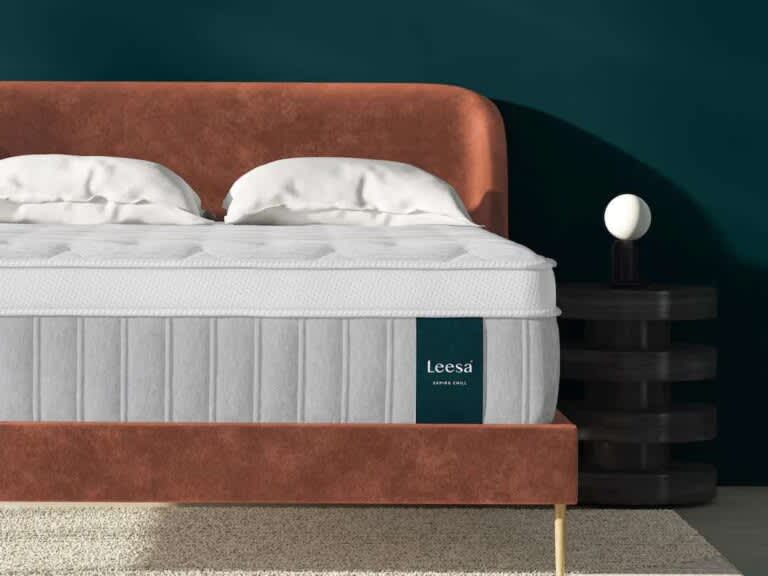
Leesa Sapira Chill Hybrid
A foam hybrid that cushions your body without trapping heat.
Key Details
- Who It’s Best For: Side and back sleepers across most weight groups and stomach sleepers up to 230 pounds.
- Feel: Sold in medium (5), medium firm (6), and firm (7) designs.
- What It’s Made Of: A four-layer comfort system with gel-infused foam, memory foam, and adaptive polyfoam over zoned pocketed coils with perimeter reinforcement and high-density base foam.
- What We Don’t Like: The 14-inch profile requires a fitted sheet with deep pockets, and initial off-gassing odor can be overwhelming for the first few nights.
Scoring & Reviews
The following ratings show how suitable this mattress is for different sleeping positions and sleeper weights. These scores are determined by how well the mattress supports and relieves pressure for each sleeper type.
In addition to the hands-on feedback from our team, we conduct a number of quantitative tests in our Test Lab. The below ratings are based on the experience of our testers.
SELECT AN ICON TO VIEW DETAILS:
Motion Isolation
In our tests, the Sapira Chill Hybrid’s foam-heavy comfort system absorbed most motion with ease. Even when one tester shifted positions or got up, the other hardly noticed — especially on the medium and medium firm models. For couples, this mattress is a standout in motion isolation for a hybrid.
Pressure Relief
Pressure relief was a top-scoring category across the board. Our side sleepers noted significant cushioning in the hips and shoulders, and even our back sleepers experienced a nice balance of support and contouring. The plush top layers adapted closely without making us feel stuck.
Temperature Control
Though it contains multiple foam layers, the Sapira Chill didn’t trap as much heat as we expected. The open-cell construction and airflow from the coil core helped maintain a neutral sleep temperature for most of our testers — particularly on the firmer options where we didn’t sink in as deeply.
Edge Support
We were impressed with how well the Sapira Chill held up around the edges. The reinforced perimeter coils gave us a stable feel when sitting or lying near the sides of the bed, which is especially helpful for co-sleepers or anyone who likes to spread out.
Ease of Movement
Movement on the Sapira Chill felt smooth, especially for a hybrid with four foam layers. While the softer model had a bit of a “sink-in” feel, the underlying coil support and responsive transition foam made it easy to shift positions or get in and out of bed on all three firmness levels.
Durability
The Leesa Sapira Chill Hybrid earns high marks for durability. As a hybrid mattress that uses four distinct foam layers, two of which are high-density polyfoam, sleepers can rely on cradling support without sinkage. Add to that the pocketed coil layer with individually wrapped springs, and the mattress should provide at least eight years of comfort.
Comfort is subjective – a mattress that meets all of your needs might be inadequate for someone else – but some mattresses come closer to being universally comfortable than others. Take the Leesa Sapira Chill, a foam-over-coil hybrid available in medium (5), medium firm (6), and firm (7) designs to accommodate a wide range of sleeper types. Thick comfort layers deliver plush cushioning, while the zoned support system helps ensure extra pushback for your torso and hips.
How It Performs
Our team tested all three of the Sapira Chill’s designs. We found that the medium model provides enough contouring for side and back sleepers under 130 pounds, who typically need a softer surface to rest comfortably. Side and back sleepers between 130 and 230 pounds will probably prefer the more supportive build of the medium firm (6), while those over 230 pounds should consider the robust firm (7) design. Stomach sleepers up to 230 pounds should receive enough reinforcement from the latter, as well.
Thanks to its thick foam layers, the Sapira Chill excelled during our motion isolation and pressure relief tests. The medium model earned the highest ratings in these categories, but all three were above average compared to other hybrids we’ve tested. Temperature control was another strength we noted, and this can be attributed to breathable open-cell foams in the comfort layers and steady airflow through the coil system.
Construction Breakdown
The Sapira Chill Hybrid contains more than 5 inches of foam cushioning, beginning with 2 inches of gel-infused polyfoam sewn to the cover. Additional layers of memory foam and adaptive polyfoam add to the surface’s invitingly plush feel, while transitional foam forms a gentle barrier between your body and the support core.
Pocketed coils and high-density base foam provide excellent stability for the mattress. The coils are zoned, meaning they feel more robust beneath your midsection – this helps ensure your torso and hips don’t sink too much. Reinforced perimeter coils also protect the edges from compression when you get in and out of bed.
Trial, Shipping, and Warranty
Leesa ships free of charge to customers in all 50 states and some Canadian locations. The Sapira Chill Hybrid’s sleep trial spans 120 nights in length. If you keep the mattress after the return period ends, your purchase is also covered under a lifetime manufacturer’s warranty.
Read More
Read Less
Best Mattress for Back Pain: Saatva Rx
Best Mattress for Back Pain
8.5/10Test Lab Score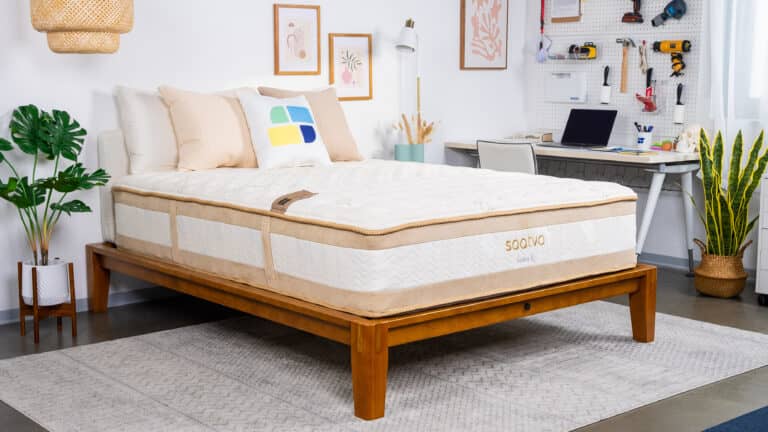
Saatva Rx
The Saatva RX is a luxury model specifically designed for individuals with chronic pain conditions
Key Details
- Who It’s Best For: Side and back sleepers.
- Feel: Medium soft (4) with a gentle cradling sensation that relieves pressure while supporting the spine. Surface stays a relatively neutral temperature.
- What It’s Made Of: A comfort system of polyfoam, memory foam, and microcoils. The support core has 8 inches of pocketed coils, topped with 2-inch polyfoam modules.
- What We Don’t Like: Above-average price tag.
Scoring & Reviews
The following ratings show how suitable this mattress is for different sleeping positions and sleeper weights. These scores are determined by how well the mattress supports and relieves pressure for each sleeper type.
In addition to the hands-on feedback from our team, we conduct a number of quantitative tests in our Test Lab. The below ratings are based on the experience of our testers.
SELECT AN ICON TO VIEW DETAILS:
Motion Isolation
We found that the Saatva Rx excels at isolation movement and preventing motion transfer. The memory foam comfort layer helps absorb surface vibrations, while the microcoil layer is encased in high-density polyfoam to further isolate movement. In addition to wrapping the support core’s individual coils in fabric — a standard feature of most hybrid mattresses — Saatva includes 2-inch foam caps on top of each coil. This helps muffle vibrations when pressure is exerted on the coils.
Pressure Relief
Designed by Saatva specifically for those who need extra pressure relief, our testers reported that the Rx delivers on their claims. The memory foam lumbar pad promotes spinal alignment, which can reduce lower back strain.We found the medium soft (4) surface relieved the most pressure for side and back sleepers under 230 pounds. The mattress compressed too much for stomach sleepers over 130 pounds, putting pressure on the lower back.
Temperature Control
The mattress’ temperature control is on par with most quality hybrids on the market, with a breathable cotton cover and wool flame barrier that help regulate surface temperature.The support core also has a number of temperature-regulating features. The Rx Foam Module has an open-cell structure that’s more ventilated than traditional polyfoam. It also contains graphite infusions and thermally conductive fibers designed for cooling.
Edge Support
Our testers sit and lie near the edges of a mattress to determine how sturdy its perimeter is.The Saatva Rx’s firmer coils along the perimeter keep the mattress from warping at the sides, so couples should be able to sleep comfortably near the edges of the mattress. That said, the mattress is pretty soft and some sinkage along the perimeter is to be expected.
Ease of Movement
A mattress that facilitates movement is helpful if you have joint or muscle pain. It’s also an advantage for sleepers who toss and turn at night.Our testers could easily move on the Saatva Rx despite its plush surface. Responsive microcoils prevent the comfort system from overly conforming to sleepers. Additionally, the strong pocketed coil core helps the mattress’ surface regain its shape more quickly.
Durability
The unique construction of the Saatva Rx makes it slightly more durable than some other hybrid mattress models. Below a half-inch layer of memory foam toward the top, there’s a support core that includes a one-inch layer of flexible microcoils encased in high-density polyfoam, followed by an eight-inch pocketed coil base layer. Even though the mattress’ medium-soft feel can reduce its durability a bit, you can expect it to last around eight years.
The Saatva Rx is a hybrid model with a unique coil-on-coil design specifically aimed at sleepers who experience chronic joint and back pain. Generous cushioning and responsive coils produce a balanced mattress that relieves pressure buildup without sacrificing too much support.
How It Performs
The Saatva Rx has a medium soft (4) feel that’s plusher than most hybrids we’ve tested. The foam layers offer excellent contouring, so our testers recommend this bed for anyone who needs deep cradling for painful pressure points.
Meanwhile, minicoils in the support core and pocketed coils in the base both ensure your body never sinks too far into the mattress. This helps promote even spinal alignment, which is crucial for people with scoliosis. We found the mattress was a good fit for side sleepers regardless of their body type, and back sleepers weighing less than 130 pounds.
One area where the Saatva Rx performed surprisingly well was ease of movement. Mattresses with plush surfaces typically inhibit mobility, but our testers moved with relative ease across the responsive surface. This is beneficial for sleepers with aches and pains related to scoliosis. The mattress also excelled in motion isolation, so you’ll experience fewer sleep disruptions when a partner shifts during the night.
Construction Breakdown
The Rx measures 15 inches thick, which is considered a high profile compared to other mattresses on the market. The organic cotton cover is quilted with foam to create a generously cushioned surface, while a thin memory foam pad underneath the lumbar region boosts support to the lower back. This is followed by a microcoil layer encased in high-density polyfoam.
The support core contains 8 inches of pocketed coils. Above the coils is a layer of Rx Foam Modules, which are polyfoam pieces that sit atop each individual coil. These foam pieces are 2 inches thick and are meant to reduce motion transfer. The Rx Foam is also infused with phase change material and graphite to promote cooling.
Trial, Shipping, and Warranty
Saatva offers free White Glove delivery to addresses in the contiguous U.S. This includes setup in the room of your choice and removal of your old mattress, if desired. You’ll receive a one-year sleep trial and a lifetime warranty.
Read More
Read Less
Best Mattress for Side Sleepers: Helix Midnight Luxe
Best Mattress for Side Sleepers
9.7/10Test Lab Score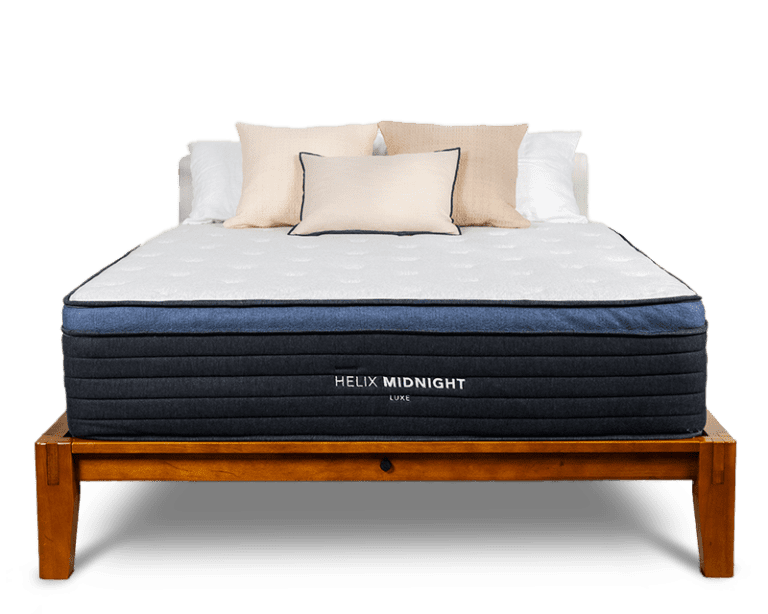
Helix Midnight Luxe
A premium quality, hybrid mattress created with side sleepers in mind.
Key Details
- Who It’s Best For: Side sleepers, particularly those between 130 and 230 pounds, and back sleepers.
- Feel: Balanced: relieves pressure by adapting to the body’s shape and enough pushback to maintain an even sleep surface without major sinkage.
- What It’s Made Of: Three layers in the comfort system, two made from memory foam and one from polyfoam. The pocketed coil support core has several different support zones, as well as a reinforced perimeter. High-density polyfoam forms the base.
- What We Don’t Like: Not quite right for stomach sleepers under 130 pounds and over 230 pounds.
Scoring & Reviews
The following ratings show how suitable this mattress is for different sleeping positions and sleeper weights. These scores are determined by how well the mattress supports and relieves pressure for each sleeper type.
In addition to the hands-on feedback from our team, we conduct a number of quantitative tests in our Test Lab. The below ratings are based on the experience of our testers.
SELECT AN ICON TO VIEW DETAILS:
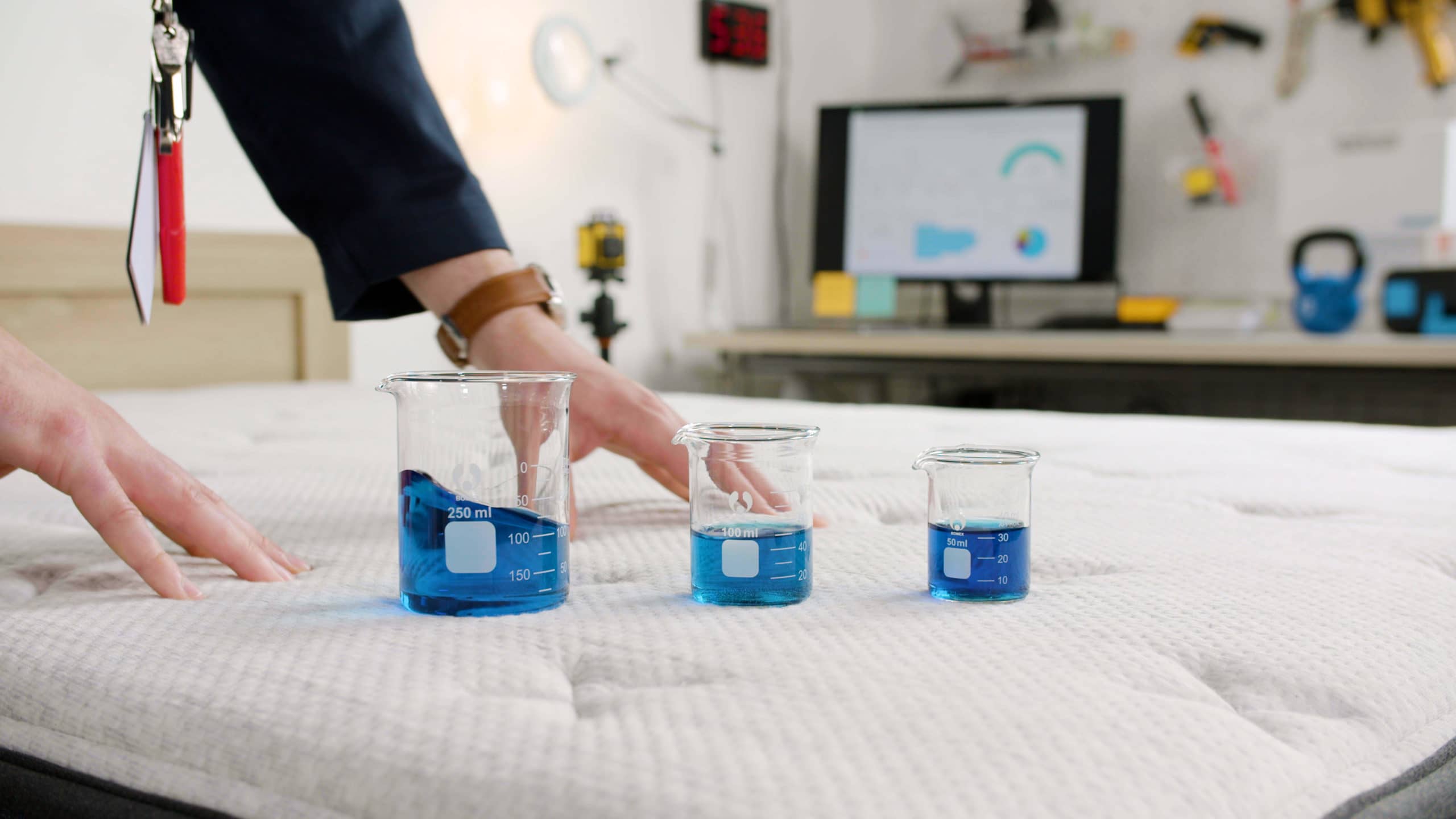
Motion Isolation
As a medium firm mattress with thick foam comfort layers, it’s no surprise that the Midnight Luxe tested very well for motion isolation. Our testers could barely feel any movement across the surface of the mattress when fellow testers rolled around on it.
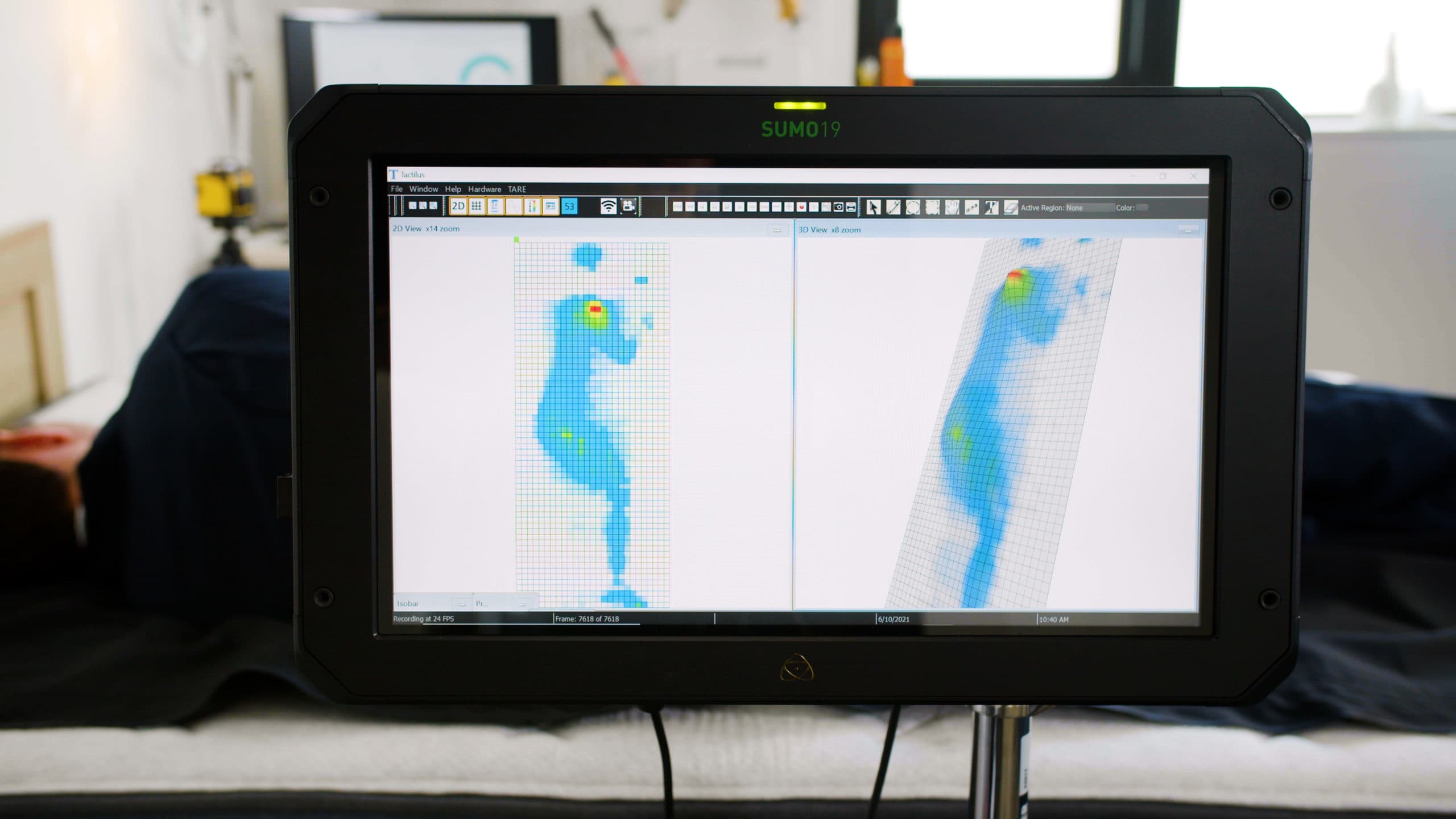
Pressure Relief
All of the Helix Luxe models have thick foam comfort layers and conform fairly close to the body. Consequently, they’ve all performed well in our pressure mapping tests, with notably less pressure in the hips and shoulders than many hybrids. With it’s 6 out of 10 firmness, The Midnight Luxe in particular performs average among other Helix Luxe beds.
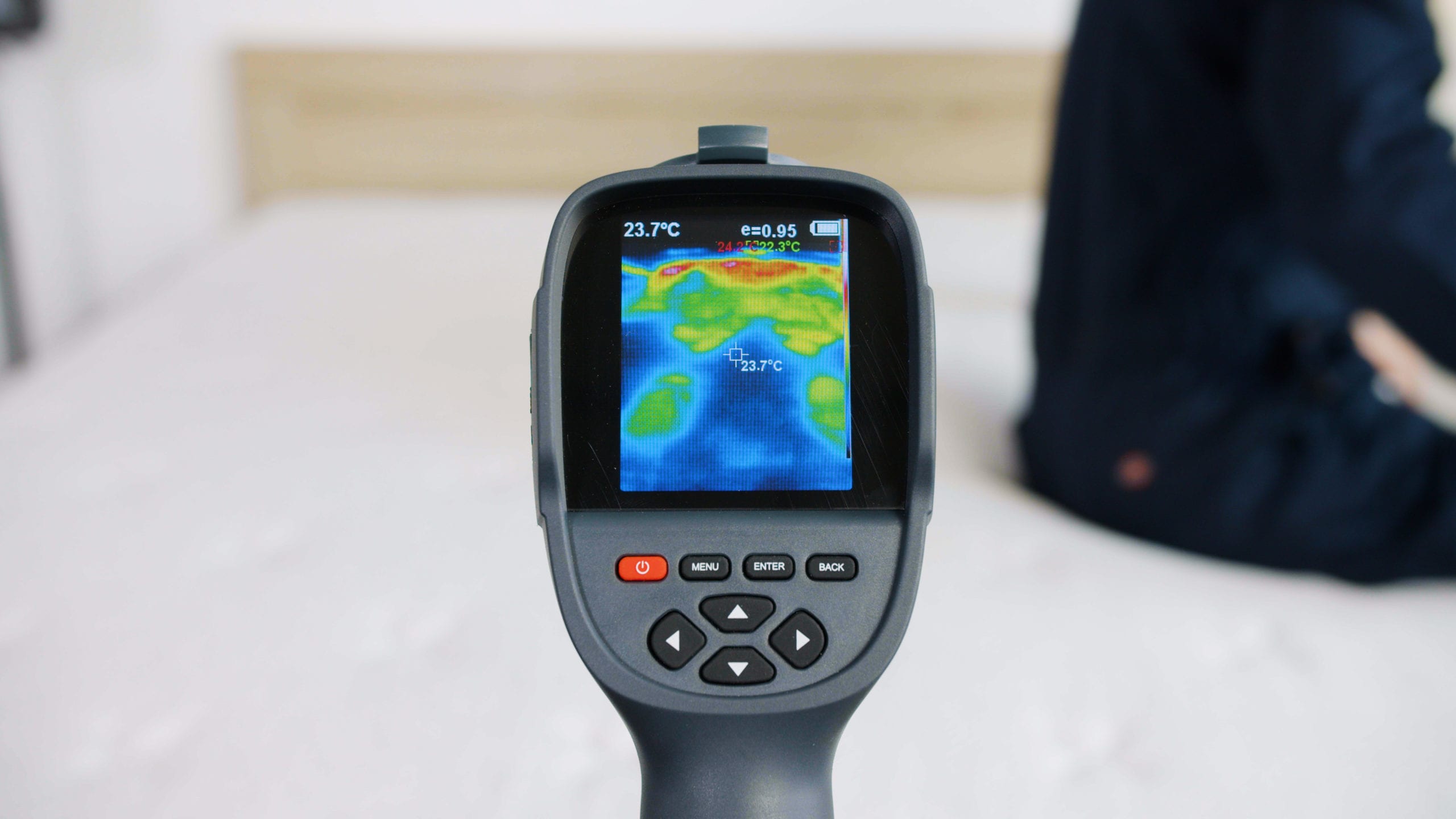
Temperature Control
The Helix mattresses perform about average for hybrids when it comes to sleeping cool. Memory foam is well-known for its tendency to sleep hot, as it often traps and retains heat through the night, but the coil cores of these beds promote airflow to help balance out heat retention.
Edge Support
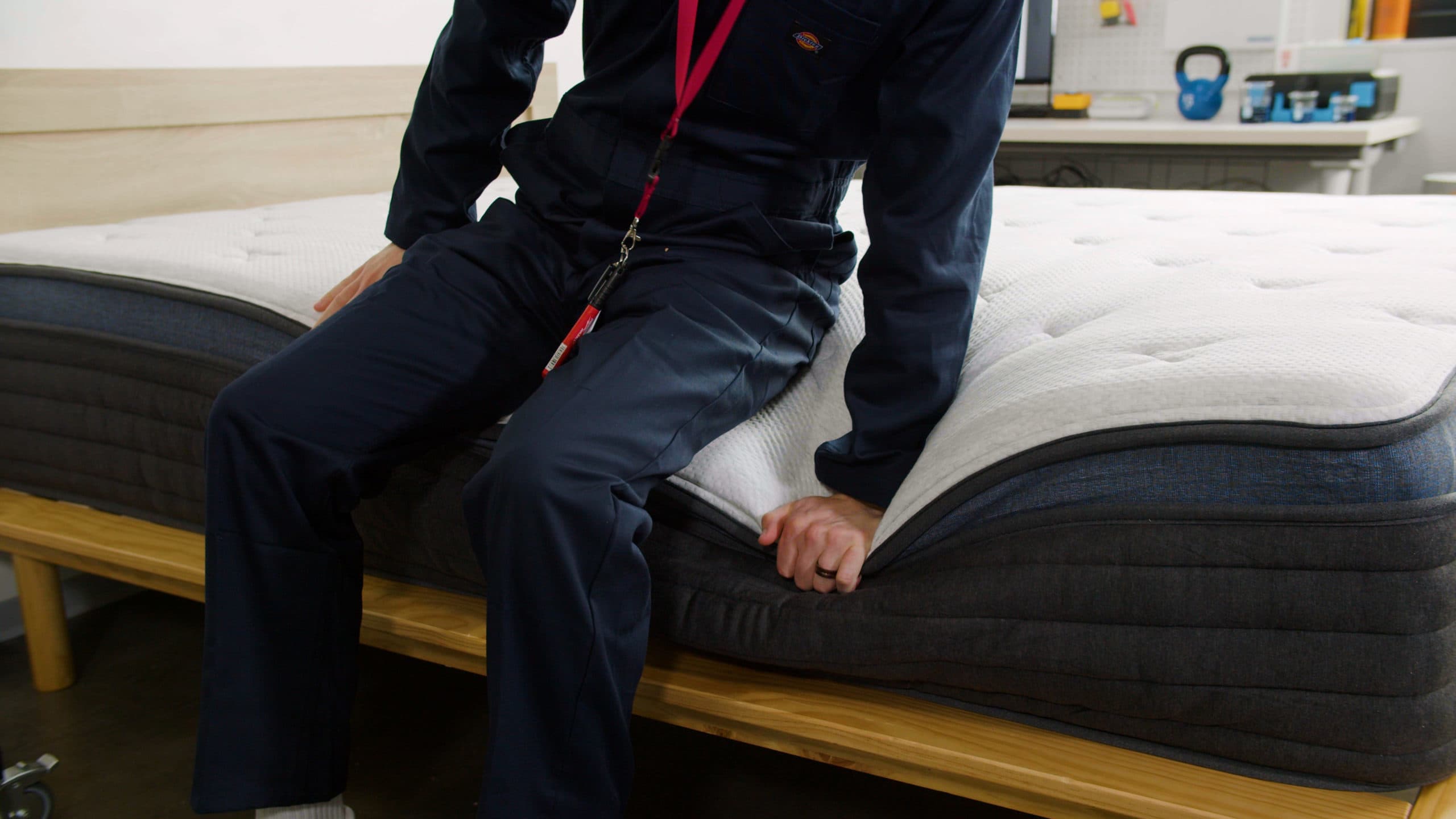
All Helix mattresses feature a reinforced perimeter, meaning the coils on the edges are thicker than the coils in the middle of the bed. When putting this to the test, we found significantly less sinkage on the edge than the middle while applying weight.
Ease of Movement
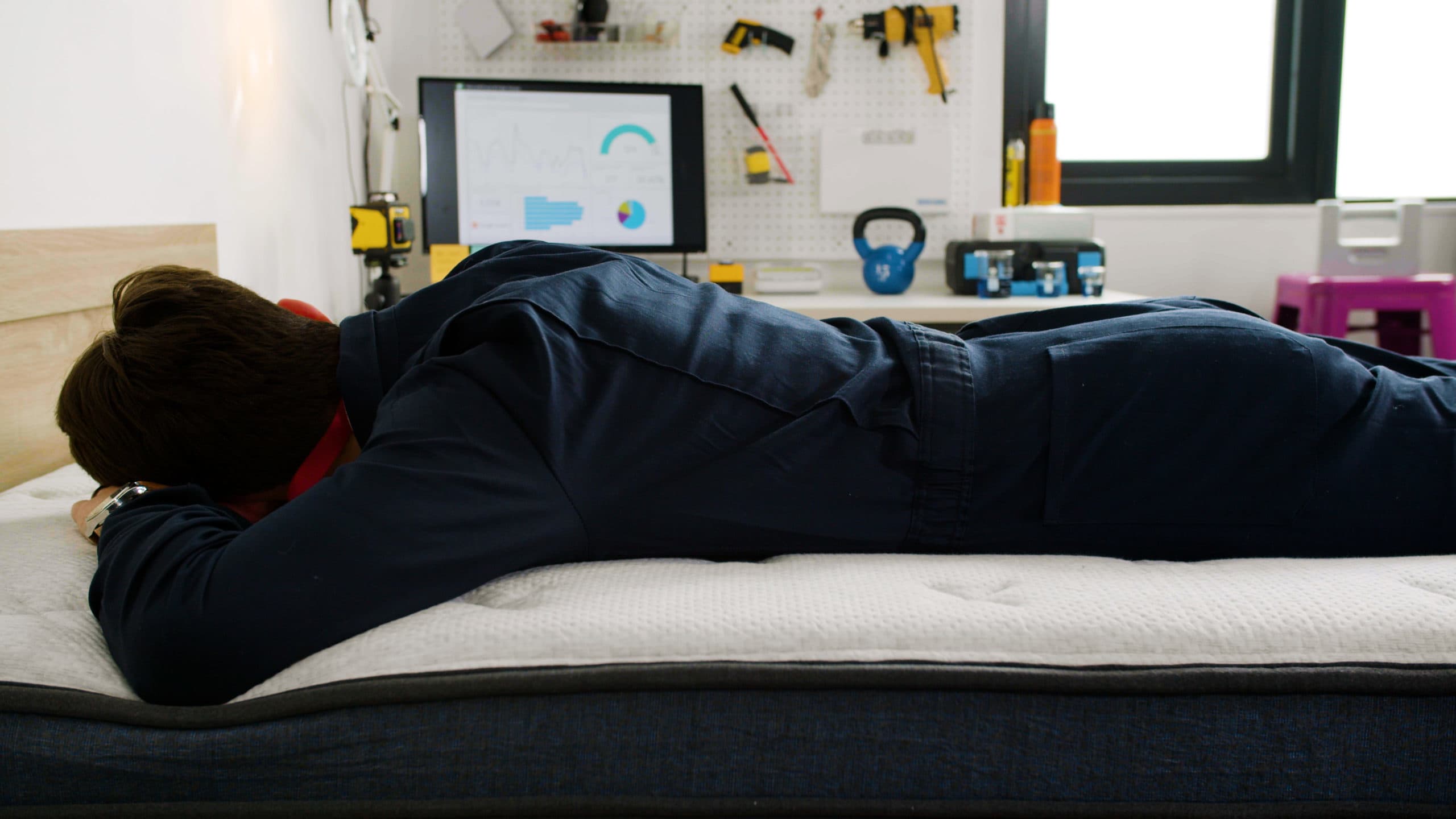
Helix Luxe mattresses tend to be somewhat responsive and bouncy, and all tested pretty well for ease of movement. The Midnight Luxe in particular had a middle-of-the-road performance in our tests, as the medium firm surface conforms a bit to the body, but doesn’t fully provide that ‘stuck’ feeling and inhibit motion.
Durability
The Helix Luxe collection of hybrid mattresses is built for durability, and the firmer options will likely extend the life even further. Each model is 14 inches thick and features three layers of foam (memory and poly), plus has 1,000 individually wrapped coils, including zone and perimeter support. It’s likely that you’ll be able to enjoy this mattress for close to a decade.
The Midnight Luxe from Helix is a hybrid mattress that successfully balances pressure relief and spinal alignment, a combination that’s sought after by many people with back pain.
As a medium firm (6) on the firmness scale, this mattress is best suited to side and back sleepers, particularly those who weigh up to 230 pounds. Stomach sleepers and people who weigh above 230 pounds may find a firmer mattress more comfortable.
How It Performs
The Helix Midnight Luxe excels at isolating motion, thanks to its foam comfort layers. Instead of transferring your movement across the bed’s surface, the memory foam absorbs it. Sleepers who toss and turn and those with different sleep schedules from their partner often find this feature beneficial.
Hot sleepers may also appreciate the airflow from the coil support core and the breathable cover. Those who get pressure points while sleeping may find the foam comfort layers most appealing, as memory foam is engineered to closely contour and alleviate discomfort.
Construction Breakdown
The Midnight Luxe’s uppermost layer is a quilted pillow-top wrapped in Tencel. This layer adds a bit more cushioning and helps the mattress stay cool. The comfort system is designed with pressure relief in mind and features two layers of memory foam.
A transitional layer of polyfoam creates a buffer between the core and comfort layers. Zoned, pocketed coils form the core and offer targeted support. These coils are softer beneath your shoulders and firmer under your hips, which helps to keep your spine evenly aligned while you sleep. The Midnight Luxe’s base is made from a durable polyfoam.
Trial, Shipping, and Warranty
Helix ships for free throughout the contiguous U.S. Canadian shoppers may incur additional fees. The Helix Luxe is backed with a lifetime limited warranty and your purchase includes a 120-night sleep trial.
Read More
Read Less
Best Mattress for Hip Pain: Bear Elite Hybrid
Best Mattress for Hip Pain
8.5/10Test Lab Score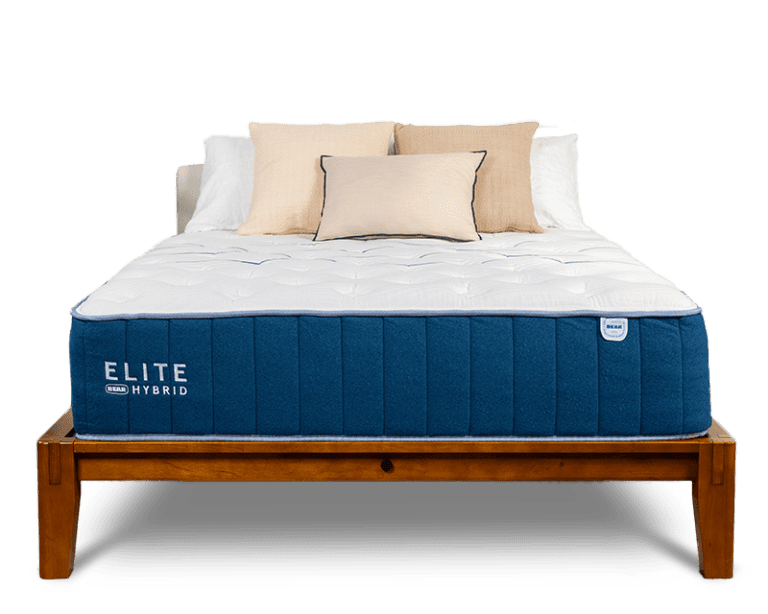
Bear Elite Hybrid
A close-conforming memory foam hybrid offering great pressure relief.
Key Details
- Who It’s Best For: Back and side sleepers, depending on firmness level.
- Feel: Cushiony yet evenly supported, particularly beneath the hips. No excess sinking and feels quite cool.
- What It’s Made Of: Depends slightly on firmness levels, but there’s a comfort system with copper-infused memory foam and zoned polyfoam. The pocketed coil support core rests on top of a high-density polyfoam base. Cover is made of proprietary, quilted, cooling fabric.
- What We Don’t Like: May be tough for stomach sleepers, especially those over 230 pounds.
Scoring & Reviews
The following ratings show how suitable this mattress is for different sleeping positions and sleeper weights. These scores are determined by how well the mattress supports and relieves pressure for each sleeper type.
In addition to the hands-on feedback from our team, we conduct a number of quantitative tests in our Test Lab. The below ratings are based on the experience of our testers.
SELECT AN ICON TO VIEW DETAILS:
Motion Isolation
The Bear Elite Hybrid shows considerable ability to prevent vibrations from traveling across the surface of the mattress. Its memory foam layer only reacts where weight is directly applied, which helps keep movement from causing ripple effects that spread to the other side of the bed.However, the bounce of the coils can cause some motion transfer, especially on the firm model that has a reduced amount of contouring.
Pressure Relief
The Bear Elite Hybrid offers excellent pressure relief that stems from its comfort system and the zoned, pocketed coils in its support core. In our testing, it was side and back sleepers who tended to get the best pressure relief and support. That said, stomach sleepers liked the firm (8) model that maintained a flat, stable surface with just enough cushioning for the midsection.
Temperature Control
This mattress doesn’t feel overwhelmingly hot, but it also probably shouldn’t be the top choice for hot sleepers. The copper-infused foam makes it slightly cooler than some other memory foam mattresses, but heat can still collect in and around the foam. The risk of overheating is highest on the Luxury Plush model because it has the closest contouring around the skin, which may make it harder for heat around the body to dissipate during the night.
Edge Support
Reinforced edges in the support core help give this mattress a solid rating for edge support. While you’ll notice foam compression around the perimeter, it’s not so significant that you’ll feel like the mattress is giving out beneath you.Of the three different firmness options, edge support is clearly strongest in the firm (8) model and weakest in the one with a firmness level of medium (5).
Ease of Movement
When you need to switch your sleeping position or adjust your body’s alignment on the mattress, you generally won’t encounter much resistance. Sleepers over 230 pounds may find that there’s less ease of movement, especially on the softer models. But in most cases, the springiness from the thick layer of pocketed coils enables relatively easy movement on the surface of the Bear Elite Hybrid.
Durability
The Bear Elite Hybrid Mattress scores above average for durability thanks to its pocketed coils, reinforced perimeter, and memory foam and polyfoam layers. The mattress comes in three firmness levels, and going firmer will typically extend the life of the mattress a bit more. Overall, you should expect around seven to eight years of use.
If you wake up with sore muscles, stiff joints, and pressure buildup along the spine, we recommend the Bear Elite Hybrid. It features a deep comfort system with foam layers that contour closely to the body, resulting in even weight distribution and extra cushioning for your shoulders, lower back, and hips.
Another key component is the cover woven with phase change material (PCM) and Celliant, a material engineered to convert your body heat into infrared energy. This restorative process is intended to help you feel more refreshed in the morning.
How It Performs
We found the Bear Elite Hybrid to be very balanced in terms of contouring, responsiveness, and support. The variety of firmness options made the mattress popular among most of our testers.
Side and back sleepers up to 130 pounds were impressed with the medium feel, while most sleepers between 130 and 230 pounds were particularly impressed by the medium firm model. The firm option earned the highest marks from back and stomach sleepers over 230 pounds.
The mattress performed well during our temperature control tests. Our heat guns and thermal sensors show most testers experienced little to no heat buildup — we’ve attributed this to the PCM and Celliant’s cooling properties, a copper infusion in the top foam layer, and steady airflow through the coils.
The reinforced perimeter earned the mattress strong ratings for edge support, while the thick foam layers absorbed movement well.
Construction Breakdown
The Bear Elite Hybrid’s comfort system consists of two foam layers under a quilted cover. Adaptive memory foam gives the surface an initially plush feel, and a transitional polyfoam layer adds cushioning while pushing back against your weight. This layer is also zoned to deliver more support to heavier parts of the body. The mattress comes in three firmness levels — medium (5), medium firm (6), and firm (8).
The support core contains pocketed coils over high-density base foam, and the coils are zoned to enhance support to your lower back. Extra perimeter reinforcement reduces sinkage when you lie or sit along the edges, allowing you to get on and off the mattress with ease. The Bear Elite Hybrid is considered a high-profile model and may require deep-pocket sheets.
Trial, Shipping, and Warranty
Shipping is free in the contiguous U.S. Bear’s sleep trial lasts for 120 nights, and the mattress is backed by a standard lifetime warranty against structural defects.
Read More
Read Less
Best Mattress for Pressure Relief: Brooklyn Bedding Signature Hybrid
Best Mattress for Pressure Relief
8.5/10Test Lab Score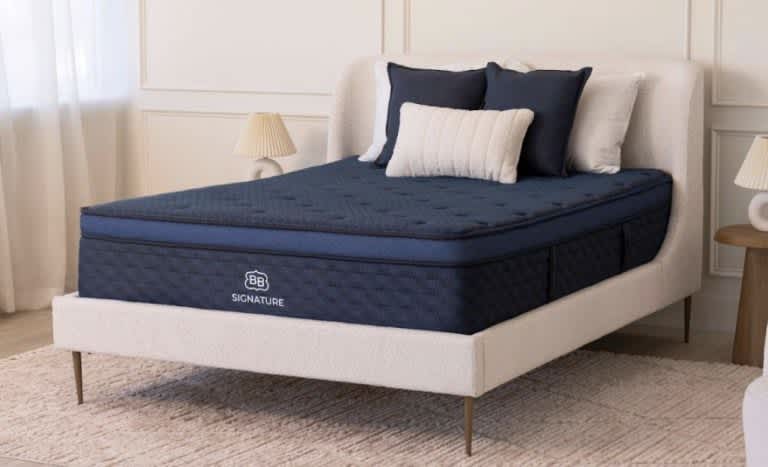
Brooklyn Bedding Signature Hybrid
A high-quality, affordable hybrid with multiple firmness options.
Key Details
- Who It’s Best For: Those who want both pressure relief and support.
- Feel: Balanced: foam adapts to sleepers’ bodies but prevents excess sinking.
- What It’s Made Of: Topped by a gel-infused polyfoam layer made from proprietary foam, a transitional layer of polyfoam, pocketed coil support core, and a thick high-density polyfoam base.
- What We Don’t Like: Not great for stomach sleepers.
Scoring & Reviews
The following ratings show how suitable this mattress is for different sleeping positions and sleeper weights. These scores are determined by how well the mattress supports and relieves pressure for each sleeper type.
In addition to the hands-on feedback from our team, we conduct a number of quantitative tests in our Test Lab. The below ratings are based on the experience of our testers.
SELECT AN ICON TO VIEW DETAILS:
Motion Isolation
The Signature isolates motion fairly well. Many hybrid models feel more responsive on the surface, and this can generate more motion transfer when someone changes positions or gets in and out of bed.The Signature’s thick foam layers absorb movement to eliminate a great deal of transfer. You may still notice some ripples of transfer across the surface on the medium soft and medium firm models. For the firm Signature, the transfer will be more noticeable.
Pressure Relief
All three of the Signature’s firmness levels offer great pressure relief. The most comfortable option for you depends on your sleep position and body type.The medium soft model reduces pressure for side sleepers with extra cushioning the shoulders and hips. The medium firm feel is more supportive for back sleepers up to 230 pounds. You won’t sink too much, but the foam still conforms and relieves pressure. Those over 230 pounds and stomach sleepers should consider the firm model.
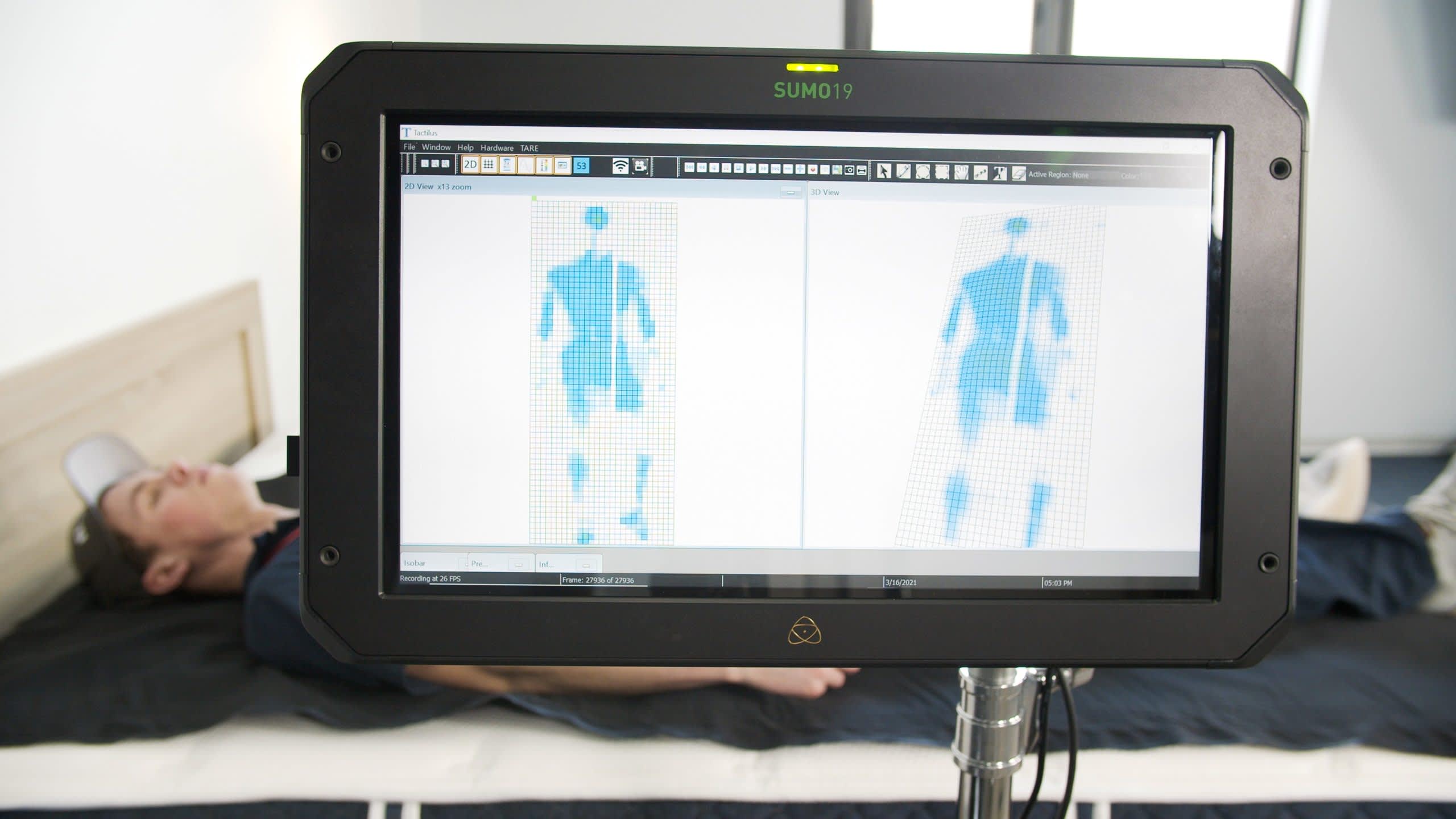
Temperature Control
The Signature’s coil system promotes airflow to maintain a comfortable temperature. The TitanFlex foam is also quite breathable compared to foams found in other hybrids.The firm model provides the best temperature control because it sinks very little and you’ll feel more surface airflow. The medium soft and medium firm models conform more closely. Hot sleepers may feel a bit too warm on these models – but for most, the mattress should sleep cool regardless of selected firmness.
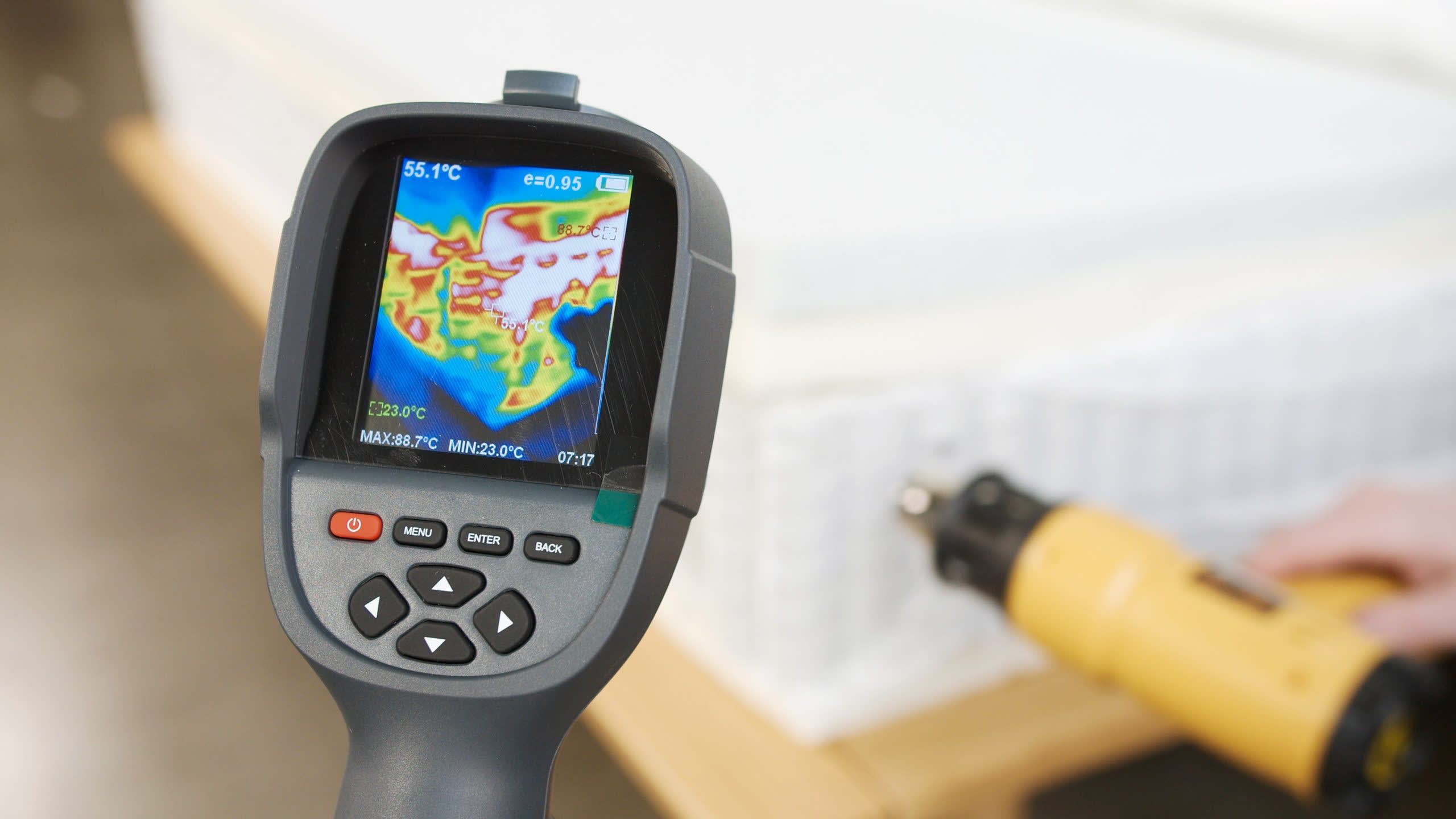
Edge Support
Hybrids generally excel at edge support, and the Signature is no exception. Coil support cores reinforce the perimeter better than latex or foam. This means less sinkage when you get on and off the mattress, and more stability if you like sleeping near the edges.The medium soft and medium firm models sink more than the firm because the foam conforms more closely, but they still maintain good overall stability if you weigh 230 pounds or less.
Ease of Movement
Polyfoam can be a responsive material, but the Signature’s latex-like TitanFlex foam is exceptionally bouncy. This allows you to move across the mattress rather easily. You won’t sink into the bed as you might on a mattress with memory foam.That said, the medium soft Signature can hinder movement on the surface. This model conforms the closest, so you’ll feel more sinkage when moving between the bed’s edges and interior. The medium firm and firm models provide more bounce-back.
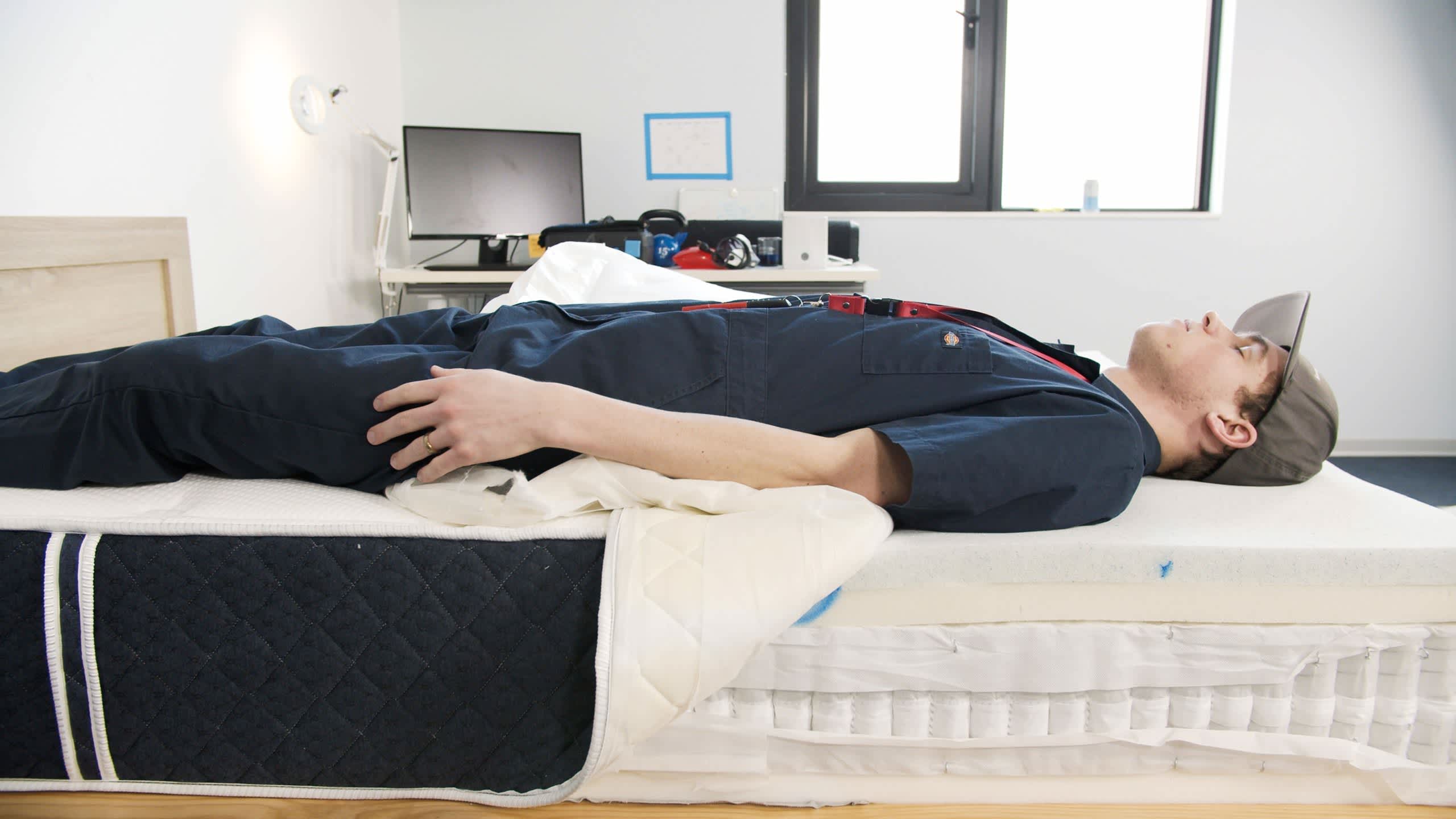
Durability
The Brooklyn Bedding Signature Hybrid has an estimated lifespan of six to seven years. As with other hybrids, the pocketed coils provide a solid base that evenly distributes pressure to prevent excessive strain on any one area. The most vulnerable part of the mattress is the comfort system, particularly the quilted top. The softer foams used in the mattress’ top layers may eventually develop imprints that affect the cushioning, something that’s more prominent in the softer model.
The Brooklyn Bedding Signature Hybrid offers exceptional quality at an approachable price. Adaptive foam layers cushion and contour to your body without the deep hug of memory foam, while sturdy pocketed coils keep you on a flat, even plane. For added comfort, you can choose from medium soft (4), medium firm (6), and firm (8) designs based on your needs and preferences.
How It Performs
The medium soft design conforms very closely. As a result, this model earned excellent ratings from side sleepers on our testing team weighing up to 230 pounds, and back sleepers under 130 pounds.
Those seeking maximum support should opt for the firm model. Our back and stomach sleepers over 230 pounds were particularly impressed with this design. The medium firm model offers the most balance, earning solid ratings from our testers across most body types and sleep positions.
Despite its foam layers, the Signature Hybrid sleeps fairly cool and shouldn’t trap too much heat. If you’re an exceptionally hot sleeper, we recommend upgrading to the “Cloud Pillow Top” design.
The firmer two models received high marks for edge support and ease of movement, while the medium soft design fared best during our motion isolation and pressure relief tests.
Construction Breakdown
The Signature Hybrid’s top layer is composed of TitanFlex, a dense proprietary foam. Cooling gel infused into the foam helps the surface stay cool. A transitional polyfoam layer provides extra cushioning while creating a buffer between your body and the support core.
For an additional charge, you can upgrade your order to include a third foam layer sewn to the cover. This “Cloud Pillow Top” makes the mattress feel slightly plusher, and the foam is encased in phase change fabric for enhanced cooling.
Pocketed coils give the Signature Hybrid a strong, springy feel but shouldn’t generate too much motion transfer. At 10 inches thick, the mattress has a medium profile and won’t require a fitted sheet with deep pockets.
Trial, Shipping, and Warranty
Brooklyn Bedding offers free ground shipping throughout the contiguous U.S. Your order includes a 120-night sleep trial. If you choose to keep the mattress, your purchase is backed by a lifetime warranty covering structural and workmanship defects.
Read More
Read Less
Best Mattress for Spinal Alignment: Nolah Natural 11
Best Mattress for Spinal Alignment
8.9/10Test Lab Score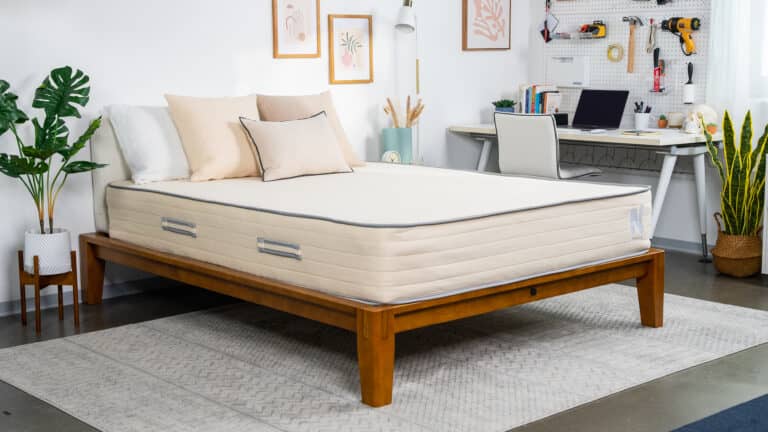
Nolah Natural 11
A durable latex hybrid that offers strong support and great temperature control.
Key Details
- Who It’s Best For: Side and back sleepers, as stomach sleepers between 130 pounds and 230 pounds. Couples and hot sleepers, too.
- Feel: Medium firm (6). Feels quite buoyant and responsive. Sleep surface is even and doesn’t compress too deeply or sag at the edges.
- What It’s Made Of: A breathable organic cotton and wool cover atop two layers of Talalay latex that measure 3 inches in total. The pocketed coil support core is 8 inches thick and has three separate zones.
- What We Don’t Like: Responsive surface allows motion to transfer from one side to the other.
Scoring & Reviews
The following ratings show how suitable this mattress is for different sleeping positions and sleeper weights. These scores are determined by how well the mattress supports and relieves pressure for each sleeper type.
In addition to the hands-on feedback from our team, we conduct a number of quantitative tests in our Test Lab. The below ratings are based on the experience of our testers.
SELECT AN ICON TO VIEW DETAILS:
Motion Isolation
Our motion transfer tests found that vibrations definitely carry across the Nolah Natural mattress. This is normal for a latex hybrid since the primary materials have a springiness that contributes to motion transfer.Despite the mid-range rating in this category, many couples can still share the Nolah Natural without a problem. However, people who are quick to be stirred awake at night may prefer a mattress with better motion isolation.
Pressure Relief
We found that the Nolah Natural was slightly above average at relieving pressure around the heavier parts of the body.The organic latex in the comfort system compresses to minimize harsh impact on the joints. In our testing, most sleepers under 230 pounds felt that the cushioning was nicely balanced, helping to promote spinal alignment.The level of pressure relief was lower among people over 230 pounds because they experienced more sinkage and less reliable support.
Temperature Control
Temperature control is a standout category for the Nolah Natural. We found that it stayed extremely cool, making it well-suited to anyone who tends to sleep hot.Every component of the mattress plays a role in its ability to regulate temperature. Cotton and wool are breathable and moisture-wicking. Latex is naturally resistant to heat buildup, and the coils permit airflow that can draw hot air out of the mattress.
Edge Support
In our tests, the Nolah Natural’s edge support was rated as roughly average. The sinkage of the latex was most significant around the edge, so you’ll notice some compression when you sit or lie down close to the perimeter. However, our testing team didn’t feel unstable or like they were going to accidentally roll off of the mattress.
Ease of Movement
One of the main properties of latex is its responsiveness, which means it quickly springs back when weight is removed from it. This characteristic makes the Nolah Natural feel bouncy.Even if you start to sink into the latex, you don’t feel stuck when you want to move. Instead, the responsiveness of the latex and the pocketed coils facilitates movement and makes it easy to modify your body’s position on the mattress.
Durability
As latex is one of the most durable mattress materials available, the Nolah Natural Mattress should hold up considerably longer than the average bed. The coils in the support core of hybrid mattresses are generally resistant to wear and tear. While Nolah uses Talalay latex, which is not quite as durable as Dunlop latex, it should still provide solid support for at least nine to 10 years.
The Nolah Natural 11 is a hybrid model with latex layers that gently conform to your body without sinking excessively beneath your weight. The light cushioning paired with a sturdy coil support core offers optimal spinal alignment, which is crucial for anyone with scoliosis.
How It Performs
The bed has a medium firm (6) feel that strikes an even balance between cushioning and support. During tests, the bed was most popular among our side sleepers weighing over 130 pounds and back sleepers up to 230 pounds. Stomach sleepers under 130 pounds also found the bed comfortable, though those over 130 pounds may need a more supportive model.
Latex, wool, and cotton are all naturally breathable materials, so it’s no surprise the Nolah Natural 11 excelled during our temperature control tests. Air also flows freely through the coil layer and the perforations in the latex, which helps ventilate the bed.
Our testers found the responsive surface very easy to move around on, making it suitable for sleepers who don’t enjoy beds that inhibit movement.
Construction Breakdown
The mattress begins with a breathable cotton cover and a thin layer of organic wool that wicks away moisture while serving as a fire barrier. Beneath is a layer of perforated latex that conforms to your body but also maintains a responsive feel, followed by a thinner latex layer with firmer support.
The pocketed coils are zoned to provide more push-back around the midsection, which helps prevent aches and pains in your shoulders and lower back. The cotton and wool carry GOTS certification to ensure organic sourcing.
Trial, Shipping, and Warranty
Nolah offers free shipping to the contiguous U.S. The sleep trial lasts 120 nights, but you can cut your up-front cost by as much as $150 by forgoing the trial period. The mattress is backed by a lifetime warranty against structural defects.
Read More
Read Less
Best Firm Mattress: Plank Firm Luxe
Best Firm Mattress
8.2/10Test Lab Score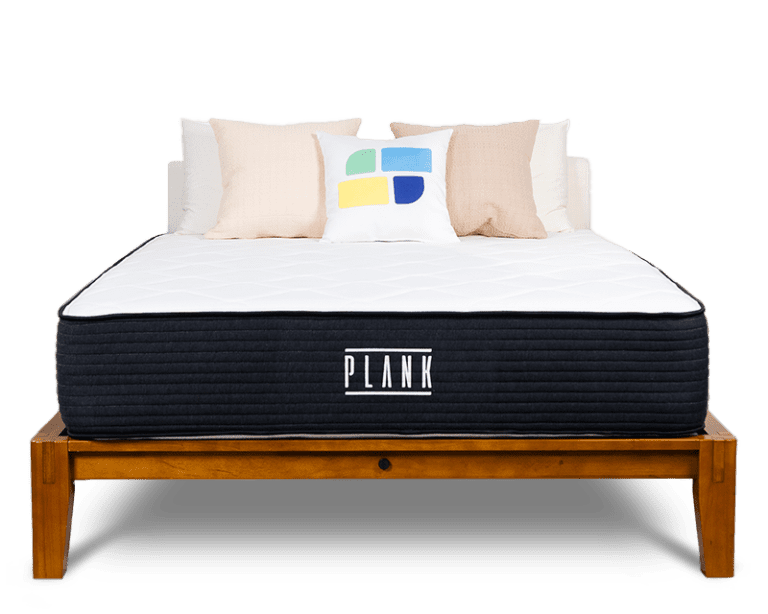
Plank Firm Luxe
High-end flippable bed that’s firm on one side, and even firmer on the other.
Key Details
- Who It’s Best For: Those who like a firm or extra-firm bed. Sleepers over 130 pounds, especially those over 230 pounds.
- Feel: Even surface with subtle cushioning that can help prevent pressure points (firm side). The extra-firm side feels sturdy and responsive.
- What It’s Made Of: Firm side has a foam comfort system separated into two distinct layers, while the extra firm side has just one. The two surfaces share a 6-inch pocketed coil support core.
- What We Don’t Like: Very little pressure relief and doesn’t isolate motion very well.
Scoring & Reviews
The following ratings show how suitable this mattress is for different sleeping positions and sleeper weights. These scores are determined by how well the mattress supports and relieves pressure for each sleeper type.
In addition to the hands-on feedback from our team, we conduct a number of quantitative tests in our Test Lab. The below ratings are based on the experience of our testers.
SELECT AN ICON TO VIEW DETAILS:
Motion Isolation
The Plank Firm Luxe has lower ratings for motion isolation than most hybrid mattresses.Because of its firmness and bouncy coils, the Plank Firm Luxe has limited ability to absorb motion that happens when there’s movement on another part of the mattress. With less cushioning, the extra firm (9) side tends to permit more motion transfer.Couples who are worried about sleep disruptions from movement may prefer a mattress with foam materials that better absorb vibrations.
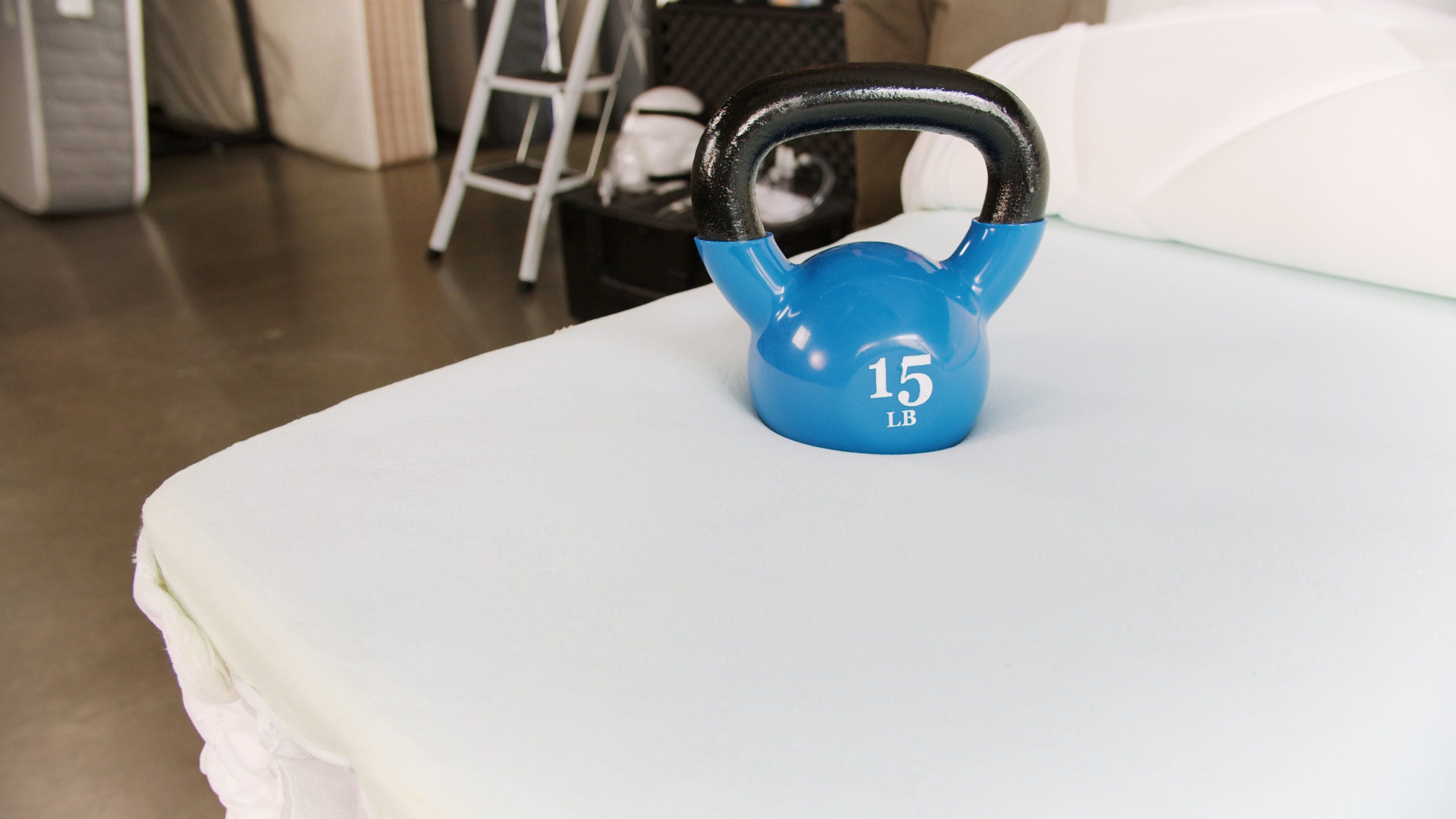
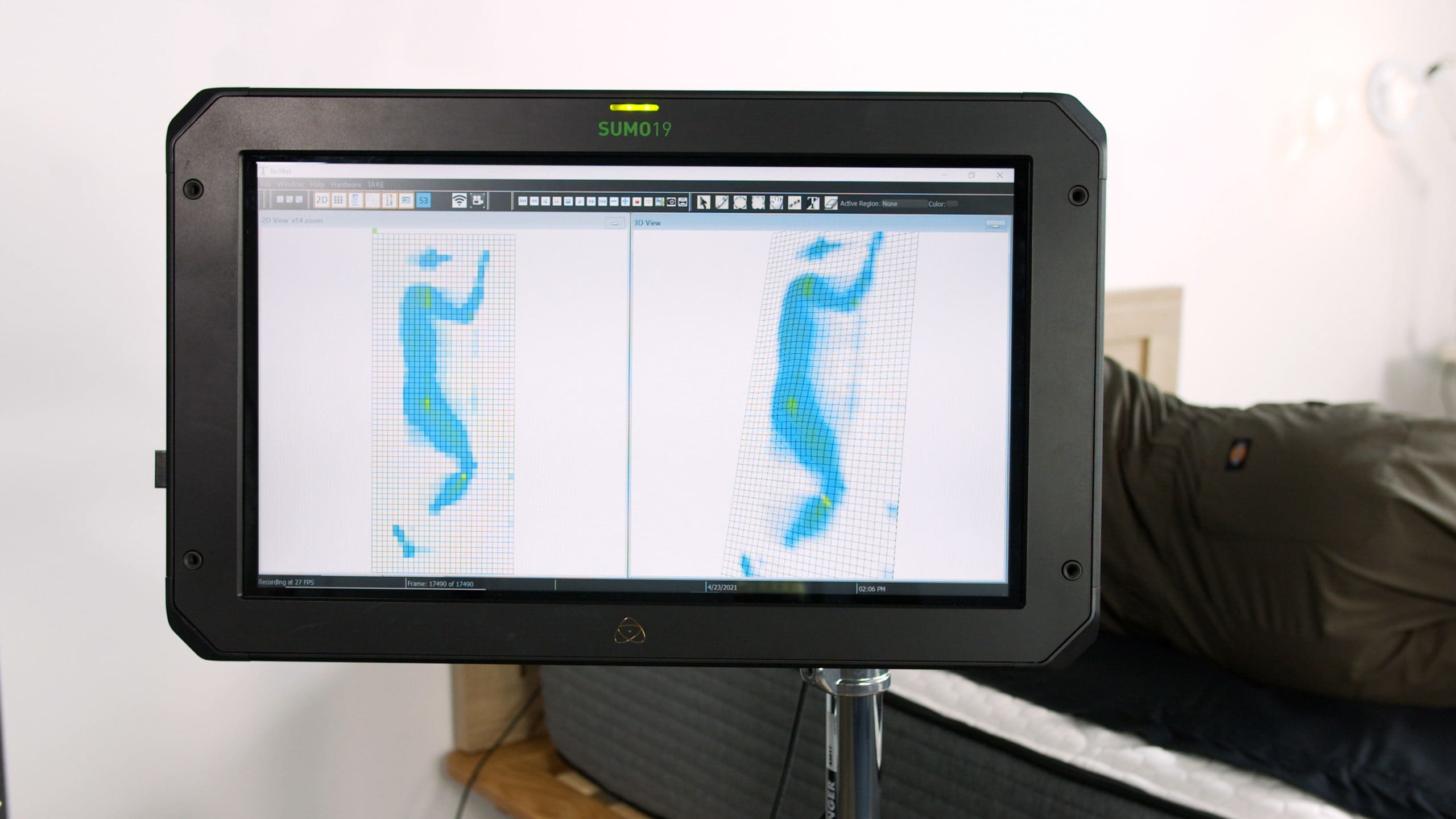
Pressure Relief
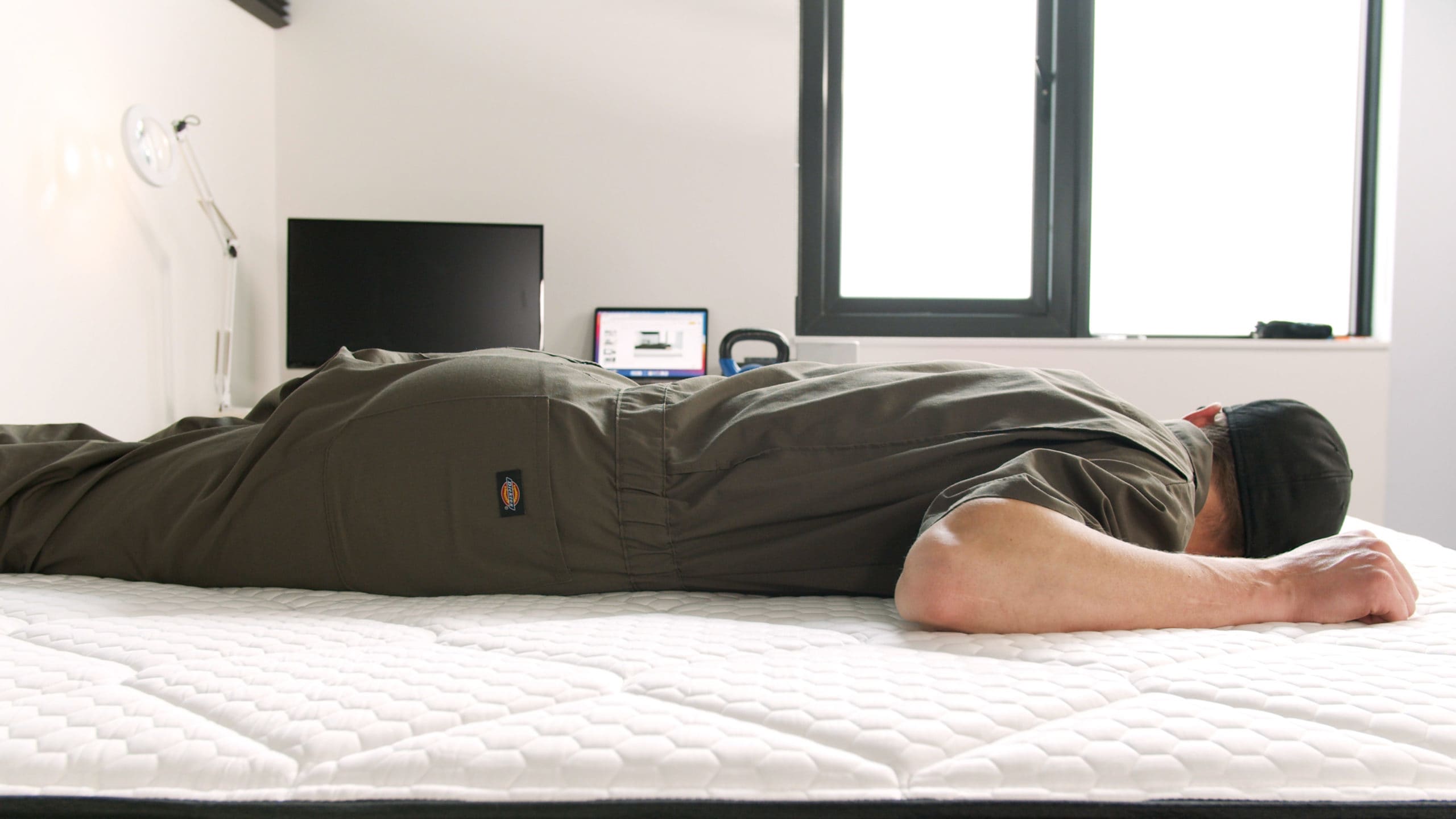
A lack of pressure relief is one of the main drawbacks of the Plank Firm Luxe Mattress. The firm (7) side has limited ability to cradle the joints, and the extra firm (9) side offers even less cushioning.That said, this mattress isn’t built to hug sleepers and provide a cloud-like feel. Instead, it is meant precisely for people who need or prefer a harder sleep surface. Based on our testing, the mattress appeals most to back and stomach sleepers.
Temperature Control
We found that the Plank Firm Luxe offers above-average temperature control. None of our testers complained about overheating, especially when using the extra firm (9) side. Since sleepers don’t sink into the mattress, there’s plenty of room for airflow around the skin, which helps the body naturally regulate its temperature.For hot sleepers who want extra cooling features, the optional cooling cover can make it even easier to avoid waking up in a sweat.
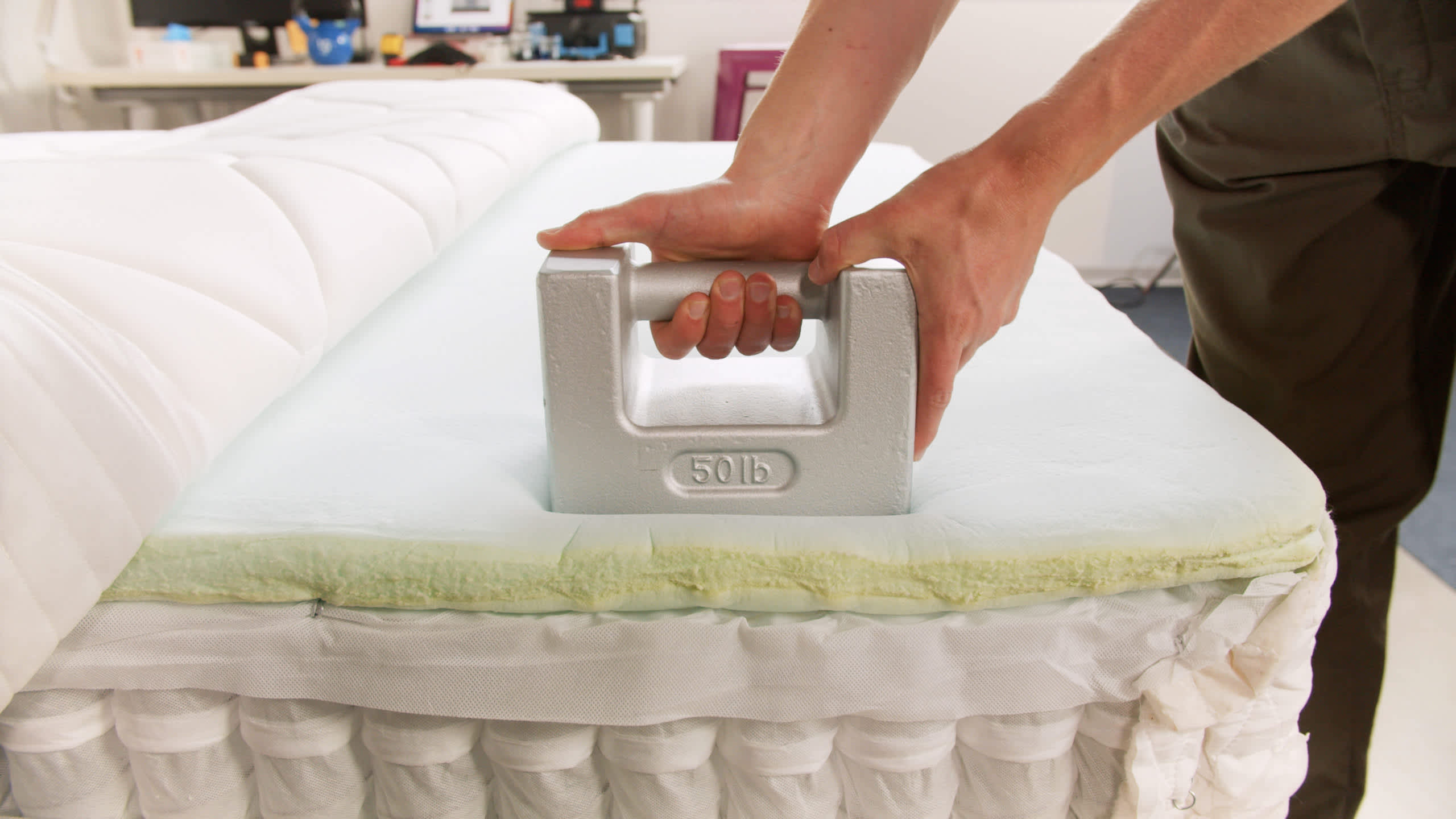
Edge Support
Because of its firmness, the Plank Firm Luxe has excellent edge support. The extra firm (9) side of the mattress is particularly supportive around the perimeter, but both sides allow you to comfortably sit or sleep near the edge of the bed. Strong edge support also makes getting in and out of bed easier.
Ease of Movement
Our testers had very few problems when they wanted to move around on the surface of the Plank Firm Luxe. The firmness level means that you don’t sink into the mattress, so there’s little resistance when you want to adjust your body’s positioning. The bounce of the coils also contributes to the high marks for ease of movement for the Plank Firm Luxe.
Durability
The Plank Firm Luxe is fairly durable due to the exceptionally supportive feel on each side of the mattress. Although the foam layers will deteriorate over time, leaving both surfaces uneven, this model resists wear and tear better than most softer foam hybrids on the market today.
Sleepers who want a mattress with uncompromising support should consider the Plank Luxe Hybrid. Much like the all-foam version of the Plank, this model is flippable with dual firmness levels of firm (7) and extra firm (9).
However, this mattress has a pocketed coil support core rather than foam, giving it enhanced responsiveness and temperature control. The Plank Luxe Hybrid also has an affordable price-point when compared to other premium hybrid mattresses.
How It Performs
This mattress is best suited to sleepers who prefer rigorous support and don’t require pressure relief. Back and stomach sleepers are likely to experience the best spinal alignment, with sleepers who weigh more than 130 pounds finding this mattress most comfortable.
Hot sleepers can also increase the bed’s already above-average temperature control by opting to add on a top cooling panel made from phase change material (PCM) fabric.
Construction Breakdown
Both sleep surfaces share the same pocketed coil support core. Individually encased coils move independently of one another to cut down on motion transfer.
Each side includes high-density polyfoam that increases support and provides very subtle contouring. The firmer surface has less quilting to ensure it feels truly extra firm. The other side uses an additional layer of proprietary TitanFlex polyfoam and more quilting to soften its surface and bring it down to a traditional firm feel.
Trial, Shipping, and Warranty
The Plank Luxe Hybrid ships free to the contiguous U.S. Each purchase includes a 120-night sleep trial, as well as a lifetime warranty.
Read More
Read Less
Watch Video: We Tested the Best Mattresses for Scoliosis – Here Are Our Favorites
Watch the video below to learn more about our lab’s top mattress picks for people with scoliosis.
What Is Scoliosis and How Does It Affect Sleep?
Scoliosis is a condition where the spine curves abnormally, sometimes forming a visible “S” or “C” shape when viewed from the back. “It usually develops in childhood or adolescence, though adult-onset scoliosis is also possible,” says Dr. Audrey Wells, MD. “The exact cause is often unknown, but it can be related to genetic factors, birth defects, or other conditions like cerebral palsy or muscular dystrophy.”
According to Dr. Wells, symptoms of scoliosis vary depending on the severity of the curve. Common signs include uneven shoulders, one hip appearing higher than the other, or intermittent pain related to muscular compensation for altered posture against gravity. As the condition progresses, it can lead to chronic pain, muscle fatigue, and in more severe cases, breathing difficulties.
“The discomfort associated with scoliosis can interfere with sleep,” notes Dr. Wells, “as individuals may struggle to find a comfortable position. For some, lying flat on their back or side may exacerbate pain, while others might experience muscle stiffness or spasms during the night. Proper sleep posture, the use of supportive mattresses, and sometimes medical interventions are key in managing the impact of scoliosis on sleep quality.”
What Is the Best Sleeping Position for Scoliosis?
Back sleeping is typically considered the best sleeping position for scoliosis, as it keeps the spine in the most neutral position. You’ll probably also find back sleeping more practical if you wear a brace.
Stomach sleeping twists the head to one side, which may exacerbate back and neck pain. Similarly, side sleeping can put sideways pressure on the spine, and it may lead to breathing trouble for people with certain types of scoliosis. However, the best sleeping position can vary from person to person depending on their unique body and situation.
What Is the Best Mattress Type for Scoliosis?
The best mattress type for scoliosis depends on several factors, including your body type, sleeping style, individual symptoms, and whether or not you sleep with a brace. Among the broad mattress categories, each type offers distinct benefits and drawbacks.
Hybrid
Hybrid mattresses include a coil support core beneath significant comfort layers, which are often made of memory foam, latex, or similarly pressure-reducing materials. Innerspring mattresses are similar and also contain a coil support core but have little to no comfort layers.
Most hybrids are made with pocketed coils, which move independently of one another to evenly distribute body weight. As a result, hybrids typically offer above-average spinal support. Also, contouring materials in the comfort layers can help reduce pressure points, making hybrids ideal for many people with scoliosis.
Foam
Foam mattresses contain a high-density polyfoam support core beneath comfort layers that are most often made of polyfoam or memory foam.
The primary advantage of foam mattresses is their above-average pressure relief. Memory foam, in particular, molds to the shape of your body to prevent pressure buildup. While the polyfoam support core isn’t quite as supportive as innerspring coils, foam mattresses can still be a solid option for people with scoliosis who weigh less than 230 pounds.
Latex
Latex is a good option for people who want pressure relief, without feeling like they are being “hugged” by the bed. Synthetic latex offers similar properties but may not perform on par with natural latex. It’s a durable, responsive material, so it offers great support and is easy to move around on if you need to switch positions.
Airbed
The support core of an airbed mattress is formed by an air chamber that can be inflated for a firmer feel and more support, or deflated for a softer feel. Most airbeds also include several inches of comfort layers for additional pressure relief.
What Should Someone With Scoliosis Look for in a Mattress?
Certain factors are particularly important in a mattress if you have scoliosis. These mostly center on the mattress’ ability to provide pressure relief and spinal support.
Sleeping Position and Firmness
The right mattress firmness level for each sleeper largely depends on your body weight and usual sleeping position. Side sleepers and those under 130 pounds typically prefer softer mattresses to relieve pressure points. Stomach sleepers and people over 230 pounds tend toward firmer mattresses, which prevent them from sinking too far into the bed.
The right firmness for someone with scoliosis can vary depending on their individual profile. Many experts agree that medium firm is a good starting point, as this firmness provides sufficient support and decent pressure relief for most sleepers.
A mattress that’s too soft may fail to support the spine, which is an important consideration for someone with scoliosis. However, a mattress that’s too firm may put pressure on already-painful areas like the hips or shoulders.
Pressure Relief
Pressure relief is one of the most important attributes in a mattress if you have scoliosis, because scoliosis can cause pain points that may be exacerbated where your body puts weight on the mattress. Softer mattresses tend to offer better pressure relief than firmer mattresses.
“A mattress with a thick comfort layer can make a significant difference by cushioning pressure points,” says Dr. Wells. “Balanced with internal support features, the combination helps alleviate discomfort and pain in sensitive areas.”
Contouring
Materials like memory foam excel at contouring, or shaping themselves to fit the curves of your body. Contouring is closely related to pressure relief, as the more a material contours, the less chance there is of pressure forming where it contacts your body or brace. That said, some people may find it restrictive when a mattress contours too closely.
Responsiveness
Responsiveness is a material’s ability to quickly regain its original shape. The more responsive a mattress, the easier it is to change sleeping positions. If scoliosis limits your movement, you may value a more responsive mattress.
Edge Support
A mattress with strong edge support holds up well when weight is placed along the perimeter, preventing feelings of roll-off when you sleep near the edge of the bed. Strong edge support also provides a sturdy place to sit or lean on when getting in and out of bed.
Durability
All mattresses break down over time, eventually sagging and developing permanent body indentations. Once a mattress is no longer able to contour properly or support the spine on an even plane, it may start to aggravate back pain or other scoliosis-related symptoms. Choosing a mattress made with durable materials can help you get a longer lifespan out of your mattress.
Delivery and Setup
Mattresses sold online are usually compressed, rolled up, and placed in a box for shipping. To set up the mattress when it arrives at your house, you need to open the box, remove the plastic, lay the compressed mattress out on the bed frame, and let it expand.
Mattresses can be heavy and difficult to maneuver, especially for someone with back pain. If you anticipate trouble setting up the mattress, look for a company that offers White Glove delivery. With this option, often charged at a nominal fee, the delivery people set up the mattress for you and remove the packing materials.
Sleep Trial and Warranty
A sleep trial is a period during which a mattress company allows buyers to sleep on the mattress in their own home and return the mattress for a refund if they aren’t satisfied. Sleep trials typically last between 30 and 365 nights.
Because many mattresses soften over time, a sleep trial gives a more accurate impression of a mattress as opposed to simply lying on it in a store. If you have scoliosis, the trial allows you to better test the mattress’ pressure relief and spinal support.
Mattresses also typically come with a warranty of at least several years. During the warranty period, if the mattress displays any manufacturing flaws, you can request that the company replace or repair the mattress per the warranty conditions.
Tips for Sleeping More Comfortably With Scoliosis
While scoliosis has an undeniable effect on sleep quality for many people, there are steps you can take to sleep more comfortably if you have the condition.
Talk to Your Doctor
Because scoliosis varies from person to person, your doctor is the best person to recommend a mattress and sleeping position for your symptoms.
It’s important to seek help from a medical professional if you have symptoms of scoliosis. When symptoms are present, Dr. Wells notes that determining the presence and the severity of scoliosis begins with x-rays of the spine. If left untreated, some people with scoliosis progress to having more serious long-term health complications, including chronic pain, reduced mobility, and in severe cases, respiratory or cardiovascular issues.
Use Pillows Strategically
You can use pillows to support different body parts, depending on your sleeping position and the type of scoliosis you have. Examples of supportive pillow placement for scoliosis include:
- Under the knees: Back sleepers may experience pressure buildup in the lumbar area. Placing a thin pillow beneath the knees can take strain off the lower back.
- Between the knees: When sleeping on your side, placing a thin pillow between the knees helps keep the legs aligned and reduces pressure on the spine.
- Under the hips: While stomach sleeping is not usually recommended if you have scoliosis, placing a flat pillow under your hips can help keep them in line with the rest of the body.
- Under the spinal curvature: If you have a pronounced curve in part of your spine, you may find it helpful to support this area with a pillow.
- Body pillow: A body pillow is a long pillow that helps support multiple parts of your body while sleeping.
Sleep on a Mattress Topper
If your current mattress provides good support for your spine but causes pressure points, then a mattress topper might be a good solution. Typically measuring two to three inches thick, toppers made of contouring materials such as memory foam are an easy and cost-effective way to improve pressure relief. However, they can’t revive a sagging mattress.
How We Test: Your Comfort Is Our Science
Our industry-leading product testing team cares deeply about improving your sleep. Having a holistic understanding of a mattress’s role as part of a sleep system is paramount to our testing process. Since a bed’s comfort and feel depend largely on body weight and sleeping position, our testing team represents a wide range of body types, sleep positions, and comfort preferences.
In our Seattle-based Test Lab, we use an objective, hands-on process to evaluate mattresses across performance categories. The following are the key guidelines that inform our performance ratings. Our ultimate goal is to ensure you have all the information you need to make the best purchase decision for you.
Construction analysis:We begin testing each mattress by analyzing its design and making note firmness, height, individual layer composition, and sticker price. This allows us to evaluate qualities like support, durability, and value.
Product testing:Firsthand testing is crucial to our evaluation and ratings system. We use a wide range of tools and technology to test mattresses in six performance categories: motion isolation, pressure relief, temperature control, ease of movement, edge support, and odor potential.
Field testing: In addition to lab-based tests, we base our ratings on feedback from field testers who use the mattresses in their own homes. They spend several weeks collecting data — this gives us insights into how the mattress performs night after night for an extended period.
User testing:We curate feedback verified owners have provided in surveys, sleep stories, and product reviews. This helps us evaluate our initial findings and, if needed, tweak our ratings to reflect real-world experiences.
How We Determine Our Overall Scores
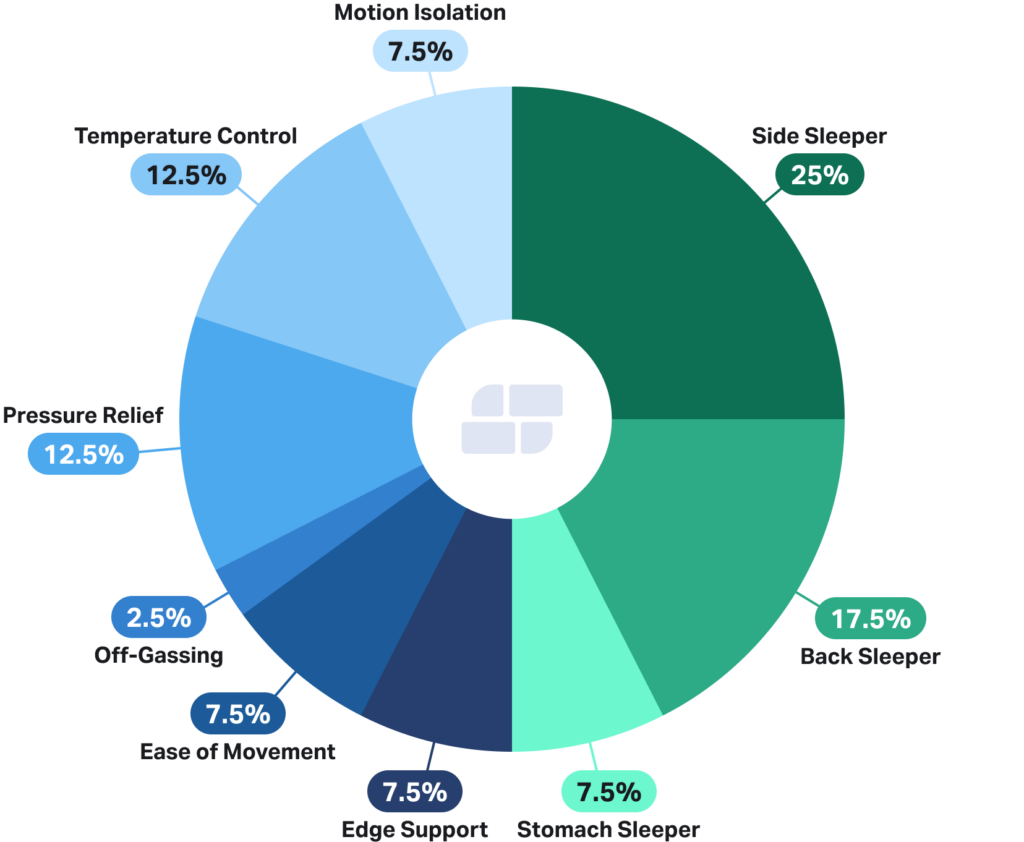
To determine a mattress’s overall score, we assign weighted percentages to performance categories based on how important they are to the individual sleep experience. For instance, areas like pressure relief and temperature control tend to matter more to people than something like off-gassing, and because more people sleep on their side and back than on their stomach, we weigh those positions more heavily.
Performance Categories
Motion Isolation
This criteria alludes to the amount of motion a mattress absorbs when a sleeper moves on the surface. We use two testers lying side by side to evaluate motion isolation, who each feel for transfer while the other person moves on the mattress.
Temperature Control
To determine how well a mattress regulates temperature, we perform temperature tests and look closely at its materials and construction. Many mattresses are designed with cooling components meant to reduce heat retention.
Pressure Relief
A bed with strong pressure relief excels at preventing pressure from building up in areas like the shoulders and hips. Beds with even contouring and weight distribution are top performers when it comes to pressure relief.
Off-Gassing
A mattress in a box may release unpleasant chemical odors for a short period after you’ve unboxed it. The initial smell may be strong but typically fades within 2 or 3 days.
Ease of Movement
This criteria reflects how easily a sleeper can move across a bed’s surface. Responsive surfaces made of latex typically perform better than foam surfaces, which can inhibit movement.
Edge Support
We perform sit tests along a bed’s perimeter to measure how well the edges push back against weight. Mattresses with strong edge support have minimal sagging when sleepers sit on or lie close to the perimeter.
Dive Deeper – Mattress Guides by Purpose
If you’re still having trouble deciding which mattress is right for you, check out our shopping recommendations categorized by mattresses for your particular requirements.
Best Mattress for Specific Purpose
Frequently Asked Questions

Still have questions? Ask our community!
Join our Sleep Care Community — a trusted hub of product specialists, sleep health professionals, and people just like you. Whether you’re searching for the perfect mattress or need expert sleep advice, we’ve got you covered. Get personalized guidance from the experts who know sleep best.
Logan is a Certified Sleep Science Coach with a deep understanding of what it means to struggle with sleep. Her years of experience researching and testing sleep products – including mattresses, natural sleep aids, and bedding – are critical to her role helping lead the editorial team. When she’s not testing mattresses or researching CBT-I, she enjoys spending time in the sunshine with her husband and her dogs Pepper and Winston.
Audrey Wells, MD attended University of Michigan Medical School and went on to train at Washington University School of Medicine in pediatrics and pediatric pulmonary medicine. It was during this time that she developed a specific interest in adult and pediatric sleep medicine. She returned to her home state of New Mexico to complete a sleep medicine fellowship.